
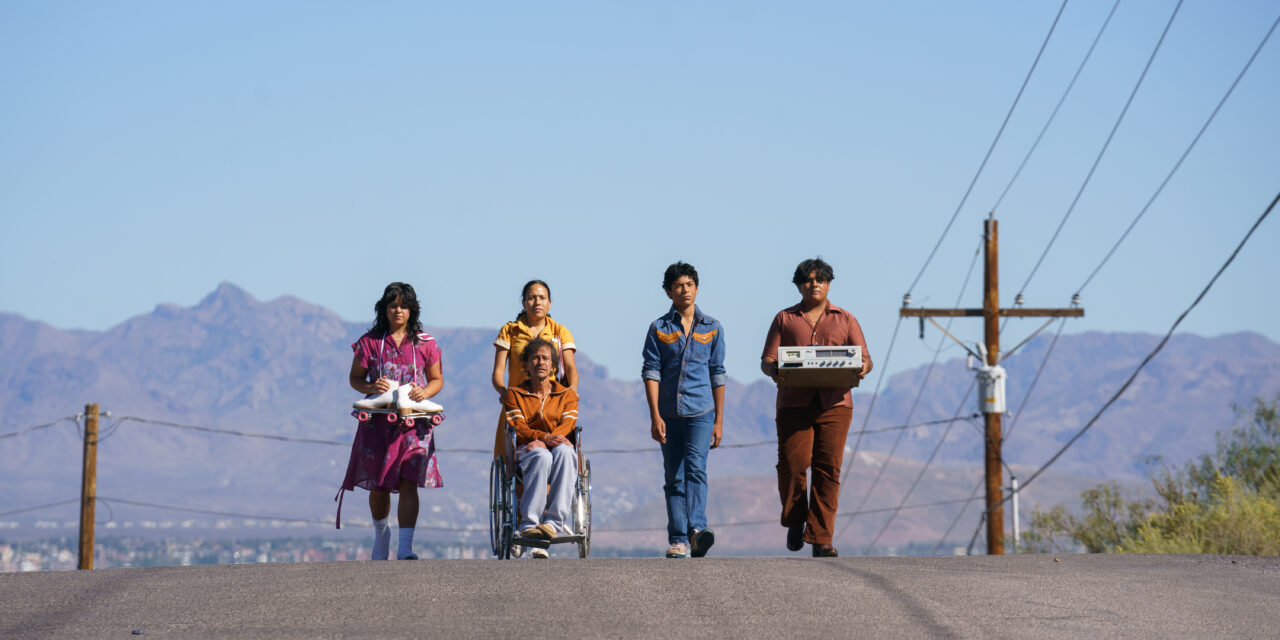
Directed by Fernando Eimbcke, Olmo shows us a family being overcome not so much by the disease that has come to the father, but by the selfishness of each member. Olmo (Aivan Uttapa) is fourteen and in lust with Nina (Melanie Frometa), the older girl across the street. When his mother Cecilia (Andrea Suárez Paz) must work an extra shift, trying to pay the rent, and his older sister Ana (Rosa Armendariz) only cares about going to roller disco, Olmo is tasked with caring for his invalid father Nestor (Gustavo Sánchez Parra), who has MS. But when Nina offers to let him come to a party, if he brings his father’s stereo, the adventure is on.
The adventure is really secondary to the relationship within the family. The members all know how to push each other’s buttons, and do so frequently. It is only Olmo’s best friend Miguel who seems to care about the people in this family. A key scene for me is when Olmo’s father is trying to teach him about fixing the stereo. Olmo sees it as a bother, even though this is a chance to bond. It is Miguel (Diego Olmedo) who thrives on the moment.
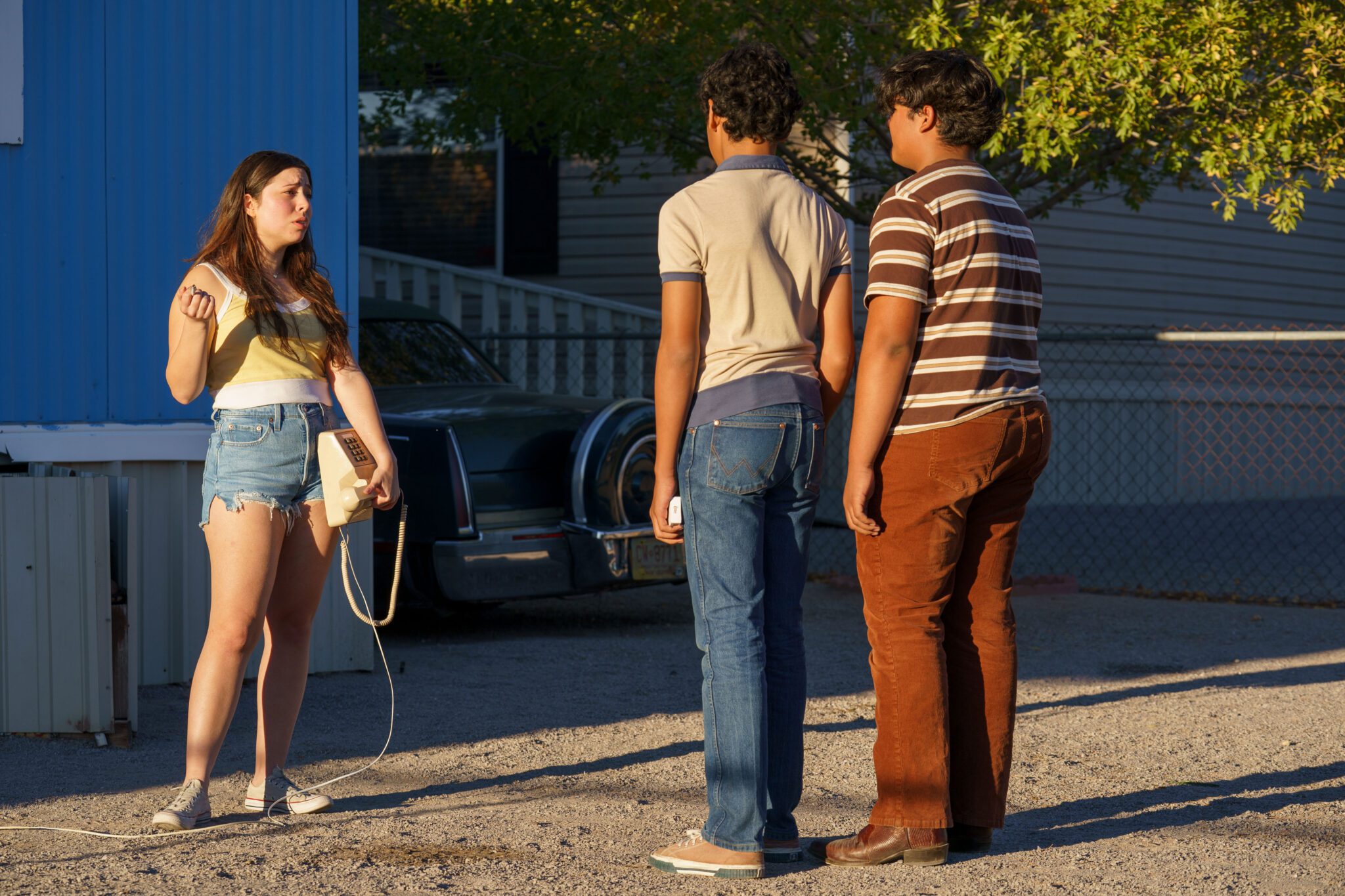
Left-to-right: Melanie Frometa, Aivan Uttapa, and Diego Olmedo in a scene from Fernando Eimbcke’s OLMO
It takes a near tragedy to pull the family out of their self-centeredness to come together in a way that might lead to more than just co-existence. Perhaps there is a seed here for them to find the love that will truly bind them.
The film is set in 1979 New Mexico, and that is important. The story really wouldn’t work in a world of cell phones and streaming. The analog world that Olmo and his family inhabits is very different today. But the relationships of parents, siblings, and friends seem much more timeless.
I first saw this film last year as part of AFI Fest. It was an interesting coming-of-age tale in which Olmo is shocked into taking the next step towards adulthood. He is trying to fulfill his sexual fantasy towards Nina, but the real growth he needs is to discover his responsibilities.
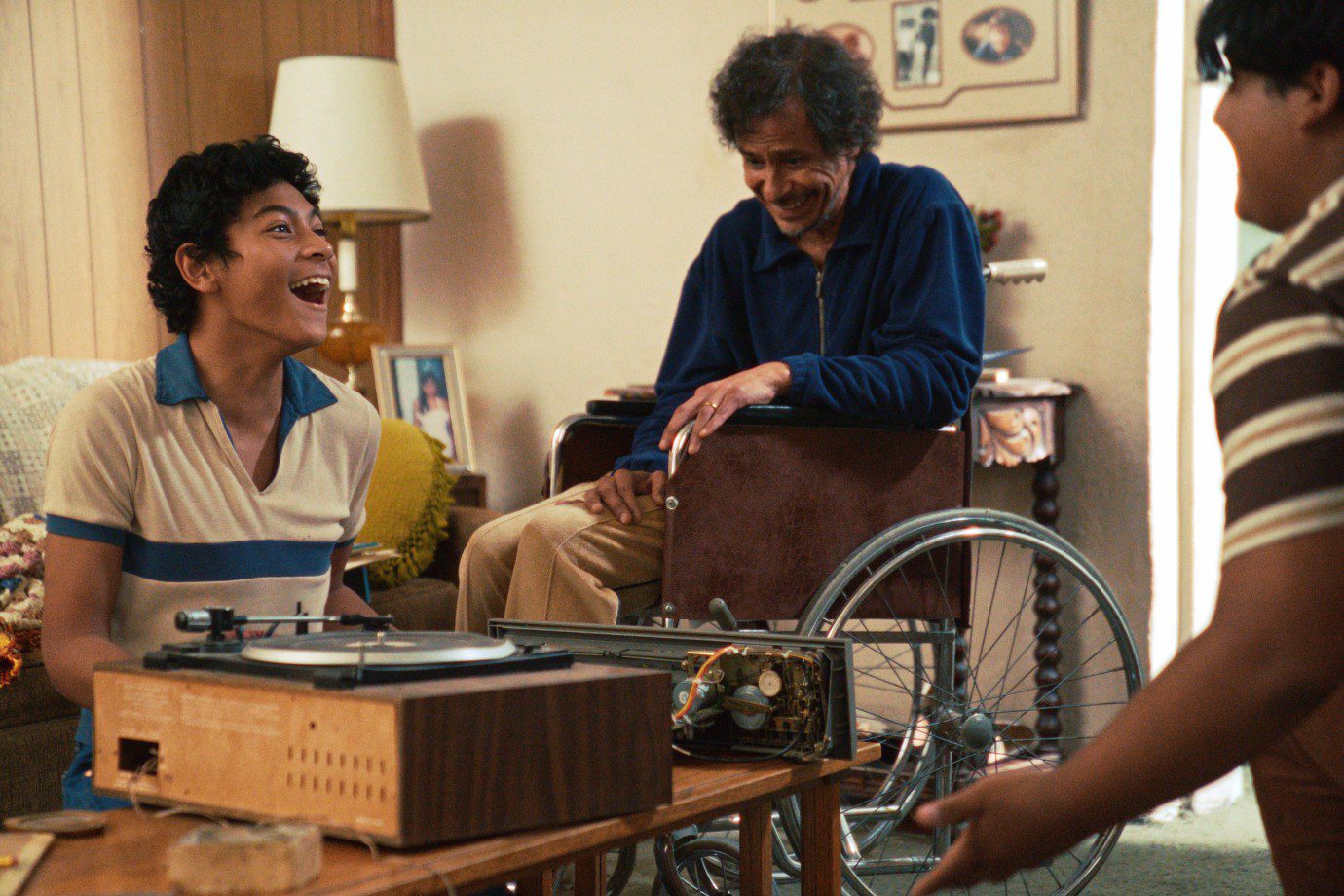
Left-to-right: Aivan Uttapa, Gustavo Sánchez Parra, and Diego Olmedo in a scene from Fernando Eimbcke’s OLMO
Viewing again more recently, I was really drawn much more to paying attention to Nestor’s role in the film. Because he is bedridden and helpless, he has become the family’s center of gravity. He utterly depends on them for everything. His children see him as a bother they’d prefer to ignore. Yet even though his body doesn’t work, he is still a thinking and feeling person. Yet the family never quite recognizes that until it is almost too late. Parra does an exceptional job of conveying his own sense of frustration, yet still wanting to be a part of the family’s life beyond just being cared for.
Caring (or the lack thereof) is really what this film is about. Olmo and Ana only care about their own wants and desires. Cecilia is overwhelmed with the financial burden of providing for the family. That is caring, but it has become very impersonal. Nestor cares deeply, but has little chance to express that care, but then sees his attempts rebuffed, as when he tries to teach Olmo about repairing the stereo. Miguel, although not part of the family, is the most caring. He will serve as a catalyst (risking his own friendship to Olmo) to help bring Olmo and his family back together. By the film’s end, we have hope that Olmo and his family have learned that they all need one another.
Photos courtesy of Greenwich Entertainment.