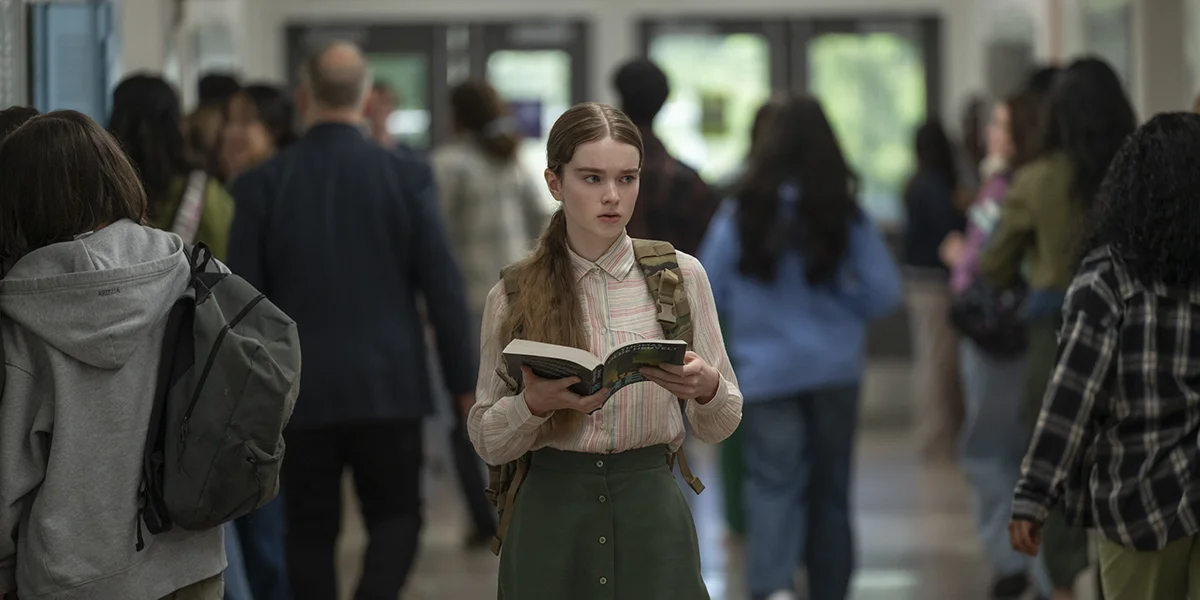
How do you modernize a story as iconic as Carrie? Mike Flanagan’s answer is surprisingly simple: the bullies now have smartphones.
TIFF screened the first two episodes of Flanagan’s new Carrie series, starring Summer H. Howell as Carrie White, and so far I think it’s a great modern retelling of Stephen King’s classic.
The basic story remains familiar, but the world surrounding Carrie has changed dramatically. Humiliation no longer ends when you leave school. Videos can be recorded, posted and spread online, allowing bullying to follow someone everywhere. At the same time, the series spends more time with Carrie’s classmates, particularly Chris Hargensen (Alison Thornton), giving us glimpses into the difficult home lives and insecurities behind some of the people tormenting her. It doesn’t excuse their cruelty, but it does make them feel more human.
Flanagan also makes some interesting structural changes. We see glimpses of the aftermath much earlier, with police interviews teasing the horrific event we’re heading toward before jumping back to show how everyone got there. Carrie also begins discovering her telekinetic abilities early, so the mystery isn’t simply waiting for her inevitable breaking point.
That immediately gives this version its own identity rather than simply recreating a story we’ve already seen several times. Also, there’s a major change in story that happens in the first episode that should change the overarching storys’ future.
After two episodes, I’m impressed. Carrie understands that the tools teenagers use to hurt each other have changed, even if the reasons behind that cruelty haven’t. And, by expanding both the bullies and the supernatural mythology, Flanagan has given me a reason to want to experience Carrie’s story all over again.
Carrie is playing at TIFF ’26. For more information, click here.