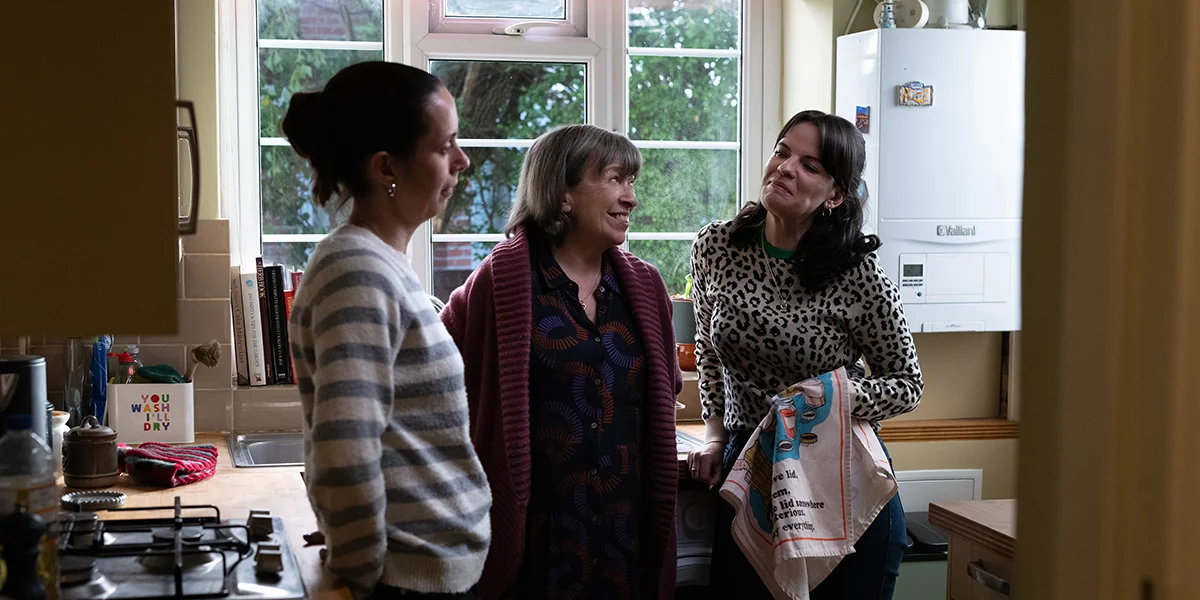
In Tender Loving Care, the first word you feel is empathy. This film features a stunning cast acting out the drama as Amy (Kate O’Flynn) breaks up with her long-term partner and moves back in with her longtime friend Rosie. The pair become more personally involved with Amy’s parents as the two of them reach their twilight years. Amy and Rosie are social workers, so we get many important scenes involving their work and see the effect it has on how they deal with their personal lives.
The film cuts around longer actions to deliver scenes concentrated on dialogue and the characters’ verbal interactions. Director Mike Leigh then supplements this with angles that let us see the particular physical tics of these characters and their approaches to movement. It allows the actors to make important gestures that, over the course of the film, show change. These details create a strong sense of connection with the characters, who you become invested in because they resemble people who could be your friends or acquaintances.
The film’s structure does make each scene feel like its own short film. It leaves you with the feeling that the film could have had more connective thematic tissue; the turn that keeps the last half going is not as engrossing as the simpler predicaments the film sets up beforehand. Its ending reminds us of some of the larger ideas that Leigh is getting at. This film comments on the need for social services to be robust and do more to prevent people from slipping through the cracks.
But, interestingly, the film is not about someone who slips through the cracks. Instead, it gets us invested in characters who have their basic material and mental health needs met. The contrast is a stark reminder of both the need for people to take care of themselves when doing difficult work and the truth that they get to escape from it, while the people dealing with these issues never really get to.
Tender Loving Care is playing at TIFF ’26. For more information, click here.