
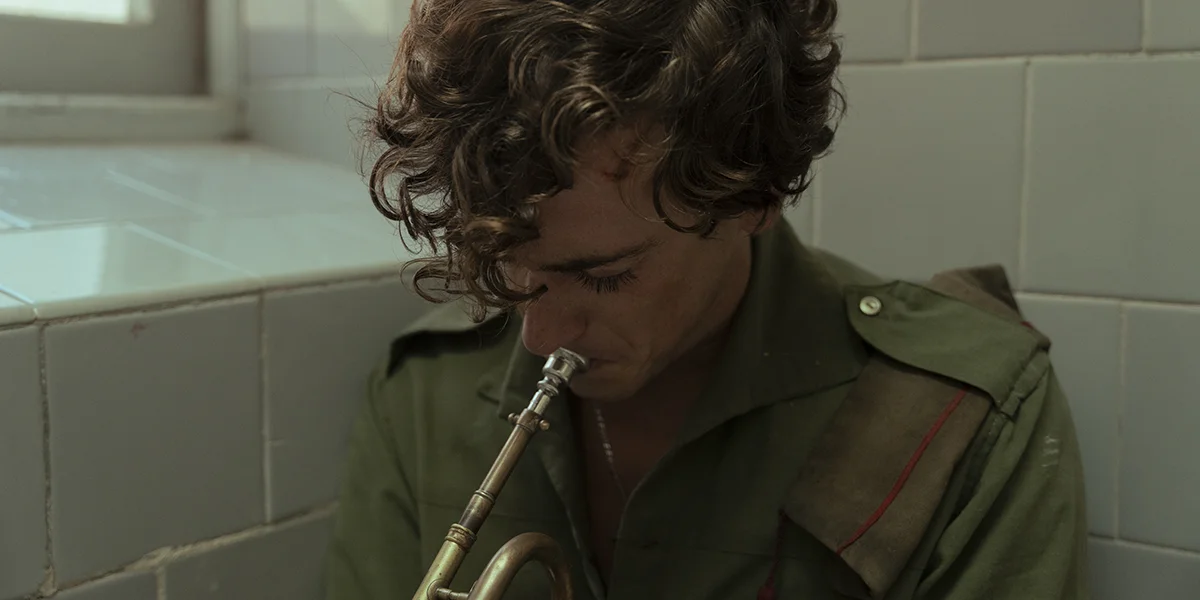
La Bola Negra is epic in scope and intimate in practice.
We are presented with three interconnected stories, anchored by the very calm story of a grandson discovering more about his solitary grandfather. We find out that this grandfather, Sebastian, was involved in the Spanish Civil War, and his experiences during it lead to a complicated life and a conviction that will affect generations.
So many visual flourishes are present throughout the film. There are a great number of varied shot choices, all of which are very well made and realized. It’s a movie with impressive scale for what it is at face value. What might otherwise be a more common European arthouse movie is able to create something grander through the way it slowly weaves three dramatic stories into each other. The Javiers, as writers, plant a mystery around how these three stories are connected and slowly reveal those connections. Personally, how these stories connect became predictable and may have lessened the emotional impact. But there is no denying that this is a dramatically potent film that provokes both academic and emotional interest in its story at many turns.
What first stands out is an epic, grandiose score that, in the war scenes, is some of the best I’ve heard this century, especially within the genre. The music brings an original sense of the epic that harkens back to the great war and historical films of the past.
The ending, along with its narrative and poetic indulgence, left something to be desired for me. I felt the Javiers, as storytellers, had already gotten me to feel and think about the themes of hidden desire that are all over the story. By the time the film uses more poetic voiceover, it spends an excessive amount of time driving home its point in a way that seems to beg the audience to have an emotional revelation. Unfortunately, I did not.
La Bola Negra is playing at TIFF ’26. For more information, click here.