The Odyssey is the epic you expect for $250 million.
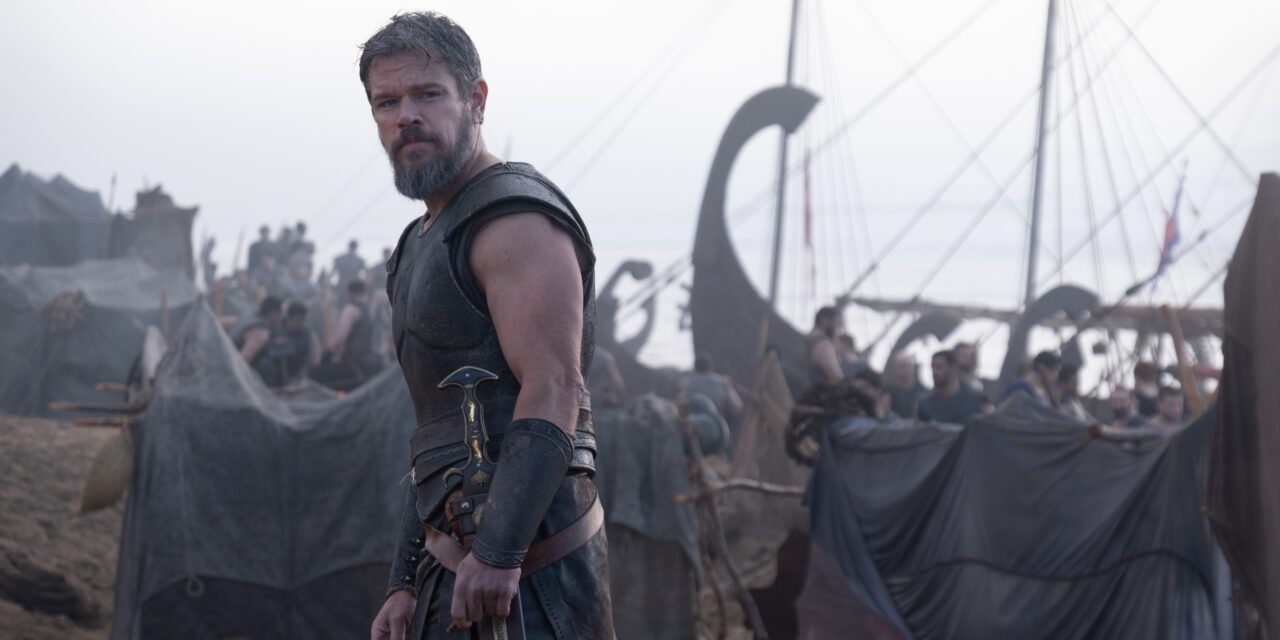
It is all on display and contains the epic moments you may already be familiar with from the lore of Homer’s poem. These scenes are depicted with brutal honesty, scale, and realism. Simultaneously, it delivers the feeling that it was made like a play, like any Greek tragedy, but instead of director Christopher Nolan simply having his actors deliver words, they are placed in situations that demand their full attention: being at sea, working on large-scale sets, and interacting with massive natural environments that are very, very impressive. It communicates the grand scale of civilizations being demolished and a chapter of human history being turned over.
This film is many parables at its core: a man telling stories and reciting stories that are visualized and made epic through the real, brutal images and emotions that would come with such a story of the ancient world. In this way, it feels like a play, simply people delivering stories about themselves or about others. But it is literally about their journey, their struggles, and the meaning behind those experiences. These stories are not simply expedition tales; they are always loaded with purpose, connected to the characters’ aims, beliefs, and principles. They are about delivering what they believe is justice and what is right, even when they make terrible mistakes along the way.
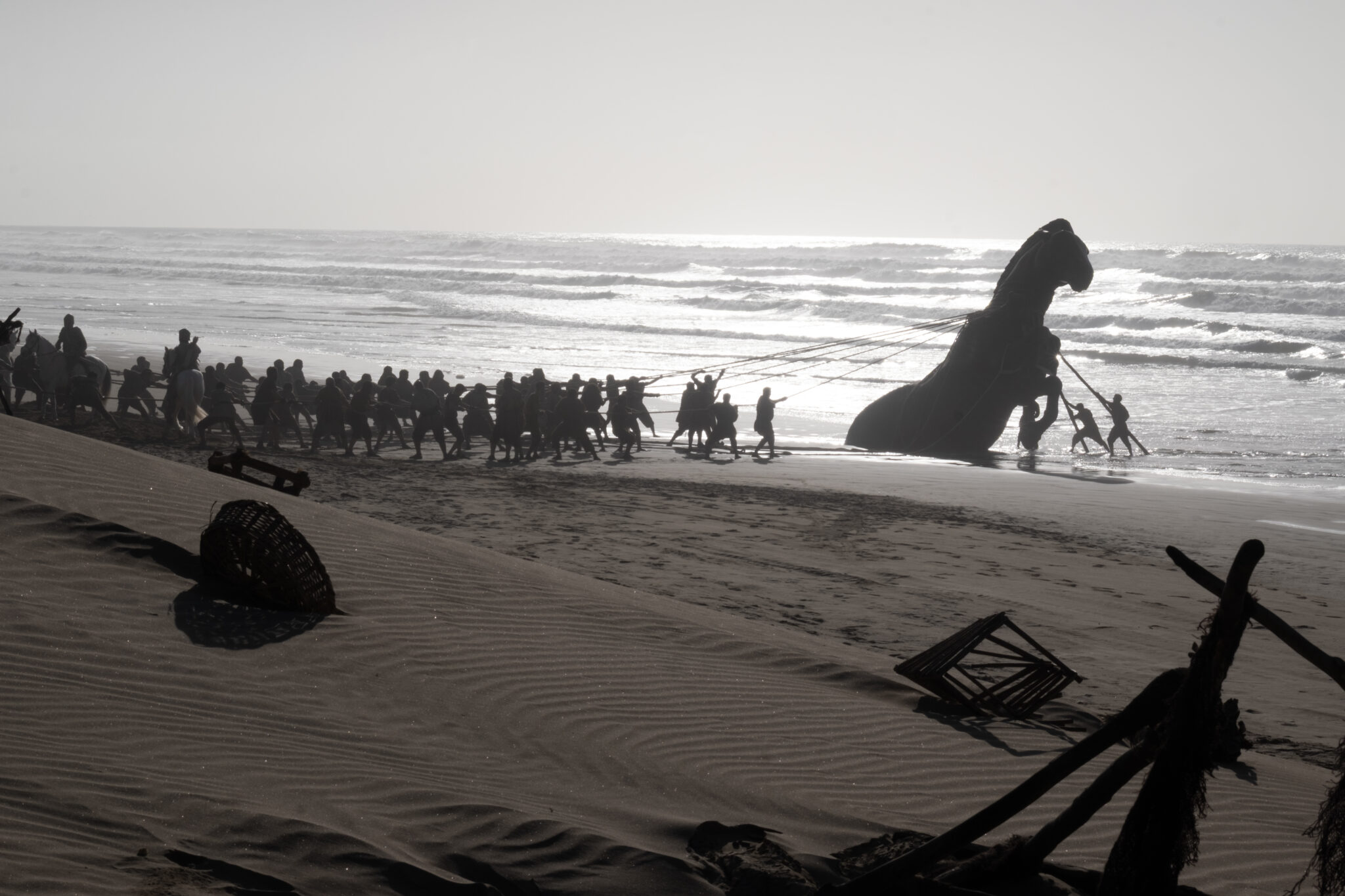
THE ODYSSEY, written, produced, and directed by Christopher Nolan.
It is able to pull off violence through the feeling of brutality, the way bodies are depicted bending, and the sound design that accompanies the horrors witnessed. Truthfully restrained in how far it could go, it still manages to communicate the weight of these moments. You feel the starvation and struggle, the way that after committing a great sin to achieve something greater, there is only greater temptation to sin again for the sake of survival—the very thing you thought you had already fought for the entire time. This works very well with Nolan’s recurring interest in time and its passing, but also with his focus on family and love. That is the core of the film.
The practical effects and visual effects are, of course, quite seamless and remarkably done. The story itself, with its central threads, dramatic characters, turns, and twists, communicates clearly, with Nolan making interesting choices to explore how men—and yes, primarily men—have both built up and destroyed what was sacred and meaningful throughout ancient history. Of course, that idea can also be scaled up to the present day, where in the pursuit of happiness, primal pleasures, and personal ambition, people create new things and attempt to take advantage of others in ways that ultimately lead to destruction and mutual suffering.
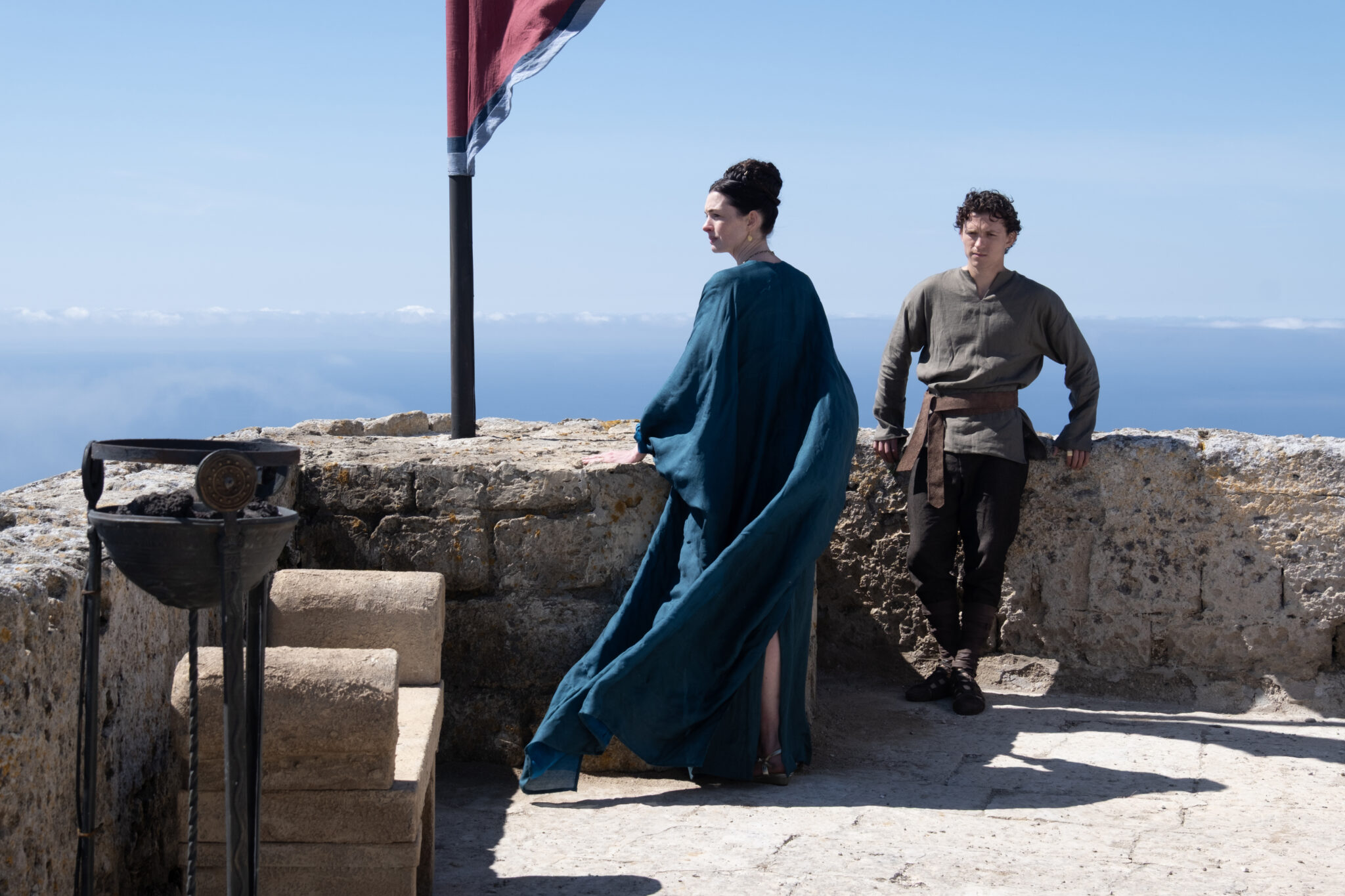
L to R: Anne Hathaway is Penelope and Tom Holland is Telemachus in THE ODYSSEY, written, produced, and directed by Christopher Nolan.
Maybe not in the same way that the gods devastate those in The Odyssey, but the film points toward how human beings can destroy each other by attempting to exploit one another for power. Odysseus himself appears to survive as long as he does because of his intelligence and power, but the story acknowledges how his men—particularly those represented as the most innocent—suffer because of those ambitions. Status and power can disappear with something as simple as the swing of a sword. Even those who hold power can lose everything, and what remains valuable can also be destroyed. It is a meditation on what lasts, what disappears, and the stories we leave behind.
The film also takes the political rankings, family conflicts, and shifting alliances of Game of Thrones and manages to weave a compelling tale of betrayal, strategy, and plotting throughout its three-hour runtime, while still maintaining the foundation of what The Odyssey has always been through its storytelling and characters.
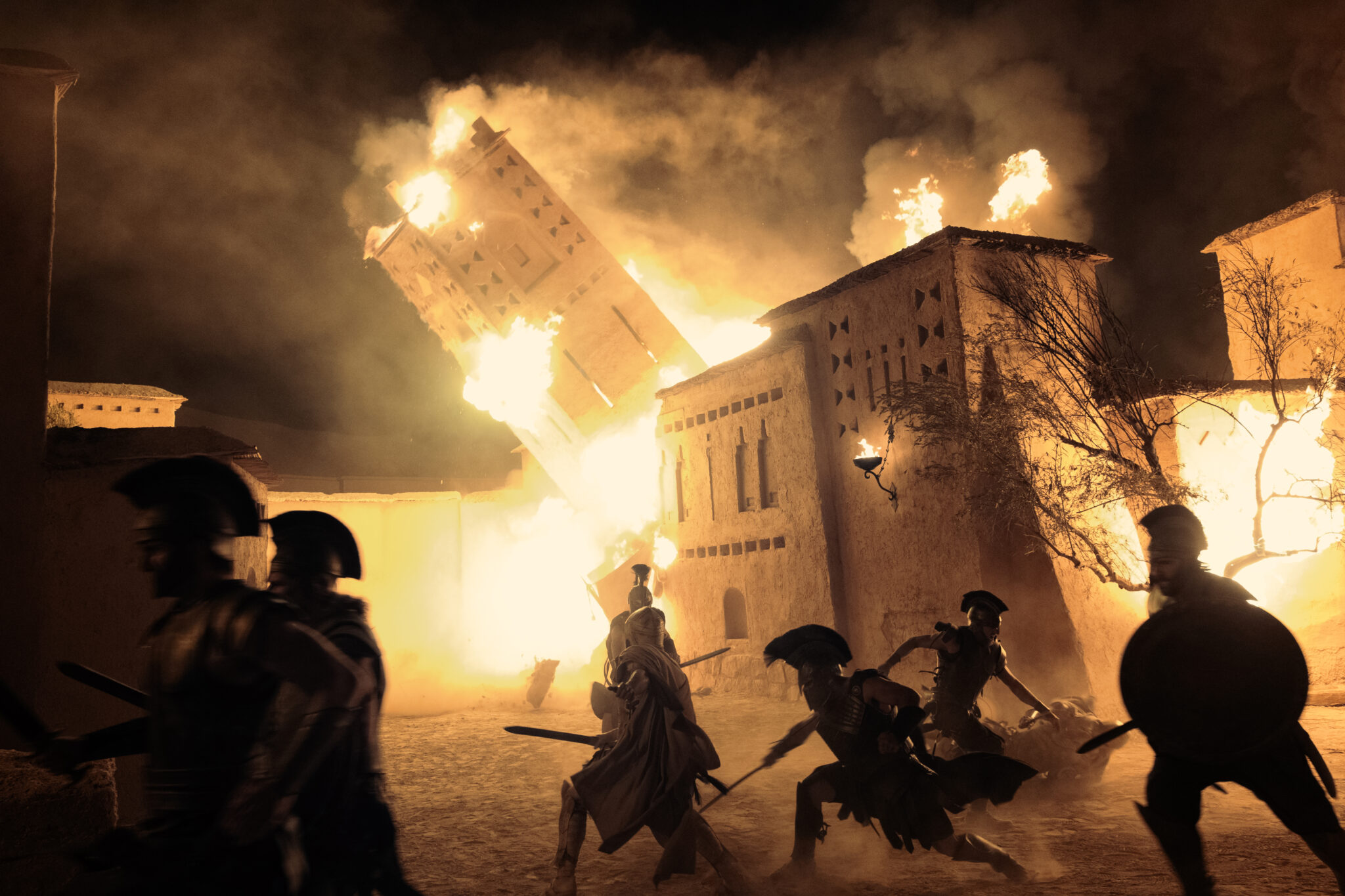
THE ODYSSEY, written, produced, and directed by Christopher Nolan.
A host of memorable performances add to the experience, and there is a reason Nolan called upon so many great actors. They all get opportunities to shine because the film gives them time to develop. You care about them, and their stories matter. Notable performances include Elliot Page, Drama Guzman, and Samantha Morton, all delivering exceptional dramatic and Shakespearean-style scenes where they face the main character directly and bring just as much importance and emotional weight to their moments as Odysseus’ own journey.
The music itself is also strong. While it is not as immediately pronounced as Oppenheimer, it accompanies the film brilliantly. It is used in multiple key moments to great effect, but it also works more as an underlying presence, allowing the film’s most crucial scenes to carry their own gravitas. It creates a sense of epic scale while also bringing a modern feeling that makes it innovative and interesting rather than simply a remix of the sounds audiences might associate with this historical period.
The Odyssey is in theatres on July 17th, 2026.