
With Spider-Noir, showrunner Oren Uziel knew that he had something special.
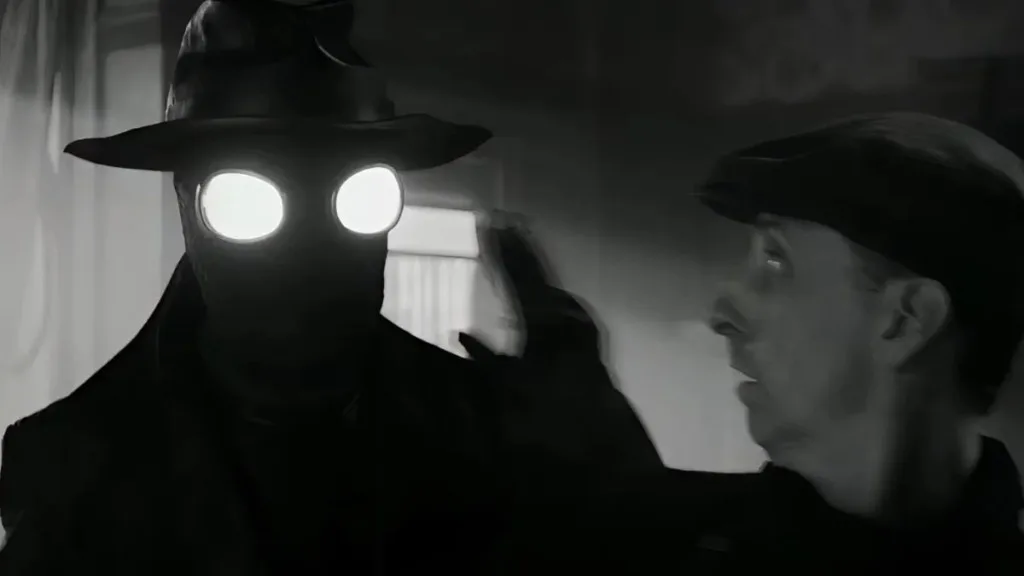
Based on the Marvel comic, Spider-Noir tells the story of Ben Reilly (Nicolas Cage), a broken-down private investigator in 1930s New York. Struggling to make it through the day, Reilly finds himself in order his head when he’s thrust into a series of mysterious occurrences in the dark corners of the city. Now, caught in the crosshairs of the local crime boss (Brendan Gleeson), Reilly is forced to revisit a piece as his life that he thought was long gone: his alter ego as the city’s only superhero, The Spider.
Developed by Uziel and Steve Lightfoot, Spider-Noir is an unbelievably inventive reimagining of our friendly neighbourhood hero. As a life-long fan of the character, Uziel knew that the opportunity to bring this vision of Spider-Man to life was too good to pass up, especially considering its submersion into the world of film noir.
“I love Spider-Man. I think he’s the most relatable of all the superheroes. I think there’s a reason we all kind of love him and I’ve worked with Phil [Lord] and Chris [Miller], who made the into the Spider Verse movies, and I worked with Amy Pascal, who makes the Spider-Man movies right now a lot. So, I’ve been around and seen how they make those movies and talked to them about working with them a million times on finding a Spider-Man project. And just this one was the right one because of my love of film noir. So, it just felt like an opportunity to tell my version of a Spider-Man story, knowing that I had them to help me was, it was perfect.”
Nevertheless, bringing film noir to life is far from easy. In order to recreate the glitz and glamour of 1930s New York City required a whole team effort in order for it to feel authentic.
“It takes an enormous amount of work [to create that world],” Uziel recalls. “The department heads were all very, very excited about getting a chance to play with that level of glamor. I mean, New York in the thirties was both. It was the Depression, and there were a lot of the ‘have-nots’. But when we did enter those areas where the people had money, the deco buildings of downtown Los Angeles, the sets of Warren Allen Young, our production designer, when we built that club, we wanted it to be the most opulent setting you could possibly imagine. Tracy Gigi Field, our costume designer, just went to town and just had the best time because we were doing both color and black and white. So, she was making sure that everything was incredibly textured for the black and white of it and powerfully colourful for the colour versions.”
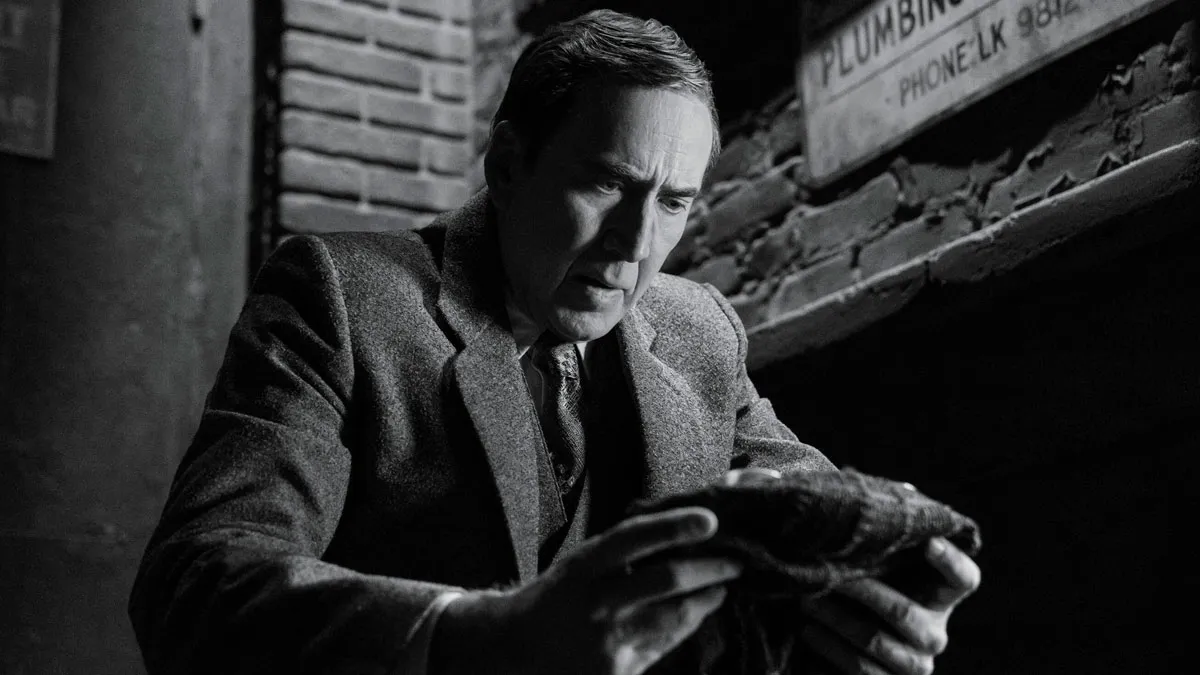
“Visual effects was an enormous part of this. When you’re shooting Los Angeles in 2026 for New York in 1933, there’s a component where you’re just putting something either in the back of a window if you’re inside or in the distance, if you’re a cityscape. There was a lot of visual effects work done, just to give it the romantic feeling of being in New York in the thirties. But when you put it all together, it really just hits you in a wonderful way “
Even so, every Spider-franchise needs its Spider. While Nicolas Cage may seem like an odd choice to play the normally high-school aged character, Uziel knew instantly that the Oscar winner was the perfect choice to take on the mantle of his mask.
“I did not consider anyone else for the part,” he beams. “I knew that he was familiar with the role and I knew that he was intrigued by it. And, and… once we agreed that we’re gonna make the character older because, in the comic books, he’s younger, then he was our first call and only call. I sat down with him over lunch and we just started talking and… he just really vibed with the references I was making to a lot of old classic film noirs. We both love superheroes and comic books, but what we found out is we both love film noir just as much. And I think it was off to the races from there.”
Out of these conversations, the dynamic duo of Uziel and Cage began to find the true tone of the series. Whereas film noir remains one of Hollywood’s darkest genres, the two men found the playfulness within it together that helped bring their version of the Spider to life.
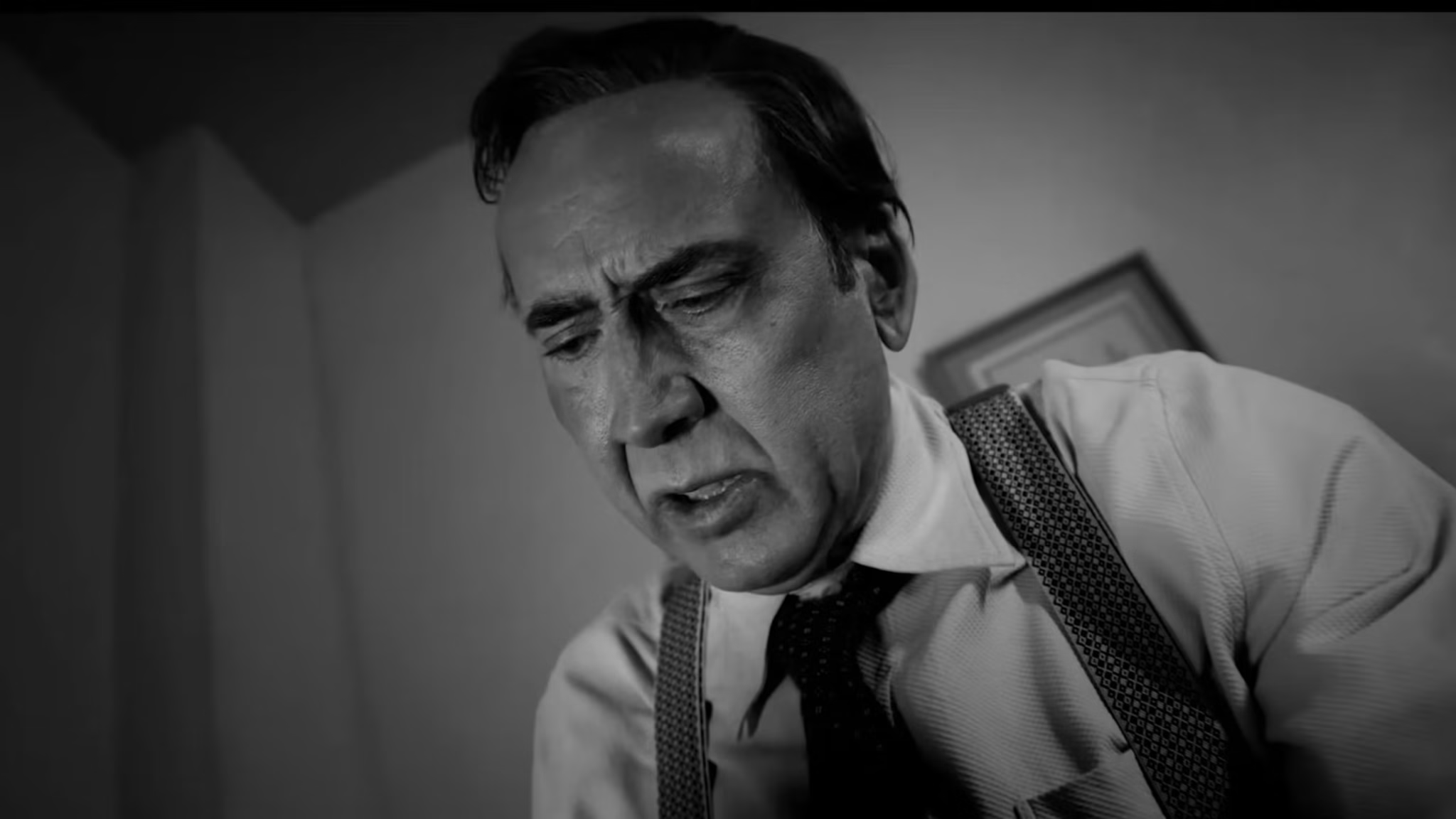
“I think we were always going to make a show that wasn’t going to take itself too seriously,” Uziel points out. “I love film noir and it can be very dark, but there’s also a lot of winking and nodding and twinkle in the eye of a lot of these private detectives. With things like The Big Sleep, Bogart knows how to have a good time in there. He’s goofing around a little bit, playing with his hat. Or in movies like The Thin Man, the tone is light or there’s a balance there. Nic came on board and was never gonna do something ordinary or straight down the middle. So, we worked together every single day on set trying to find the right balance. We’re making a Bogart movie where Bogart just happens to be Spider-Man.”
And that tension between styles is essential to the success of Spider-Noir and, more specifically the story arc of Ben Reilly. Caught between the hero the people need and the brokenness of his own life, Cage’s Reilly doesn’t have the optimism of Tom Holland’s wall-crawler. Instead, he’s grappling with his own middle-aged, existential crises that keeps him torn between bravery and cowardice.
“I just think it’s so relatable,” he states. “I think especially as you’re telling a story about a guy who’s not a high school kid anymore. He’s a little bit older. He’s had some successes [and] he’s had a bunch of failures. I think we all get to a certain place where we start asking ourselves who we are and what we’re made of and what we really want out of this life. So, it just felt perfect for this character in this genre, right? Like, he’s Rick at Casablanca. He’s got the bar, he’s fine, but he’s not really happy and he’s not gonna stick his neck out for somebody. He’s just waiting for somebody to walk into the bar. So, it just felt like this [was] the exact right story to tell when you’re making a collision of these two genres, comic book and noir.”

But writing doesn’t simply drop out of the sky either. As he was developing this world, the director also confesses that much of Reilly’s journey stems from his own personal struggles trying to make it in Hollywood as well.
According to Uziel, “I think anytime you’re making a movie or a TV show as a writer, you’re infusing a lot of your lived experience into the project but this one in particular was pretty straightforward when I first started on it. And I said to Phil and Chris and Amy [that] I’m really interested in this idea in this world, but can we age this character up a little bit? I’m not a high school kid anymore and the issues the high school kids face is different from the issues that I find myself facing. And once we aged him up… there’s a lot of overlap between what this private investigator Ben Reilly is going through and has lived through and my experience. I always, I sort of felt like there were parallels between my journey into this business of feeling young, feeling like a superhero, feeling I could do anything, and then running into some brick walls every once in a while, and just picking myself back up and marching forward again. Because, at the end of the day, it’s what I love doing.”
Having said this, Uziel also believes that the raw honesty he was able to embed within this series is also part of its joy. No longer does superhero content have to fit into some brightly coloured mold. Instead, he argues that fans are more willing to accept their heroes with darker edges in a darker world.
“I think we’re just telling different stories. I think it’s fair to be the earlier ones that are hopeful and optimistic. I think that’s a big part of humanity and who we are. And it’s something that people love to watch and love to see. It feels good. But for me, what’s strange about noir and this kind of doomed, fatalistic storytelling is that, it also makes me feel good. There’s a certain freedom with noir where you know, it’s not going to go exactly the way our hero wants it to go, but they’re still going to be there to fight the good fight at the end of the day. It just doesn’t necessarily work out. It’s sort of freeing. It takes a little burden off of everything has to work perfectly all the time.”
Spider-Noir is available on Prime Video now.