
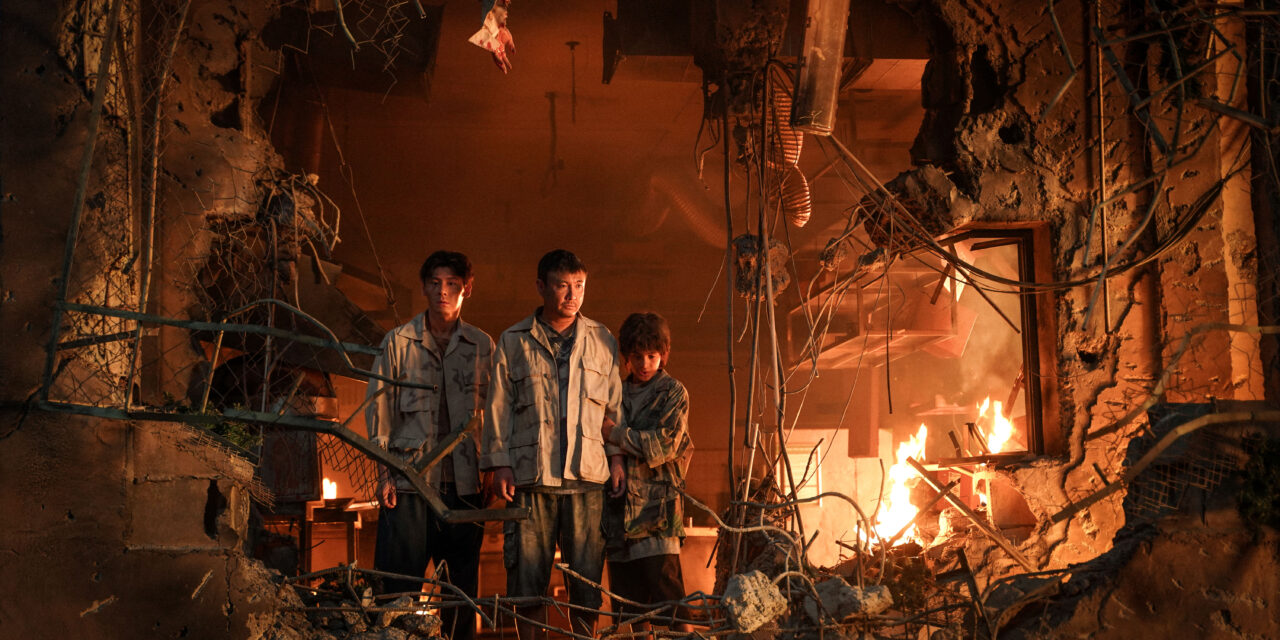
The title Once Upon a Time in the Middle East may sound like a fairy tale, but it is instead a grim reminder of how war is often death of both innocence and innocents. Directed by Wen Muyue, the film is a story of food and family, but also of loss and devastation. Once Upon a Time in the Middle East is China’s official submission for Best International Feature.
Xu Fu is a middle-aged chef who lost his restaurant and needs to repay debts. He takes a job as a chef in a Chinese restaurant in an unnamed country in the Middle East (all signs suggest Iraq). Soon he and the restaurant’s manager Ma Junsheng have a thriving business. But this is in the aftermath of 9/11, and soon the Americans are attacking. The restaurant becomes a haven for many war orphans who work as servers and are cared for by Xu and Ma. Xu finds a bright, but troubled orphan, Seif, who he takes in as an apprentice.
The chaos and destruction of war go on all around them. Xu, Ma, Seif and the other orphans end up as prisoners of the Americans and later the Arabs. All the while Xu uses his cooking skills to create a community of those around him and finds ways of trying to save the children from the darkness of the war and violence.
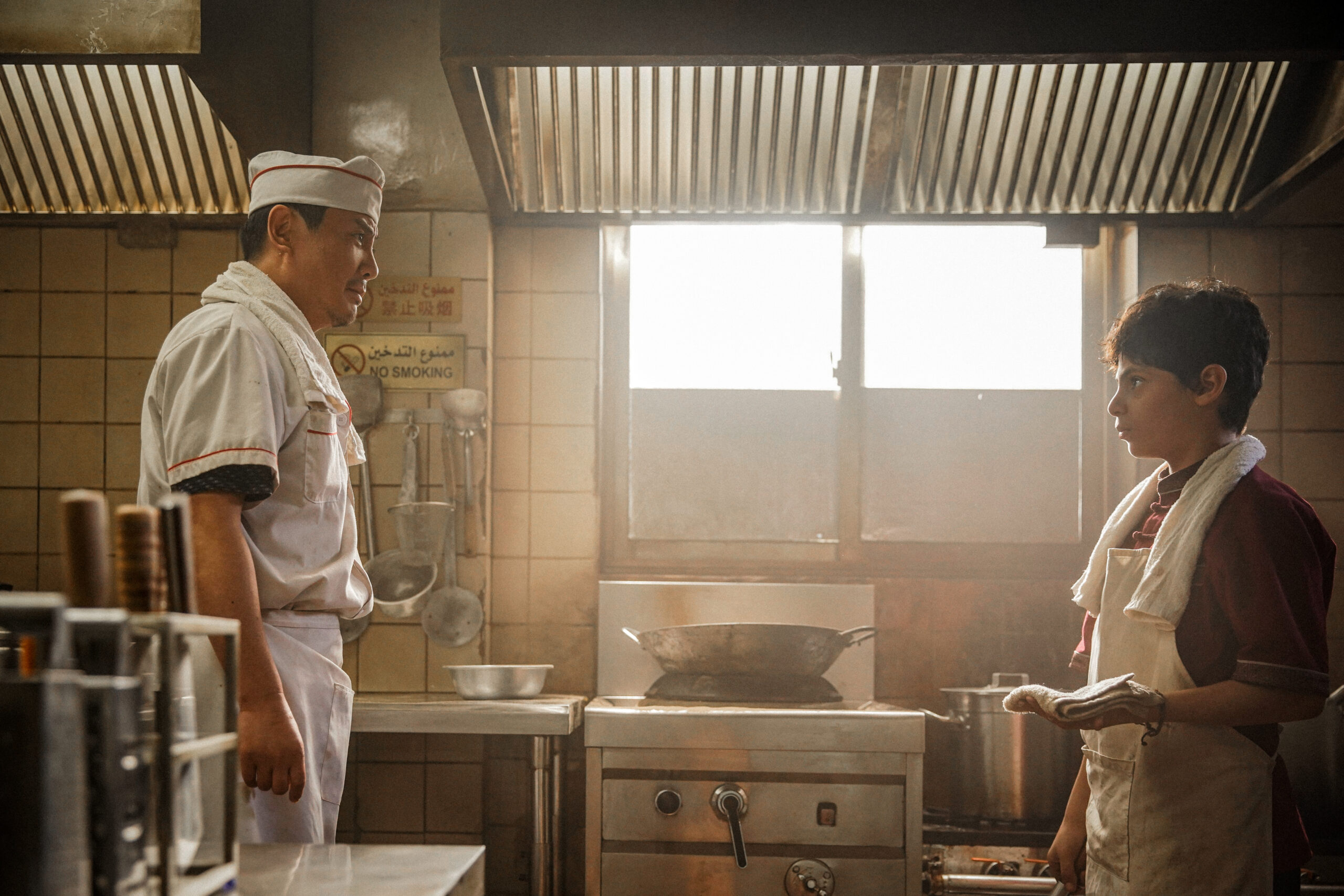
At times the film uses a broad brush. It relies on stereotypes for both Americans (brash, corrupt, demanding) and Arabs (ideological zealots willing to do terrible things in God’s name). The Americans gleefully torture prisoners. The Arabs forcibly recruit children to act as terrorists seeing them as mere tools. But the film is also very much like most of the dishes Xu creates along the way: all the ingredients are thrown into the hot pot and cook together to create a satisfying experience.
It is not unusual for movies about cooking to use food as a metaphor for love. We first see it when Xu Fu is getting ready to leave his Chinese family. He creates an enormous gourmet feast for himself, his mother, and his daughter. Even when imprisoned, the food he makes is essentially an act of love and care for the children he is seeking to save. There are a few times when he tells those close to him to “eat well”—which seems to be his shorthand for “I love you.”
Fire also plays a big role in the film. It is the symbol for destruction. Bombs rain fire on the city. Restaurants and house (and family) are burned to nothing. But fire is also what makes cooking possible. The power that fire represents can be used for evil or for good. It can destroy or it can nourish. It depends on if it is being used as a force of hatred or of love.
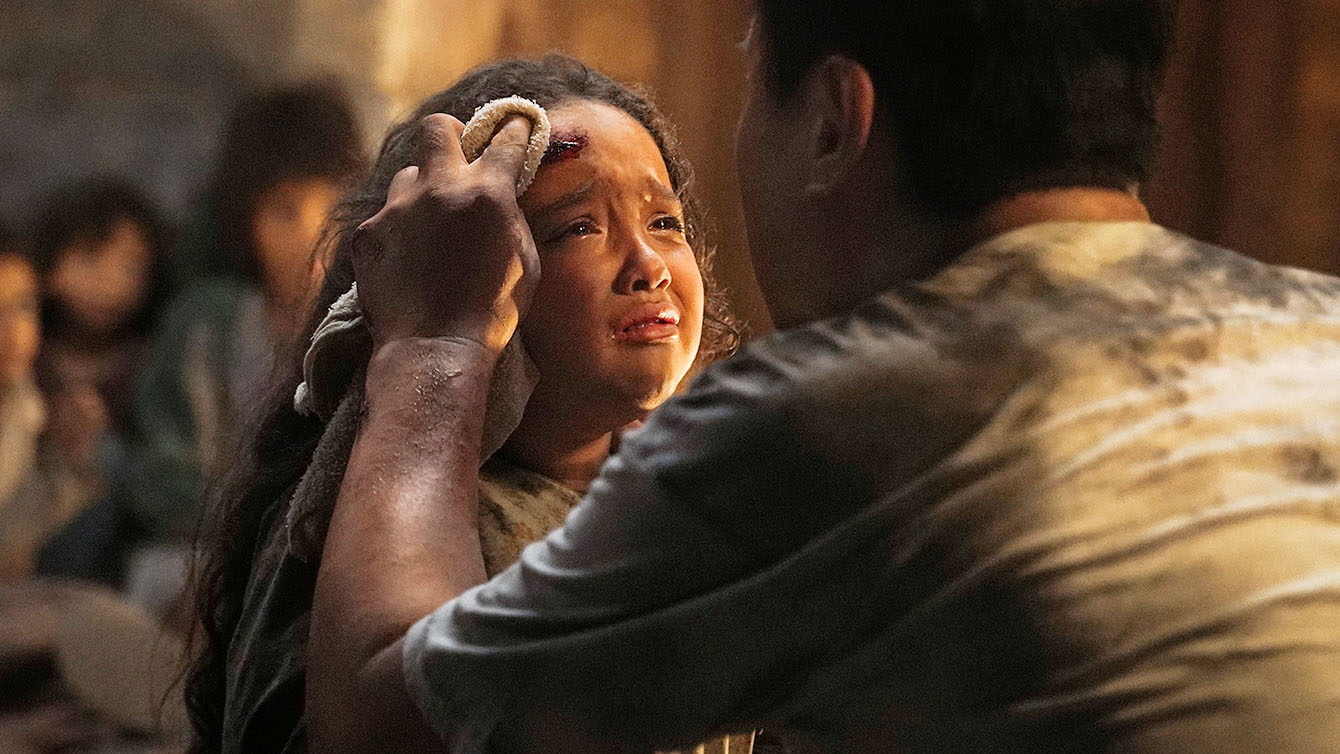
We would hope that something that begins “Once upon a time” would end with “happily ever after”. This film does give us the chance to believe that will be fulfilled. Although it is only after a difficult journey through war and hatred that we find it.
Once Upon a Time in the Middle East is in select theaters.
Photos courtesy of Well Go USA Entertainment