Nia DaCosta is ready to step into a world of monsters.
But, in 28 Years Later: The Bone Temple, the line between man and monster is murkier than one might expect.
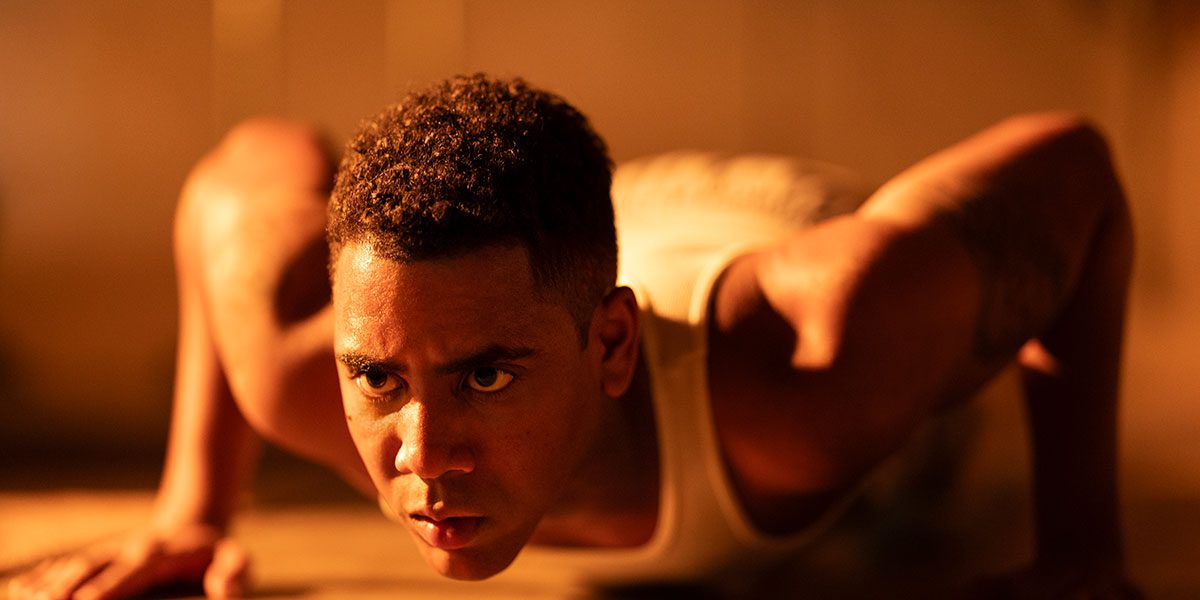
28 Years Later: The Bone Temple picks up immediately after the events of last year’s revival of the franchise. Having been captured by the Jimmys, Spike (Alfie Williams) is forced into their ranks at the hands of Jimmy Crystal (Jack O’Connell), a villainous leader committed to reshaping the world in the face of evil. Meanwhile, Dr. Kelson (Ralph Fiennes) finds himself involved in a relationship that has the same potential for change, albeit with entirely different results. As the two stories head towards a collision course, it becomes increasingly apparent that the infected are potentially less threatening to world than the inhumanity of the survivors themselves.
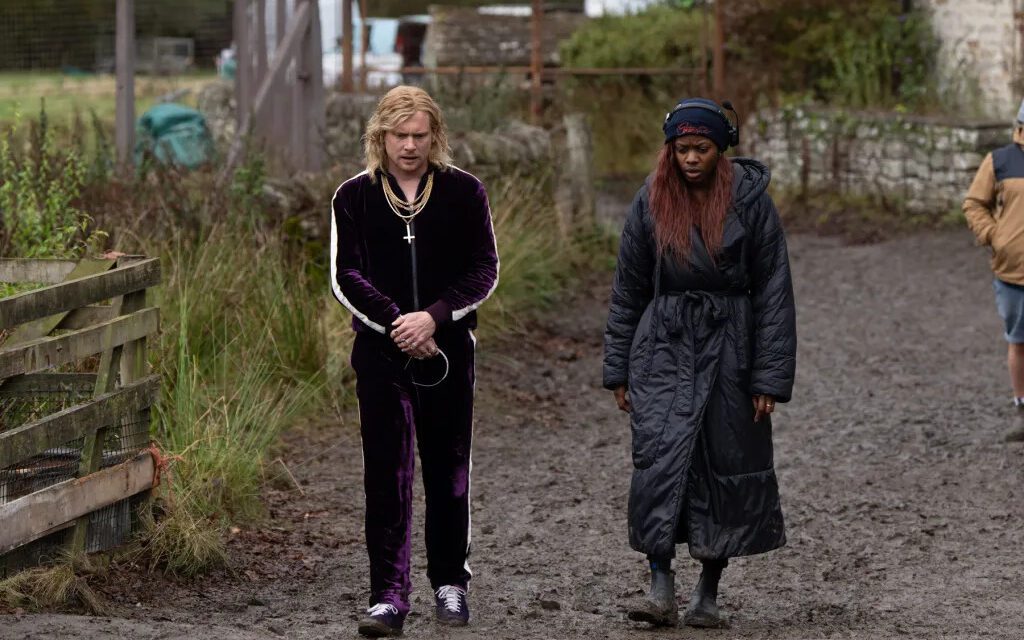
Taking over the director’s chair from Danny Boyle, DaCosta had the unique challenge of creating a film that both seamlessly taps into the world that they created while still making it her own. However, working closely with the production team, DaCosta believes that she had the support that she needed to brings this story to life.
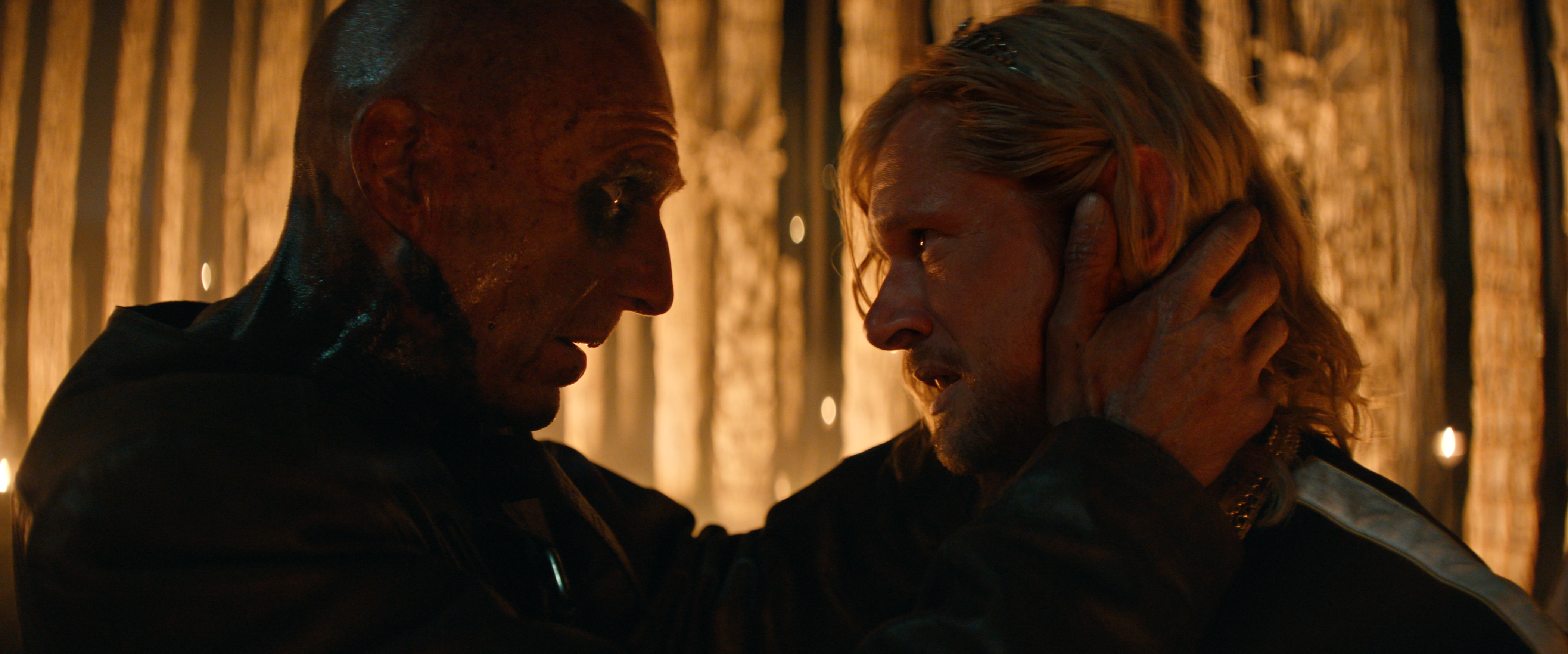
“When I came into it, there were the first two scripts were written,” she begins. “And so, because I think Danny introduces some characters in his film that get full arcs, by the time we get to the end of my film, I did feel like I got to come to some sort of conclusion. Then, at the same time, [for] the things that had to be left open, it was really just like talking with the producers Danny and Alex and Peter and Andrew, and [asking] where do we want to make sure we end this character? What do we want them to look like? Do we know where the next one’s going to start? So, having answers or at least sufficient enough guesses for some of those questions was the biggest thing that I thought about in terms of being the middle film. But everything else, it was just really nice to do the full Kelson story, the full Jimmys, all that stuff.“
And DaCosta knows that that collaborative process helped elevate the film. One moment where this teamwork approach particularly came to good use is in the film’s killer musical number, an absolutely bonkers sequence that allowed everyone involved to make use of their own unique abilities.
“That was one of my favorite moments of every department throwing down,” DaCosta beams. “We had our special effects department having to do what they did to that set. Our choreographer movement director, Shirley Maxwell coming in, my stunt coordinator, Julian [and] my production designer, costume designers were so integral in helping me conceive that whole part of the film.”
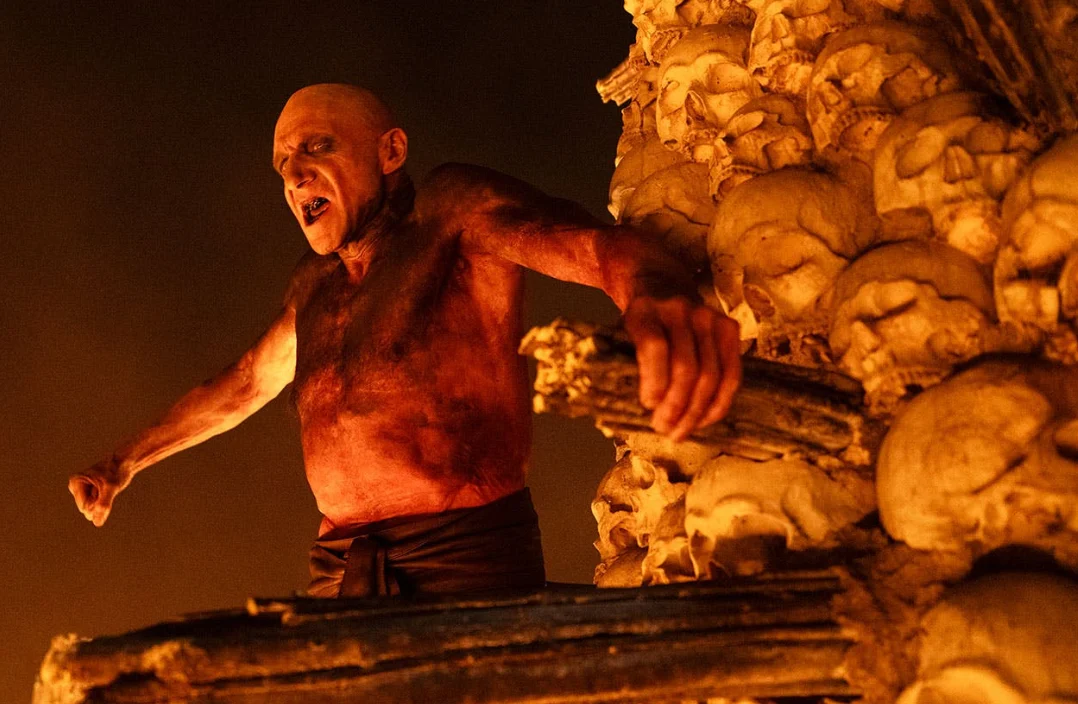
“Then, Ralph was just so game to do whatever it took and to rehearse and to perform that in the cold without a shirt on,” she continues. “He was just so down and so giving. It was so much fun. And, you know, when you’re shooting, you’re doing that over and over and over again, over several nights. And every time we watched it, we were so into it. So, it was everything I love about filmmaking, which is having the most amazing collaborators, bringing something really weird and different, and hopefully new-feeling to life.“
But the reason that The Bone Temple remains so powerful extends far beyond the visuals. Set within a world of infected horror, the film steps into the darkest corners of humanity, exploring the nature of evil in a world that’s spiraling out of control. Asked what she believes hope looks like amongst a people that are looking for answers, DaCosta believes that the answer may lie within our belief in others.
According to her, “I think it sort of comes down to what, like Kelson says. I think hope is believing in each other. Like, hope is believing that change is possible… I think the movie really is about saying, ‘Look to your left and look to your right. Like, that is what life’s about.’… [Everyone’s] looking for meaning… [In this setting,] the foundations felt unshakeable, and then they shook, and then they fell. What do you hold onto? I think the idea is [that] you hold onto each other.”
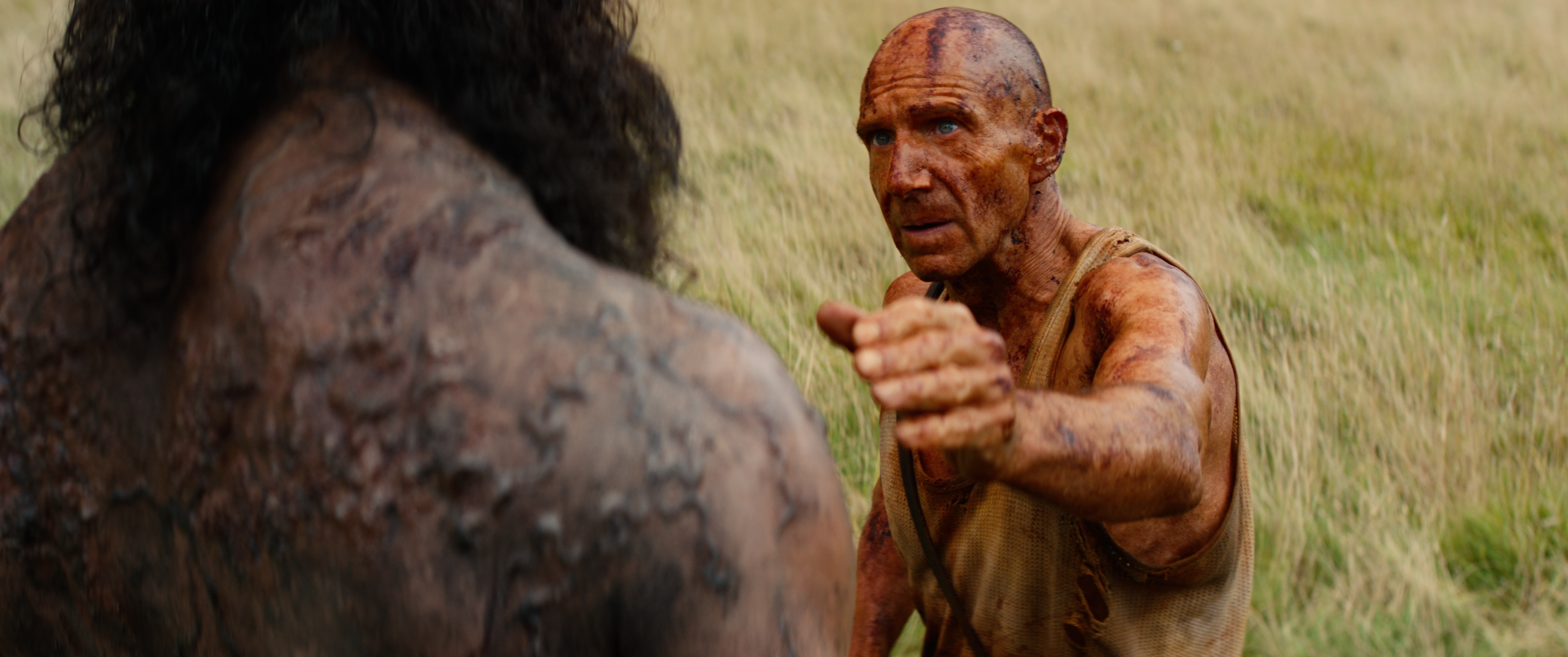
Without giving spoilers, this dichotomy of good versus evil becomes personified in the film’s juxtaposition of the terrifying Jimmys and Samson, the infected beast who seems capable of more. Through the simple metaphor of their names, DaCosta effectively examines the nature of identity and how dignity can be restored (or taken away).
“On one hand, we have a cult or a cult of personality where they are stripped of their identities,” she points out. “That’s the whole point. And then, on the other hand, someone’s being given an identity and, in being given an identity, a name, searching for his actual identity. And I think inside of the story about like how searching for meaning could sometimes make us lose ourselves. Because, when you give into a cult, you’re searching for meaning. You want something to hold onto, but you lose yourself inside of it. And not just yourself, but also your humanity, your ethics, your sense of right and wrong.”
“Then, you have a character like Samson who comes from inhumane, monstrous, whatever and, as he gets more of his identity, you start to see kind of a… could we say goodness… in him? As a person, that’s something I think about a lot. I’m really compelled by that. And I think it’s why I reacted so strongly to the script and what Alex wanted to do. I think the way you phrase it is beautiful. It’s really about when you can find meaning in each other, you actually do find yourself.”
For full audio of our interview with Nia DaCosta, click here.
28 Years Later: The Bone Temple is available in theatres on Friday, January 16th, 2026.