
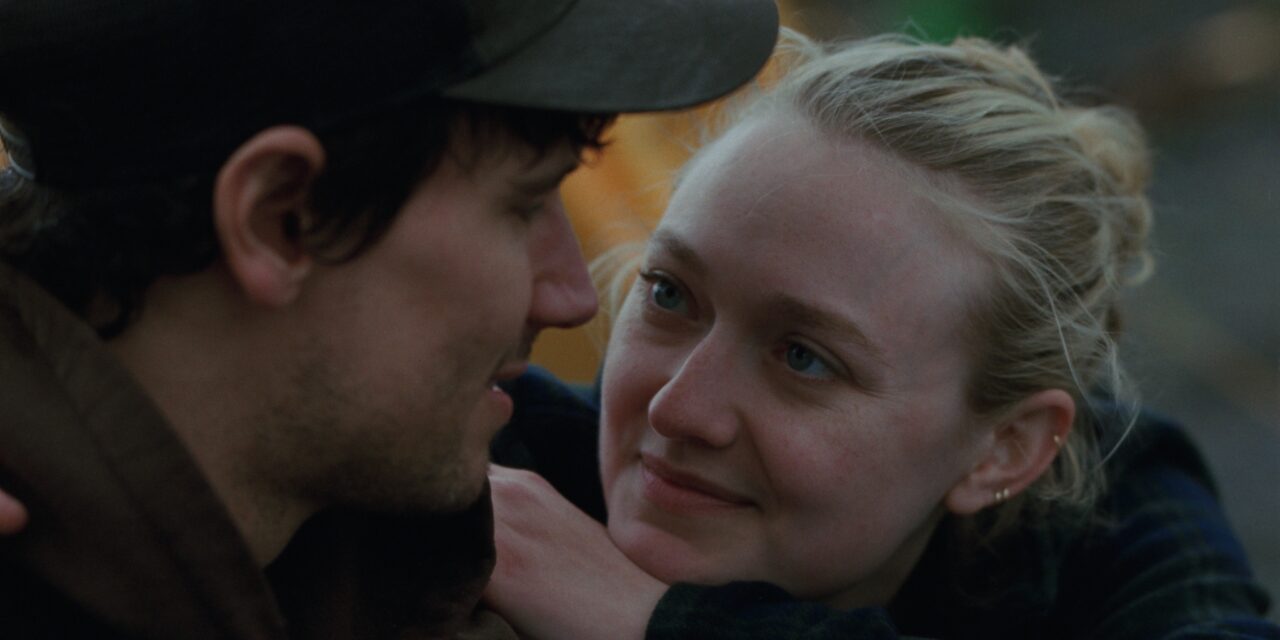
Written and directed by Joe Swanberg, The Sun Never Sets follows Wendy (Dakota Fanning), a 31-year-old construction worker living in Anchorage, Alaska, who finds herself at a crossroads. She loves Jack (Jake Johnson), an older divorced father who has built a comfortable life for himself, but the two are on different timelines when it comes to marriage, children and the future. When Jack suggests they take a six-month break so Wendy can figure out what she truly wants, the plan quickly becomes more complicated when her ex-boyfriend Chuck (Cory Michael Smith) unexpectedly returns to her life.
What begins as a relationship pause turns into a messy love triangle that forces all three to confront a question that sounds simple but rarely is: What do we actually want from love?
From the beginning, Swanberg makes it clear that Wendy’s uncertainty existed long before Chuck walked back into her life. She is drawn to a boat because she wants to reconnect with the adventures she shared with her late father. Then, when her friend announces she is pregnant, Wendy suddenly feels the weight of how much her life is changing around her.
She isn’t necessarily unhappy with Jack.
She’s just beginning to wonder whether she is ready to let go of the person she used to be.
And that is where The Sun Never Sets finds its emotion.
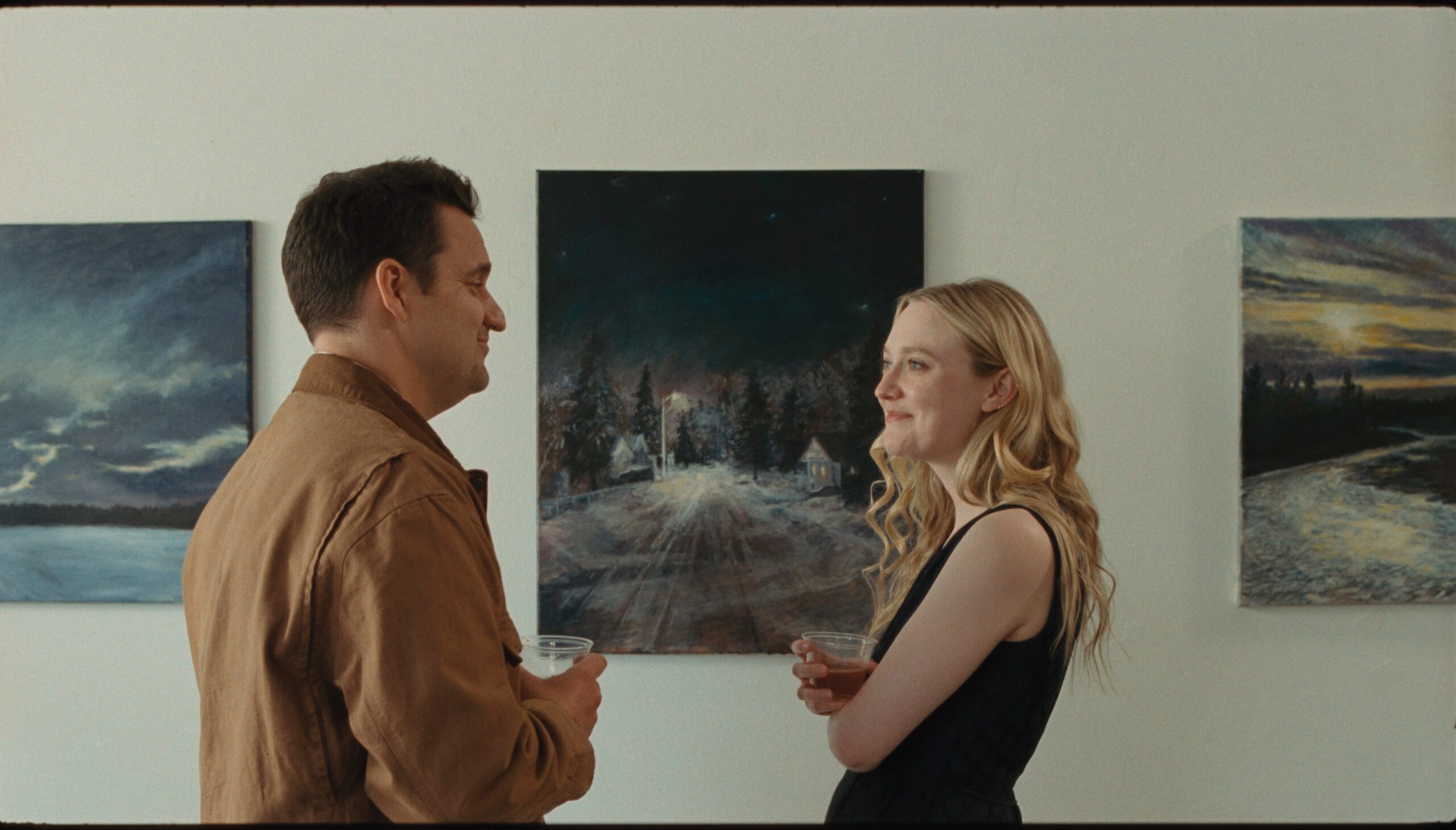
Jack believes he is doing the right thing by giving Wendy the freedom to explore. He doesn’t want her to wake up years later and resent him for the life she chose. As he tells her, “I don’t want you to wake up in eight years and hate me.”
It is a line that captures the complicated love at the centre of the film. Jack isn’t trying to push Wendy away because he doesn’t care. He is trying to protect her from making a decision she might regret. But in giving her the freedom to leave, he also has to face the possibility that she actually might.
And Chuck makes that possibility very real.
Where Jack represents stability, Chuck brings back spontaneity and adventure. But Swanberg wisely avoids turning the two men into simple opposites, where one is the “right” choice and the other is the obvious mistake. Chuck has his own vulnerabilities and baggage, while Jack’s stability comes with expectations about what Wendy’s future should look like.
Wendy isn’t simply choosing between two men.
She is choosing between two possible versions of herself.
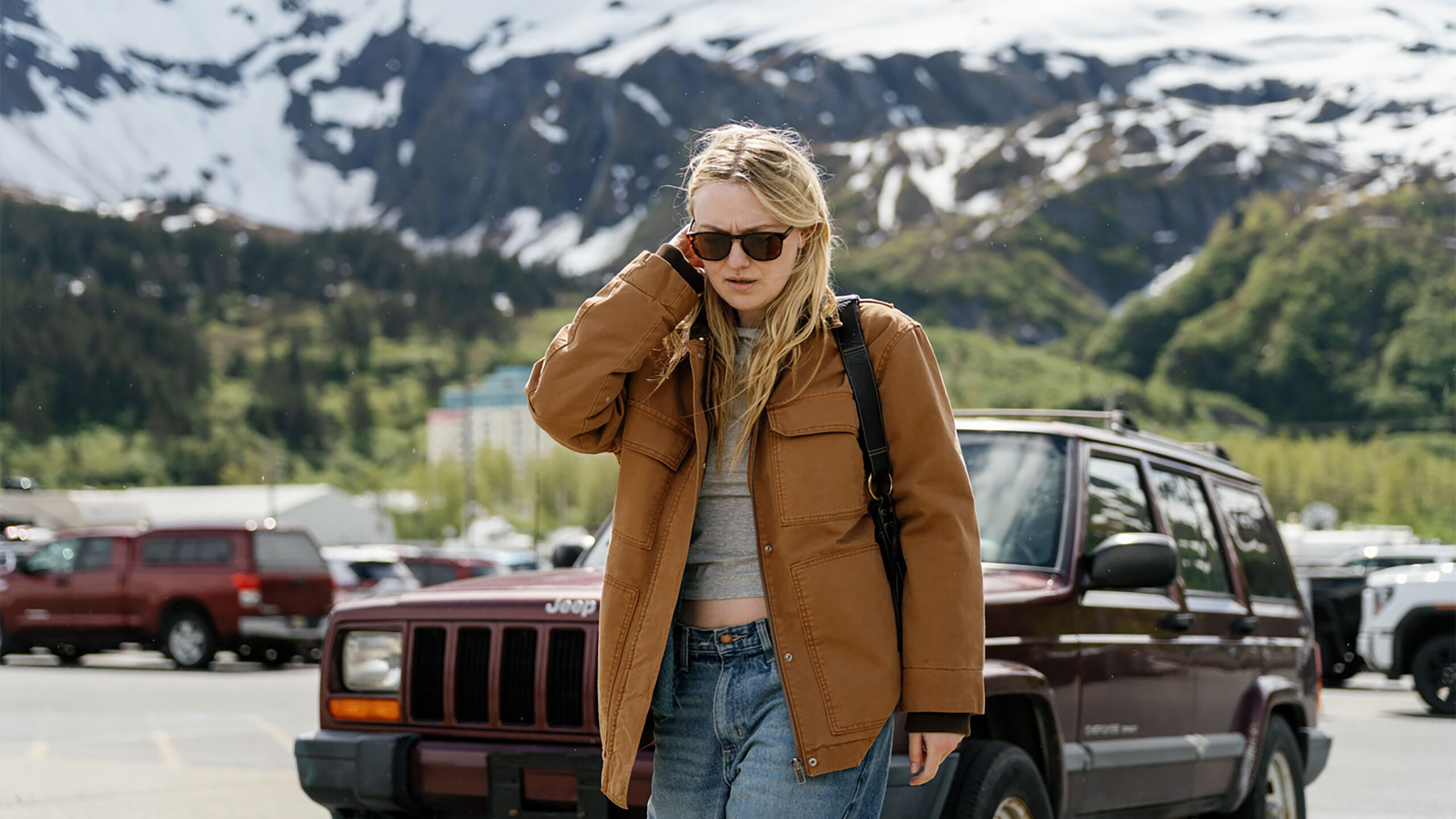
The film’s Alaskan setting makes that uncertainty even more striking. Shot on 35mm, the expansive landscape of Anchorage, its mountains, water and seemingly endless summer light, gives the story a beautiful sense of openness. But beneath all that space, Wendy is emotionally stuck between what she knows and what she might become.
Even the title begins to feel symbolic.
The Sun Never Sets.
Nothing is completely closed off. Every possibility remains visible. Every door seems to stay open.
And sometimes, having every possibility in front of you can be more frightening than having none.
Swanberg’s naturalistic filmmaking style allows the characters to sit inside that discomfort. Conversations can feel messy, awkward and unresolved, much like real relationships. Wendy, Jack and Chuck don’t always know what they want, and sometimes they make choices before they have figured out the consequences.
That can be frustrating, but it is also what makes the film feel human.
Because real people rarely enter relationships with everything figured out. Sometimes we love someone while still wondering who we are. Sometimes we mistake comfort for certainty. Sometimes we think we know what our future should look like until life gives us another possibility.
At the centre of all of this is Dakota Fanning, whose understated performance gives Wendy room to exist inside that uncertainty. She doesn’t need to announce every emotion. There is something quietly compelling about watching her move between different possibilities, trying to understand whether she wants the life someone else has imagined with her or the freedom to build something of her own.
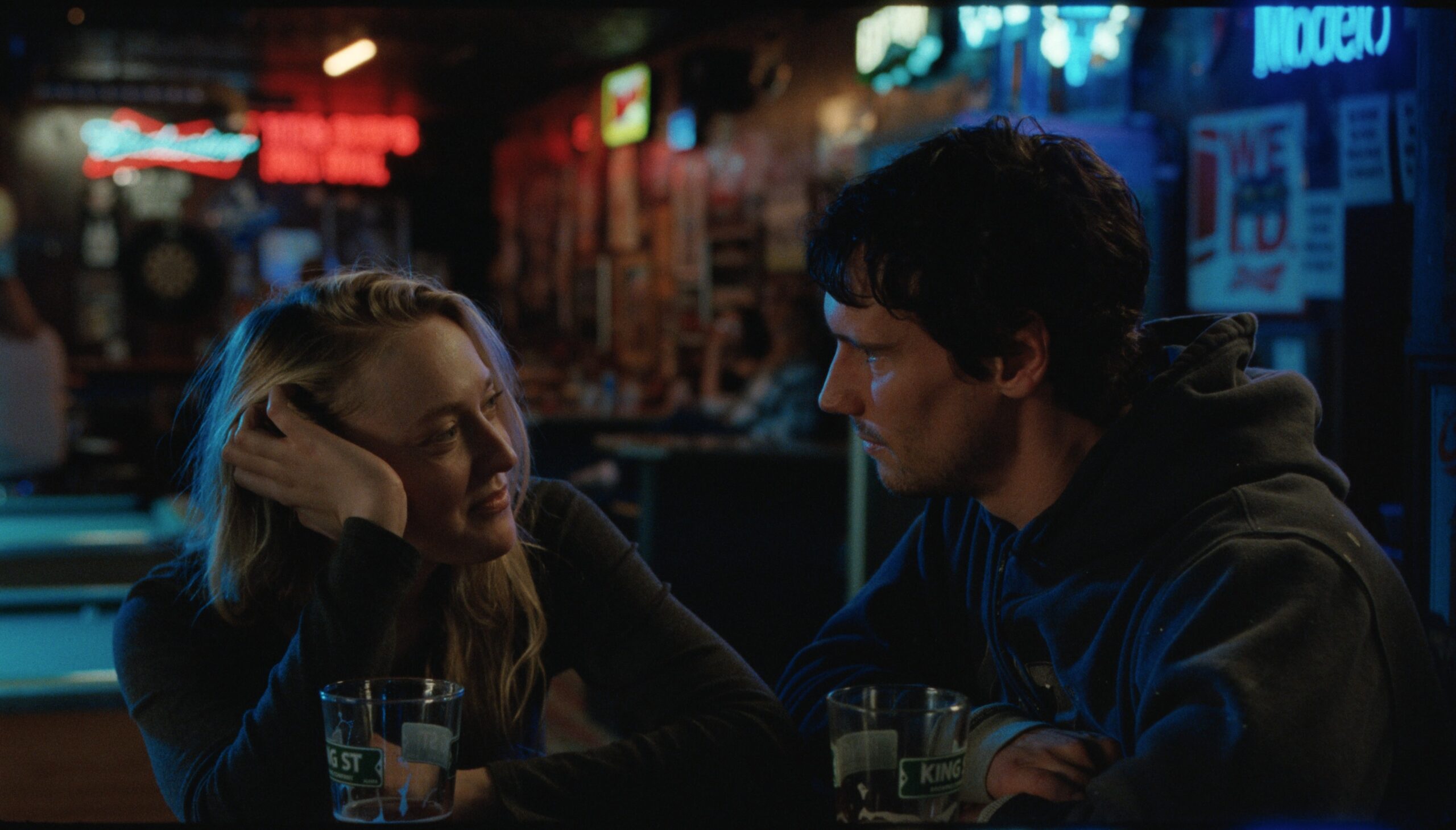
And perhaps that is what The Sun Never Sets is really asking.
What if growing up isn’t about choosing the person who gives us the safest future, but having the courage to discover which future is actually FOR us?
Love isn’t always about finding the person who completes the picture. Sometimes it is about figuring out what the picture is supposed to be in the first place.
Beneath the love triangle, the awkward conversations and the emotional chaos is a story about timing, identity and the courage to choose yourself without pretending that the people you leave behind didn’t matter.
Because sometimes the people who shape us aren’t the people we end up staying with.
And sometimes, loving someone means having the courage to let the future remain unwritten.
The Sun Never Sets is now playing in theatres.