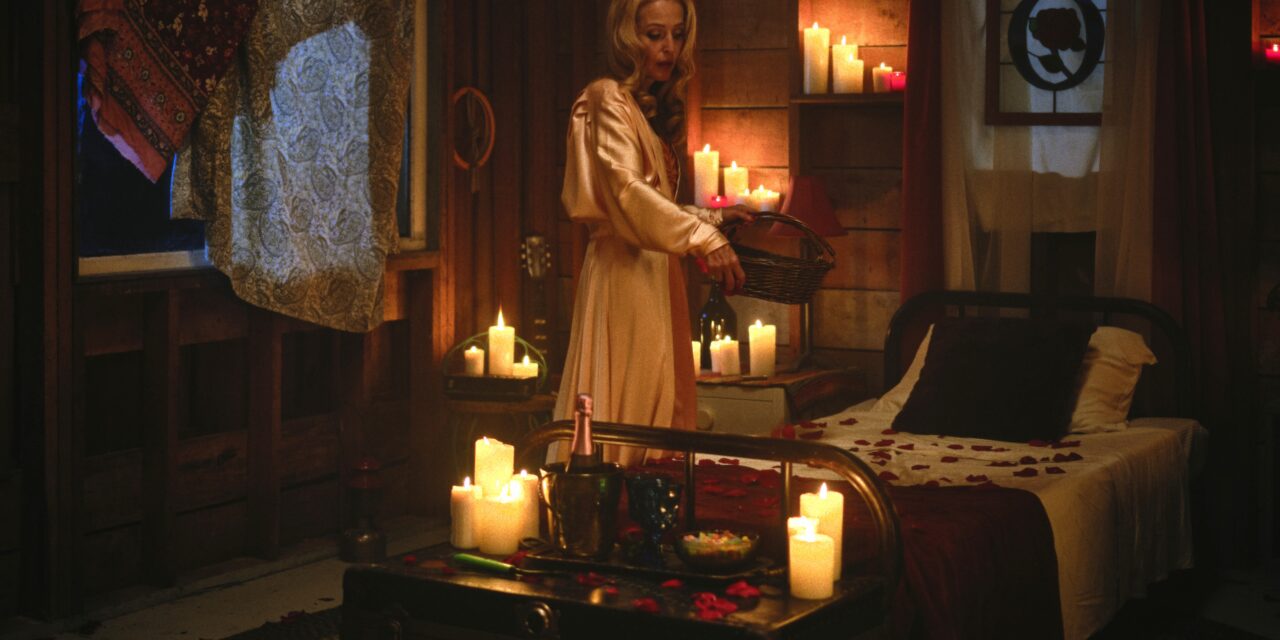
Jane Schoenbrun continues to establish themselves as one of horror’s most original filmmakers with Teenage Sex and Death at Camp Miasma. While the title evokes the classic camp slashers of the 1980s, this isn’t simply another masked-killer movie. Instead, it’s a thoughtful, surreal exploration of why horror stories endure, how they evolve with each generation, and what it means to revisit beloved franchises through a modern lens.
The film follows Kris (Hannah Einbinder), a young queer filmmaker hired to reboot the long-running “Camp Miasma” series, a clear homage to franchises like Friday the 13th. Looking for inspiration, she retreats to the original filming location, where she reconnects with Billy Presley (Gillian Anderson), the reclusive actress who became an icon after starring in the original films. As the two spend time revisiting the franchise’s legacy, their creative partnership slowly develops into something far more personal.
Hannah Einbinder delivers an emotionally grounded performance, portraying Kris as someone driven by both artistic passion and quiet insecurity. Gillian Anderson is equally compelling, balancing confidence with vulnerability as a woman whose most famous role continues to define her decades later. Their chemistry gives the film its emotional center, making the quieter moments just as engaging as the horror sequences.

One of the film’s greatest strengths is its fascinating commentary on horror itself. Kris and Billy revisit the older “Camp Miasma” films, discussing what made them classics while also confronting aspects that haven’t aged particularly well. Rather than dismissing the past, the film thoughtfully asks whether older stories can be reinterpreted without losing what made them meaningful in the first place. It’s an idea that feels especially relevant in an era filled with reboots and legacy sequels.
When the slasher elements arrive, Schoenbrun doesn’t disappoint. Little Death is a memorable horror villain, with several tense stalking sequences, creative kills, and effective face-cam one shot style scene that pay tribute to classic slashers while still feeling visually distinct. The horror is stylish and unsettling without overwhelming the film’s deeper character work.
Beneath the blood and suspense, however, Teenage Sex and Death at Camp Miasma is really about identity, intimacy, and the stories we inherit. Kris and Billy’s conversations reveal that both women struggle with vulnerability in different ways, giving their relationship genuine emotional weight. At the same time, the film explores how horror legends can take on lives of their own, becoming larger than the people who created or tried to reinvent them. Without becoming overly explicit, Schoenbrun suggests that some stories continue to evolve long after they’re told, with every new filmmaker and every new audience adding another layer to the mythology.
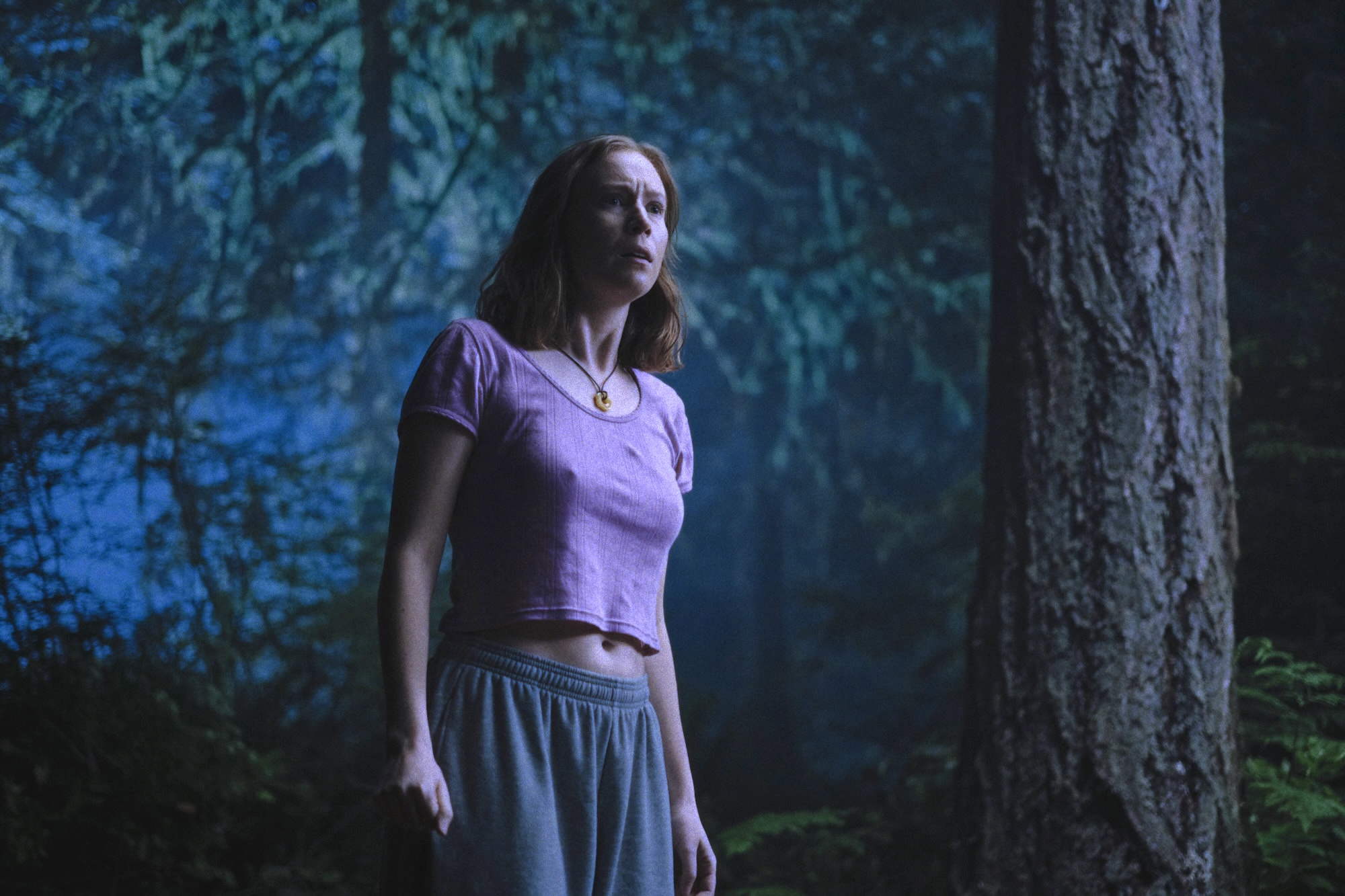
Visually, the film is mesmerizing. The lakeside camp setting perfectly captures the nostalgic atmosphere of vintage summer camp slashers, while the dreamlike cinematography and Alex G’s haunting score create an experience that feels both cozy and deeply unsettling. Even when the narrative drifts into surreal territory, the film maintains a strong emotional line.
Teenage Sex and Death at Camp Miasma won’t satisfy viewers looking for a straightforward slasher packed with nonstop kills. It’s slower, more introspective, and often more interested in ideas than simple scares. But for audiences willing to embrace its unconventional storytelling, Schoenbrun delivers one of the year’s most distinctive horror films, a movie that celebrates the genre while also questioning why certain monsters, myths, and franchises continue to haunt us decade after decade.
Teenage Sex and Death at Camp Miasma is available in theatres on August 14th, 2026.