When Werner Herzog puts on his documentarian hat, it is always with a sense of awe about what is in the world. That is certainly true of the National Geographic film Ghost Elephants. He tells the story of a scientific expedition in a way that lets us experience wonder and a new understanding of the interconnectedness of nature and humanity.
The film follows biologist Steve Boyes on a trek to the Angolan Plateau in search of what might be the largest elephants in the world. The film begins at the Smithsonian, with a look at “Henry” a recreation of the largest elephant ever killed. The Smithsonian still has the skull and tusks, which will play a role in matching DNA with living elephants if they are found. There have been stories of such huge elephants, but because the area is so remote, people haven’t been able to verify that such creatures still live there.
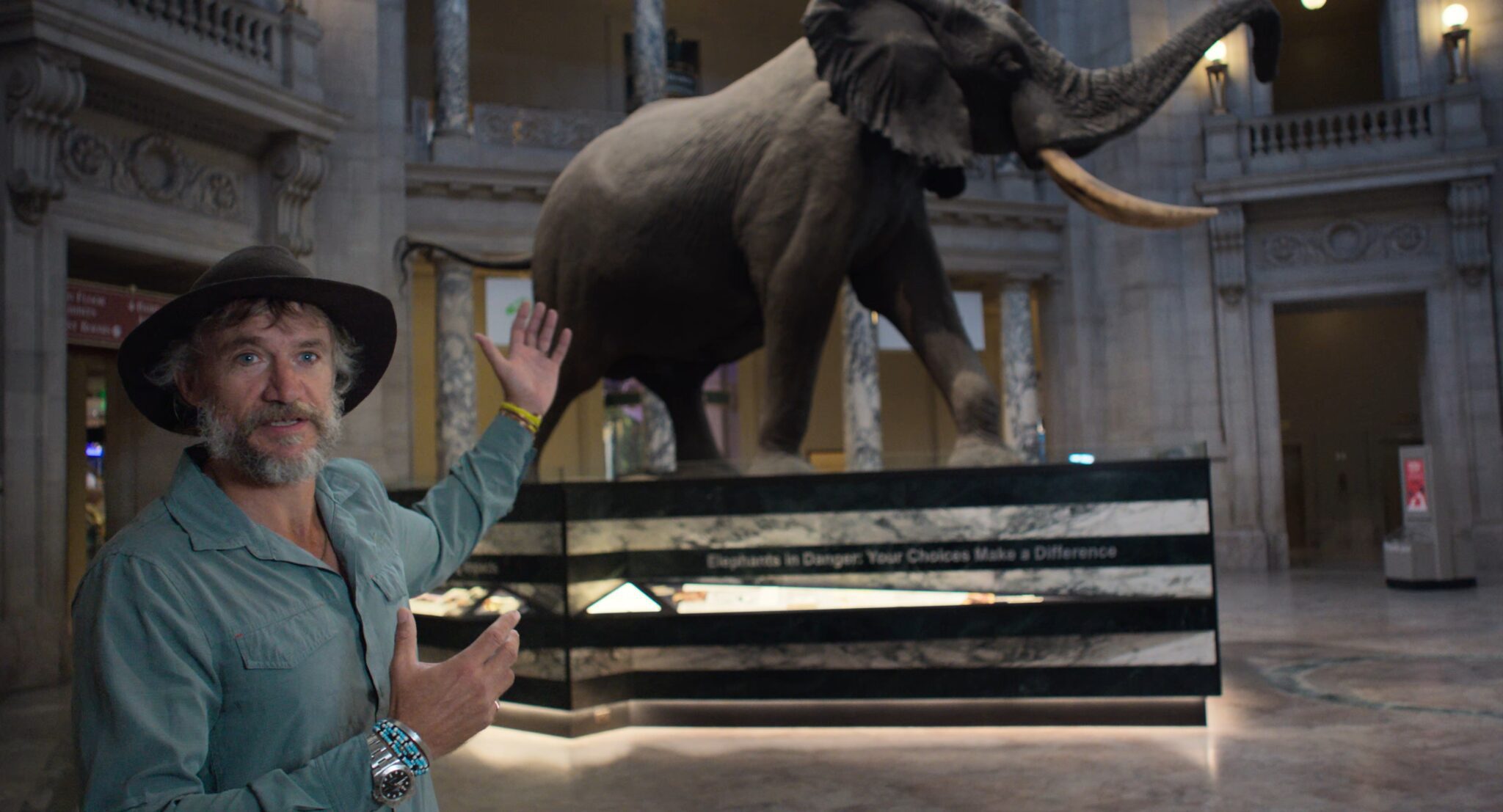
Dr. Steve Boyes stands in the rotunda of the Smithsonian Museum. He describes his emotions seeing Henry the elephant. (Credit: Skellig Rock, Inc)
Boyes is aided in his trip by master trackers from two indigenous tribes. These trackers have learned a great deal about the animals in their world. But the film is not just about relying on traditions, but also on modern science. One of the key tasks for the expedition is to try to get DNA from these ghost elephants. That may be from their rubbing on trees, their feces, or trying to get a tissue sample with a specially designed arrow.
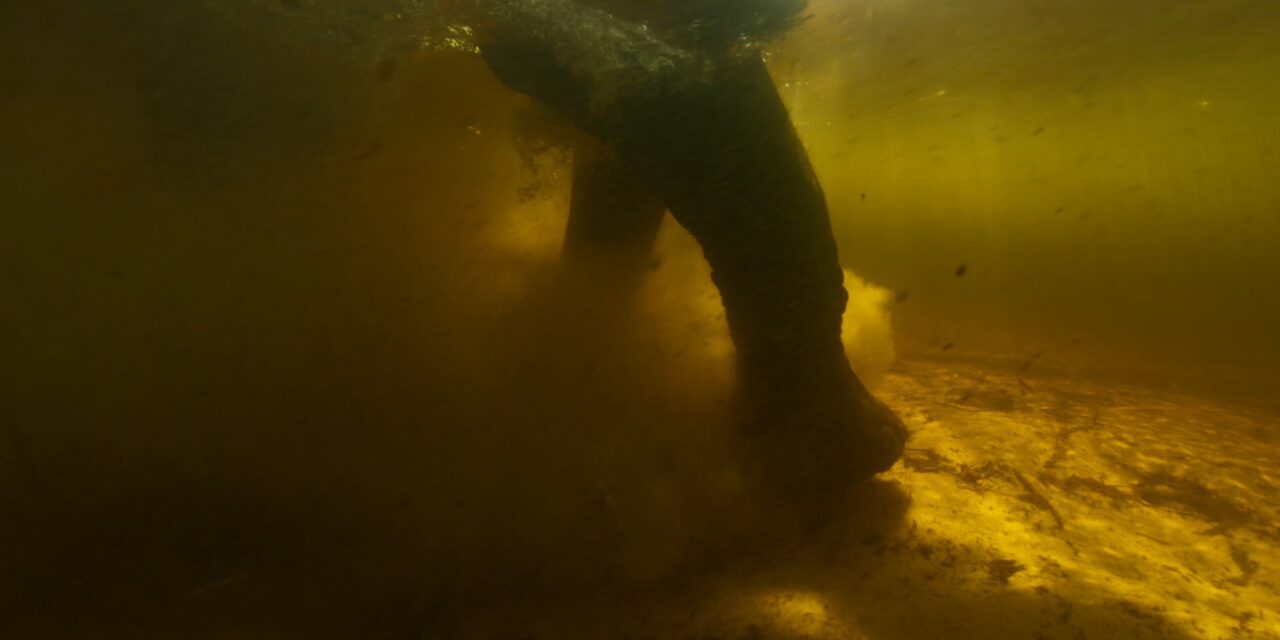
It is a long and difficult journey to get to the plateau. (There were times the determination involved in the journey reminded me a bit of Herzog’s narrative film Fitzcarraldo.) When four-wheel drive runs out of road, motorbikes must be used (and carried across rivers). Eventually, it must be finished on foot.
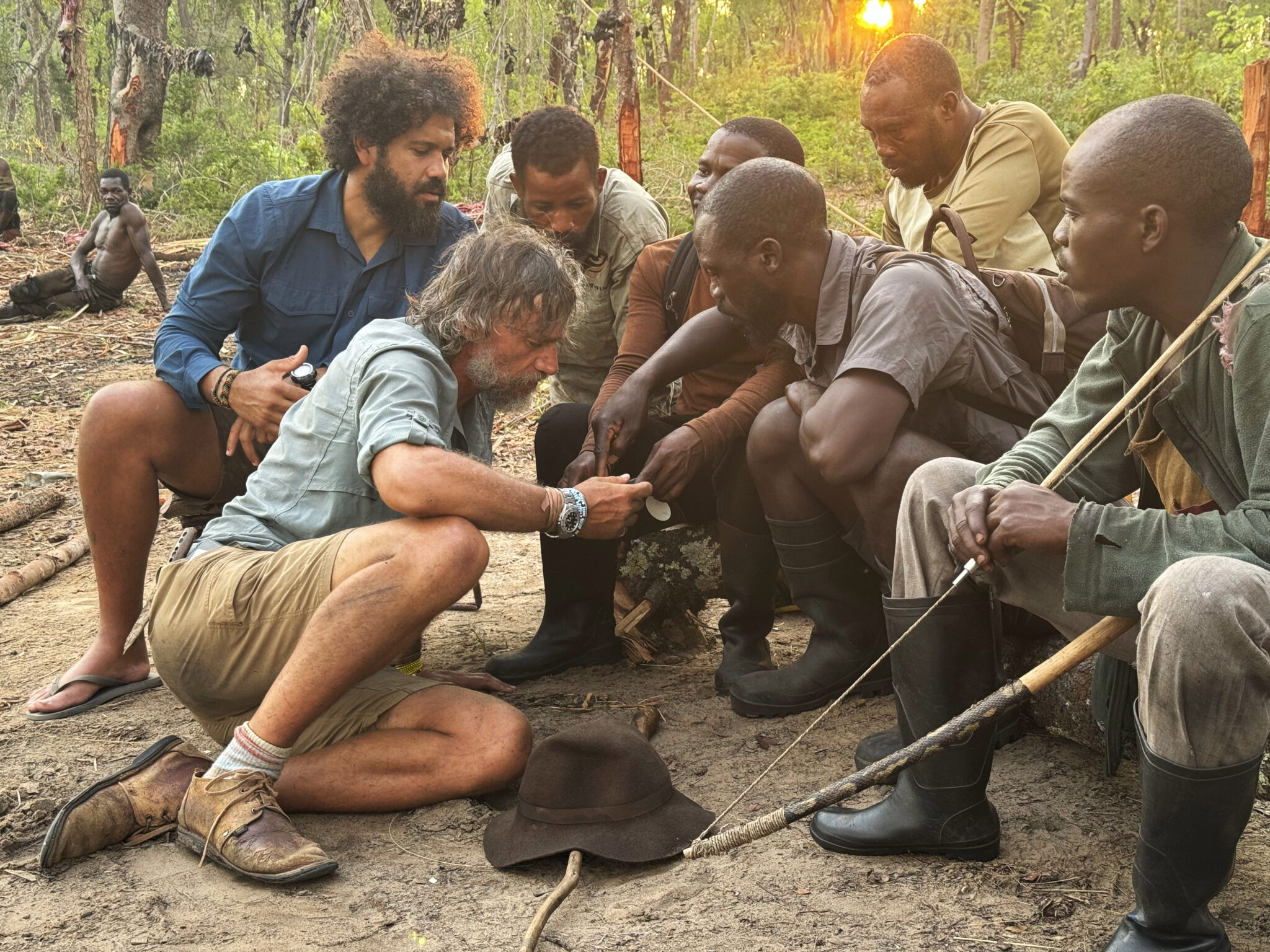
Kerllen Costa, Dr. Steve Boyes, and a group of Angolan tribal hunters check Steve’s cellphone video of a ghost elephant at their search camp. (Credit: Ariel Leon Isacovitch)
The film eventually becomes a combination of anthropology, genetics, travel, and ecological treatise. Its goal is not so much to bring closure to the question of the existence of the elephants (which it does), but to evoke an almost mythical sense of wonder at the diversity of the world.
Herzog is constantly connecting the natural world to the human world. One of his main themes in docs is the way we are connected to nature and to nature’s sustainability. At one point in the film Herzog says, “I know I shouldn’t romanticize this, but….” That statement captures the essence of Herzog’s documentaries. They do romanticize. Viewers may or may not think this is appropriate, but his perceptions about the interconnectedness of our lives to the world around us are very clear.
This search for the ghost elephants seeks to be a journey of discovery. Part of that discovery may be scientific, but even more, Herzog wants us to discover a world that touches our lives—even if it is thousands of miles away.
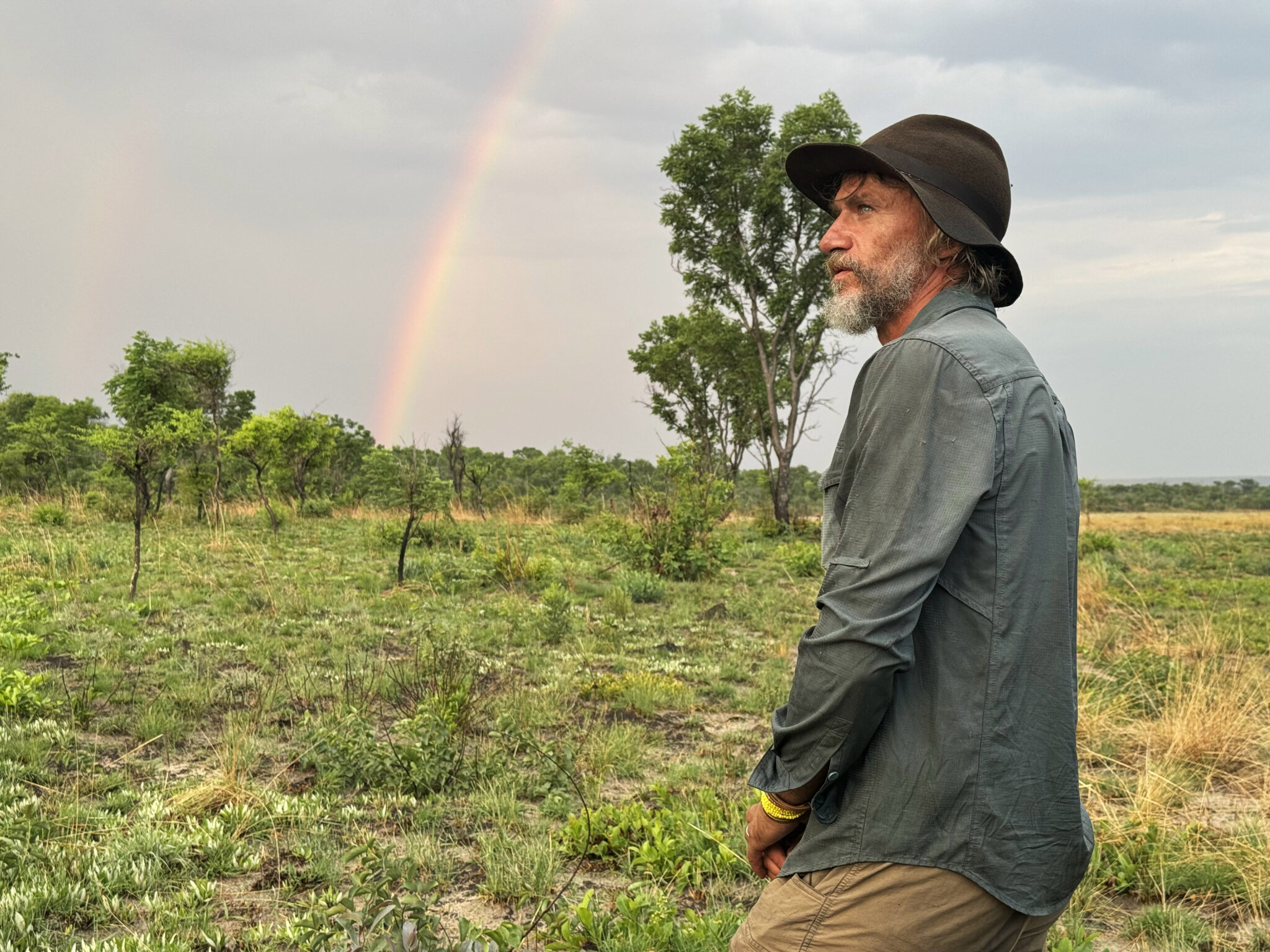
Dr. Steve Boyes, with a rainbow in the background, experiences the first signs of the rainy season. (Credit: Ariel Leon Isacovitch)
Ghost Elephants is in select theaters. It airs on National Geographic March 7 and streams on Hulu and Disney+ the following day.
Photos courtesy of NatGeo.