I don’t cover Sundance Film Festival as a journalist, but my wife and I do buy an online package each year that gives us access to ten films. Among our choices this year were three documentaries from the US.
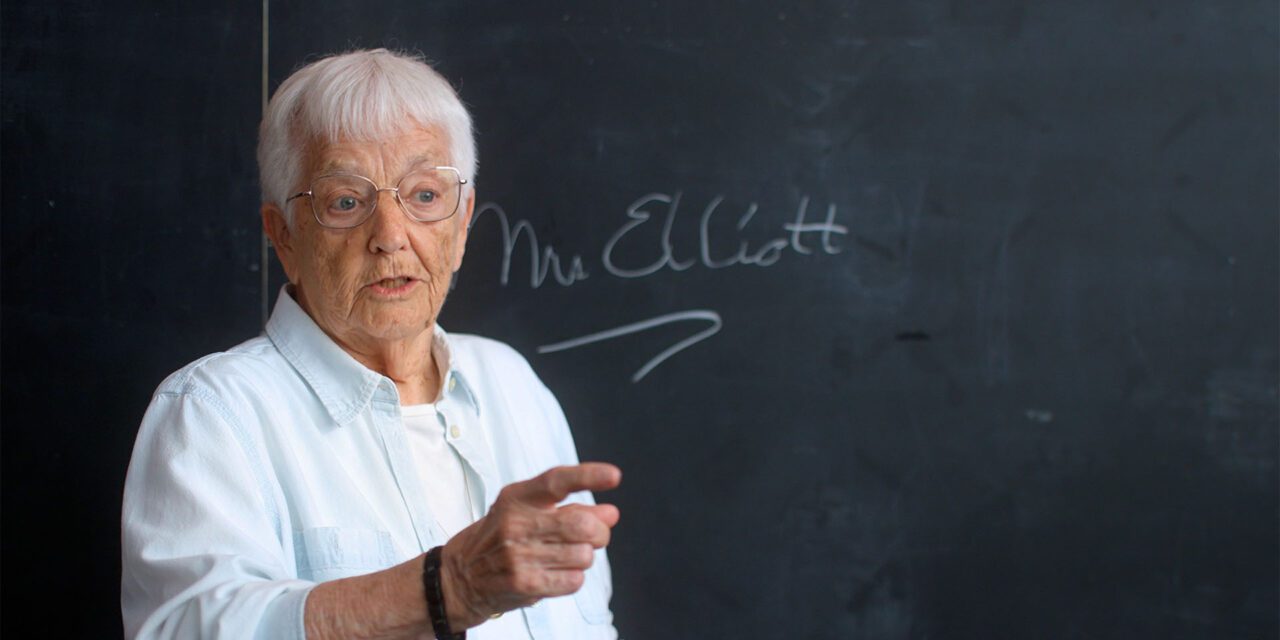
Jane Elliott Against the World, directed by Judd Ehrlich, introduces us to a woman who has been teaching about racism for over fifty years. When Jane Elliot began teaching in a small town in Iowa, she was given a class filled with non-readers. She was determined to give them the skills they needed. After Martin Luther King was killed, she led her all-white class in a “brown eyes, blue eyes” exercise in which one group was deemed inferior. How that played out led her into teaching anti-racism through the years. She gained renown appearing on things like The Tonight Show and Oprah.
But the film isn’t just about her anti-racism ideas. We also learn how her focus on this affected her family. One of her daughters says they knew that their mom was an educator first and their mother second. It also takes us to Temecula, California, where one of her grand-daughters and her great-grandson live. Temecula became a hotbed for those who wanted to do away with anti-racism programs.
Part of Mrs. Elliott’s message is that racism in a white problem (although, she hates the terms “white” and “black”). She knows that she can only say some of the things she says because she has white privilege. In a time when the government is trying to tear down things about race in public spaces, this is an important film to remind us that we still have a great deal of work to do to heal the festering wound of racism. But she’s still trying.
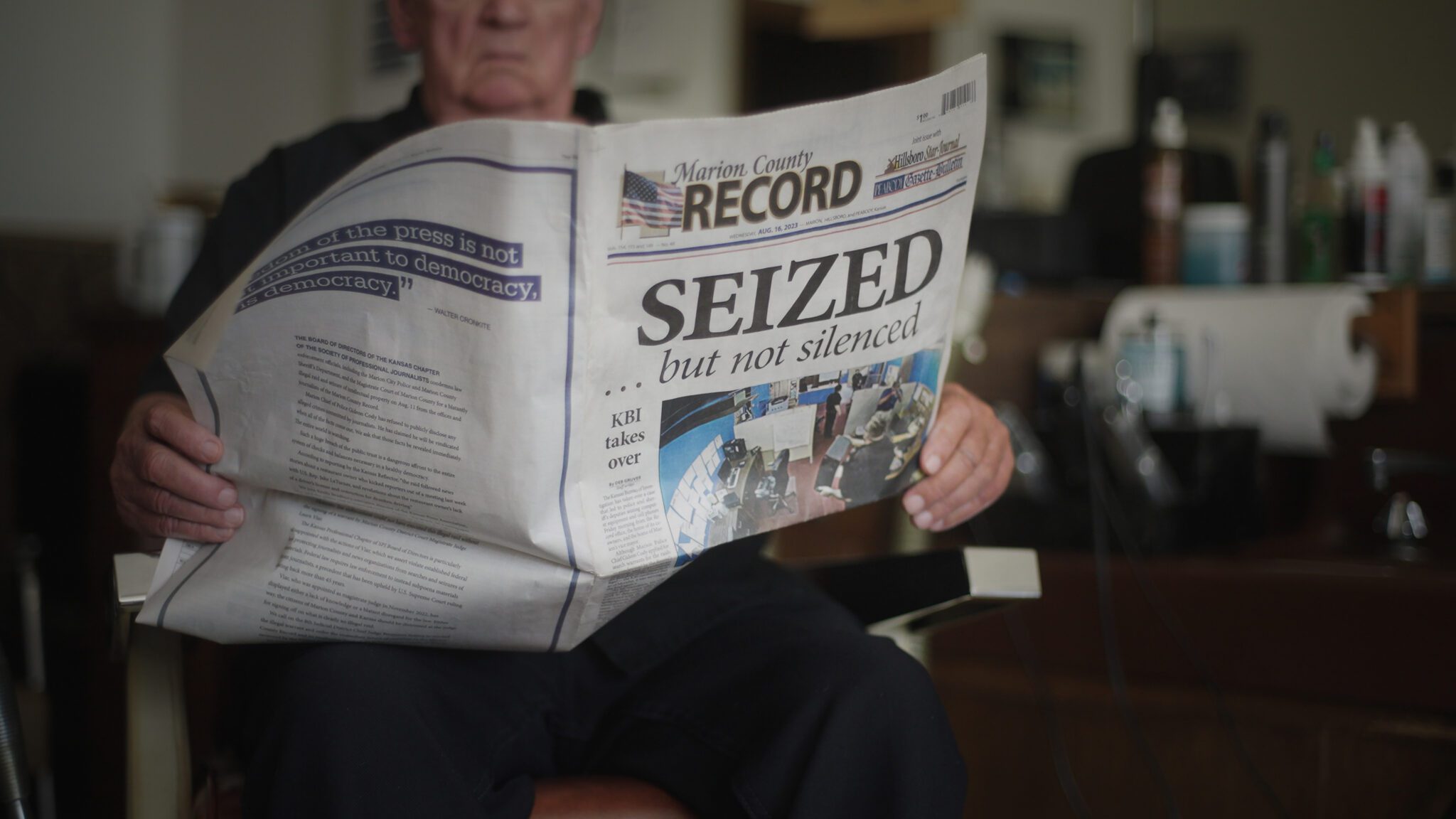
A still from Seized by Sharon Liese, an official selection of the 2026 Sundance Film Festival. Courtesy of Sundance Institute | photo by Jackson Montemayor.
Seized, directed by Sharon Liese¸ is another film that reflects a current issue in the US. In 2023, the local police raided the offices of the Marion County Record in Kansas and the home of the owner. When the 98-year-old mother of the owner died the next day (a contributing factor was the stress of the search), the small town weekly became a world-wide story. The film uses interviews as well as surveillance footage and body cam footage to tell the story of the raid and the aftermath.
An important part of the film is watching a young reporter who has come to work at the paper. He’s not local. The transition from New York City to Marion gives him a different perspective on the community. There are some people in Marion who don’t like the Record but others see it as an important part of the community.
Journalism is struggling in many ways. Small town papers like the Record are often bought up by corporations that have no interest in either journalism or communities. Attacks on freedom of the press are also growing. Around the world journalists are often imprisoned or killed. Many media outlets face lawsuits or other intimidations from the government. The White House and Pentagon want to cherry-pick the reporters who will cover them. All of this makes it harder for the public to know the truth—whether in the nation’s capital or a small town hall.
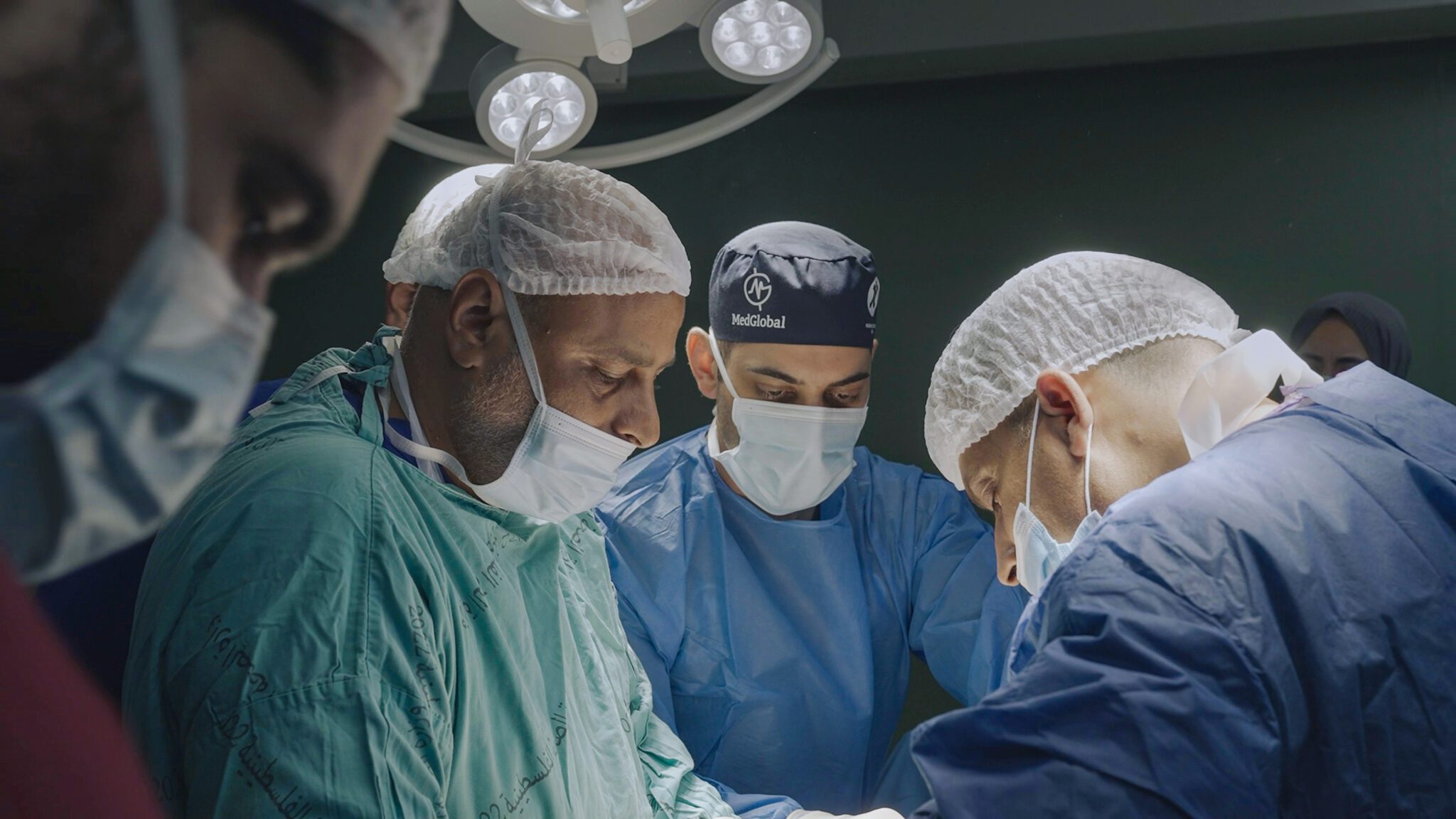
A still from American Doctor byPoh Si Teng, an official selection of the 2026 Sundance Film Festival. Courtesy of Sundance Institute | photo by Ibrahim Al Otla.
American Doctor, directed by Po Si Teng, shares the story of three American doctors (one Jewish, one Palestinian, one Zoroastrian) who have traveled to Gaza to care for the Palestinians during the military campaign. Most of the film deals with the time that two of them returned to Gaza last March. (The third was denied permission by the Israelis.) They have also become media personalities appearing on news programs to tell about the needs and the atrocities that have taken place in Gaza, including the targeting of hospitals in violation of international law. We see them caring for the injured in difficult situations. We also see them at home as they tell their stories and lobby senators about the situation.
All three are adamant that America has a major role in this destruction. As one of them puts it, “This is what my tax dollars did. This is what your tax dollars did. This is what my neighbor’s tax dollars did.’ The film is not so much about the medical needs in Gaza (which it shows to be many) as it is about trying to increase awareness about what America’s role is in the situation in Gaza. That these doctors go there and help many is only a small part of what needs to be done. These doctors make it clear that America needs to pay attention to the role we play in the death and pain of so many people.