“Into death and beyond it.”
There are many times that I will think of a film derisively as hagiography (life of a saint). I say derisively, because it seems to be making someone look far better than they really were. So what am I to do with Anthony D’Ambrosio’s Triumph of the Heart which is literally a hagiography, focusing on the martyrdom of St. Maximilian Kolbe at Auschwitz? In the way the film shows how that martyrdom took place, the story is a meditation on the meaning of hope.
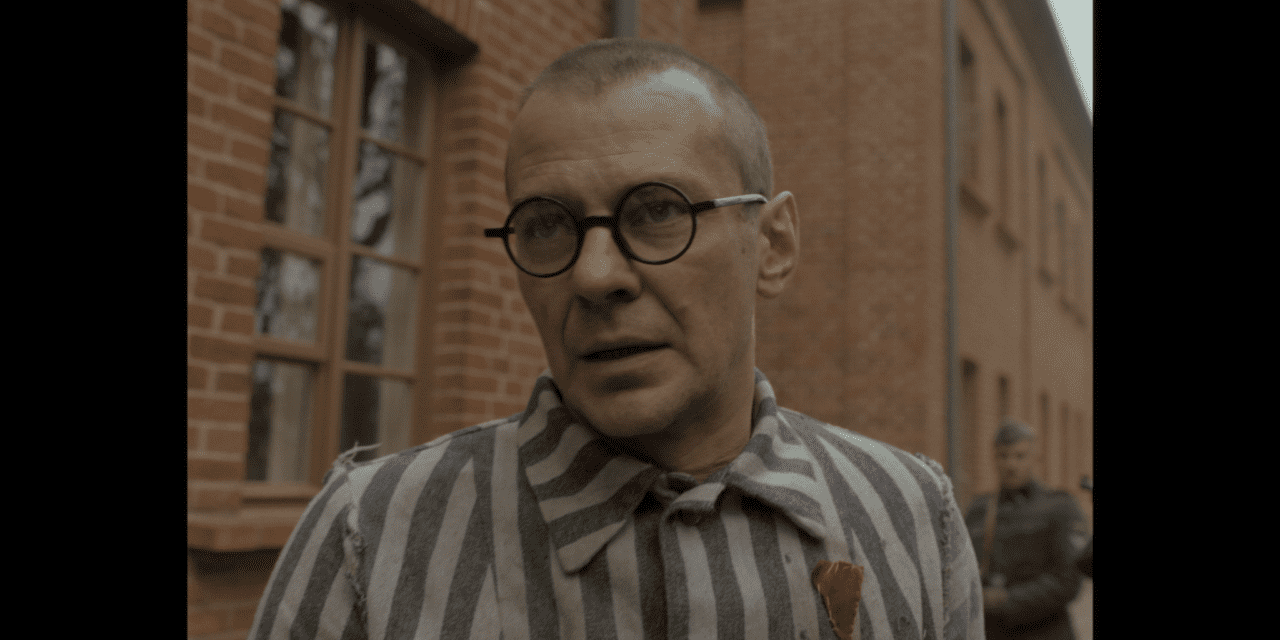
St. Kolbe (Marcin Kwaśny) was a Polish Franciscan priest who was working as a journalist when Germany took Poland. He was arrested and sent to Auschwitz (prior to its time as a mass extermination camp). When a prisoner escaped, camp commander Karl Fritzsch (Christoper Sherwood) picks ten prisoners at random to be locked into a bunker with no food or water until they die. One of the prisoners was married with a child. Kolbe volunteered to go in his place. All of this is known to have taken place.
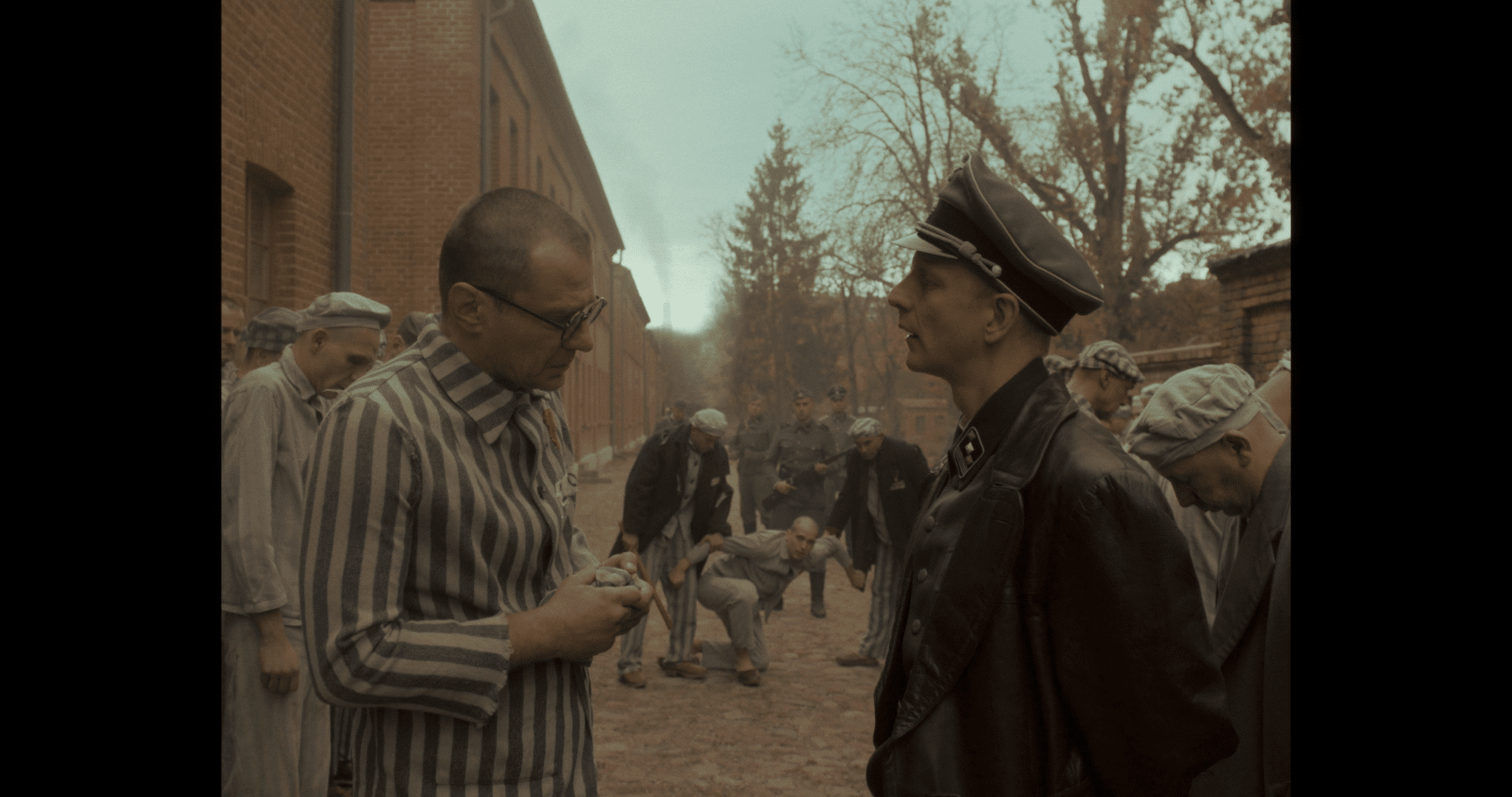
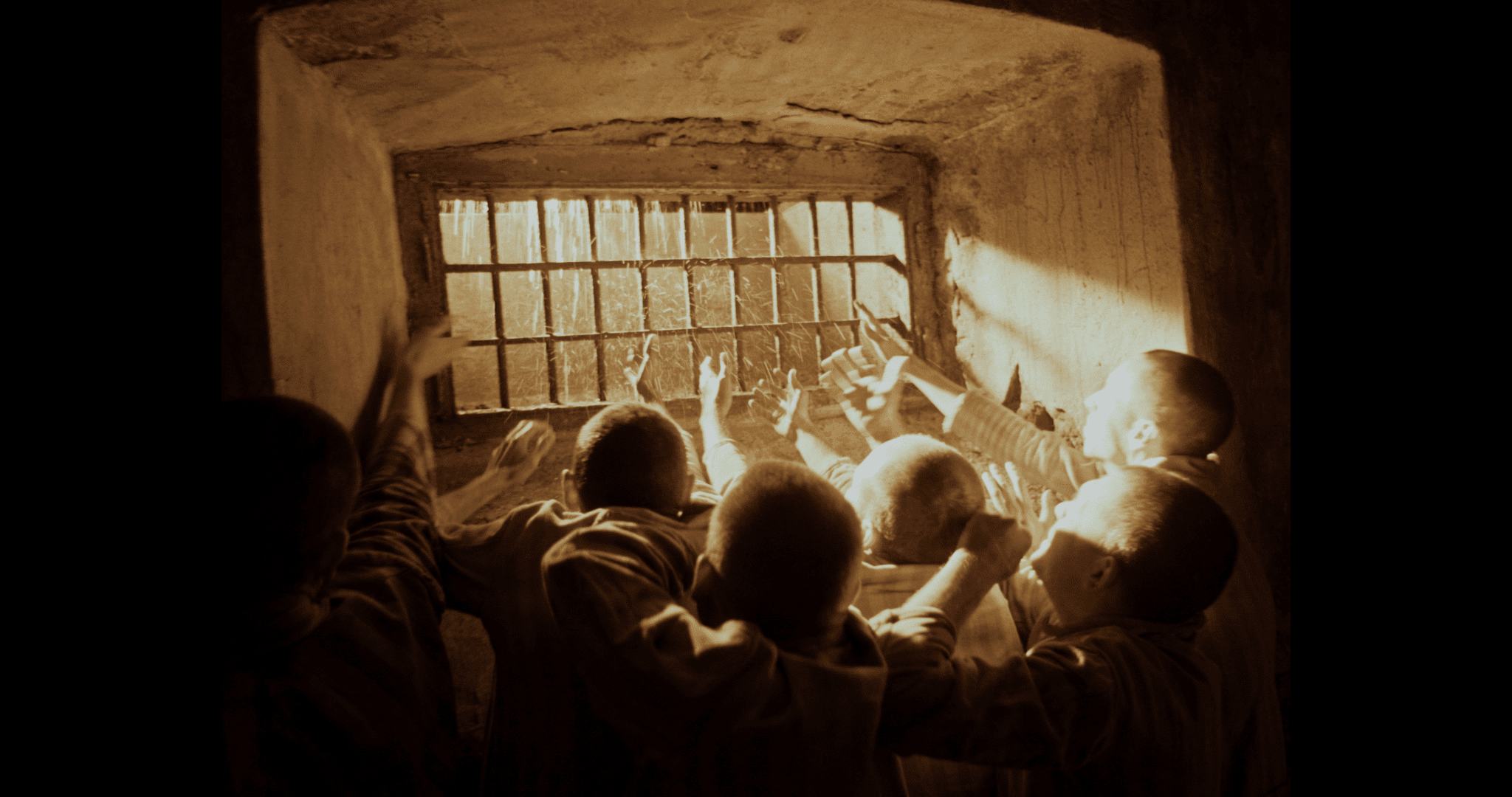
Almost all of this film takes place within that bunker. Of course since no one in that death room survived, it is really a matter of conjecture, but it is a worthy attempt at imagining what could have taken place. Under normal circumstance, death would have taken just a few days. Fritzsch leaves them a sharp rock with which to kill themselves for a quicker death.
While the prisoners (including Kolbe) begin with a sense of despair. Some are ready to end it immediately. After a vision of the Black Madonna singing a lullaby his mother sang, Kolbe begins to form a community out of these condemned men. At one point, they sing together the Polish national anthem as a way of giving hope to the other prisoners in the camp.
As each man dies, we see a flashback of their life and happiness. Some of them survive for two weeks, at which point Fritzsch orders them executed by an injection of carbolic acid. The film closes with an image of a joyous polish wedding with all the prisoners taking part.
The film uses Fritsch as a counterbalance to Kolbe. As commander, he is ruthless and uncaring. Yet at home he is a loving father and husband—although just as strict and demanding. There is a telling line in which he is warned not to make a martyr out of the priest. (Oops!)
The question of faith in such darkness does come up in the film. One of the prisoners asks Kolbe, “Where have you been these past few years to believe in heaven or God? Certainly you couldn’t have been living in this world.” It is not so much a question of belief that Kolbe addresses, but the need for hope in the face of such despair.
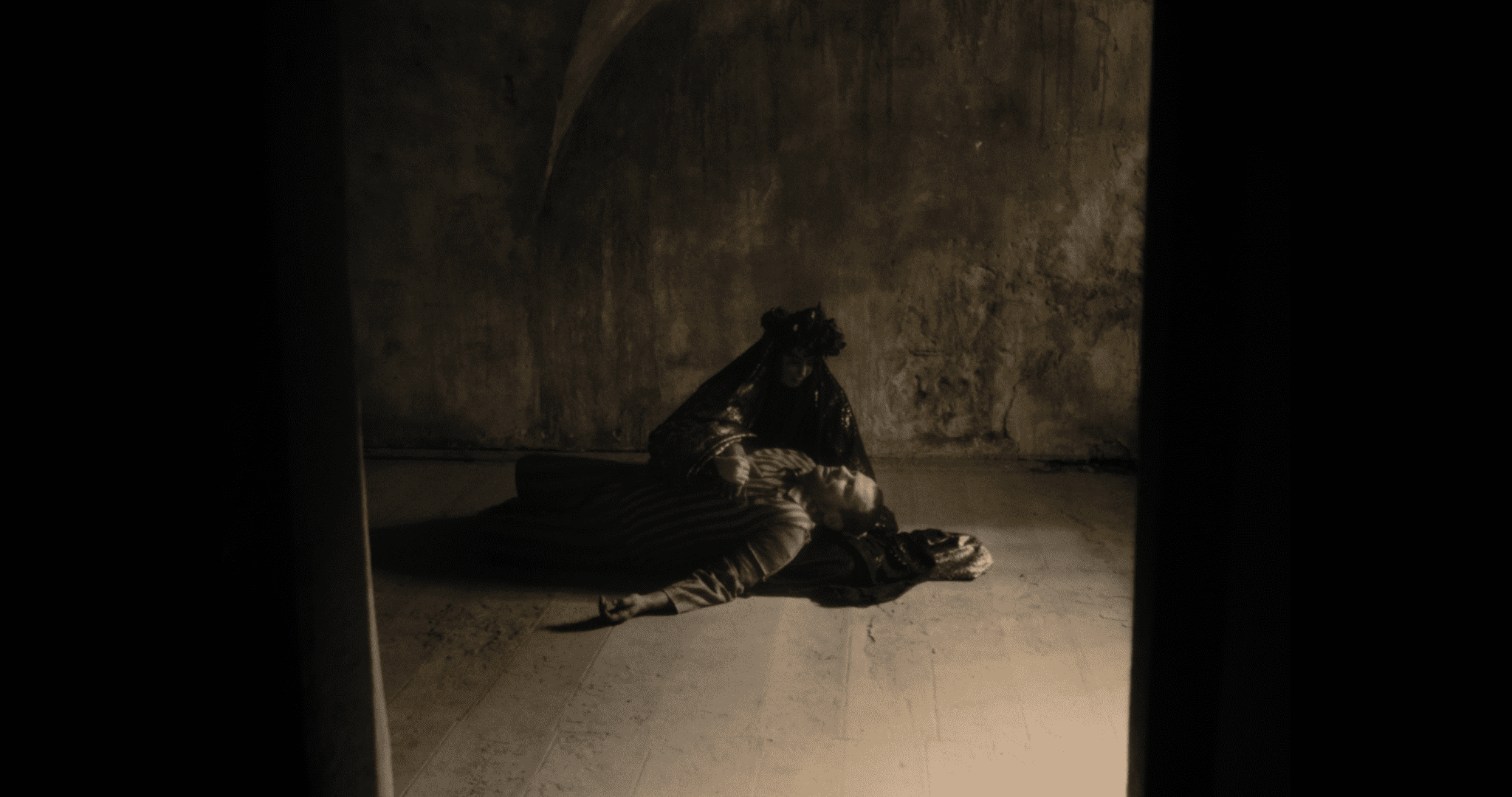
It is of note that the word ‘martyr’ comes from the Greek world for ‘witness’. While St. Kolbe’s sacrifice and death may be key to him being canonized as a martyr, I prefer this film’s seeing him as a witness to something beyond the darkness that can fill the world.
Triumph of the Heart is in theaters on Friday, September 12th, 2025.
Photos courtesy of Outsider Pictures.