
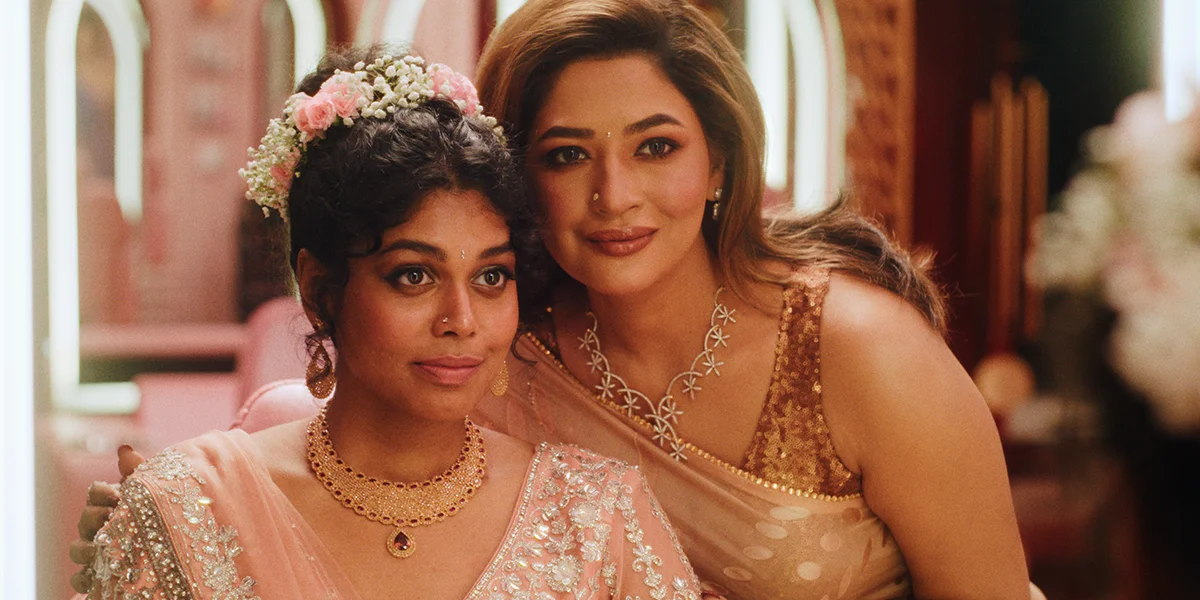
I wanted to like Rubaiyat Hossain’s The Difficult Bride. Its premise pulls you in: a wealthy young Bangladeshi woman approaching marriage begins experiencing increasingly grotesque bodily manifestations as the expectations of femininity, beauty and marital perfection close in around her. Unfortunately, the film’s ideas are considerably more compelling than their execution.
There is something worthwhile in Zaineen’s rebellion. Privilege does not make patriarchal expectations harmless, and Hossain effectively depicts marriage as a performance for which Zaineen’s body must be disciplined, decorated and perfected. But the increasingly excessive body horror overwhelmed that examination for me, turning potentially unsettling symbolism into something so relentless that it became distancing rather than provocative.
More frustrating is Zaineen herself. She possesses wealth, mobility, and opportunities unavailable to many of the women surrounding her, yet the film romanticizes her attraction to working-class spaces as though proximity to hardship represents freedom. She repeatedly behaves recklessly without considering the consequences for others, particularly the salon worker who risks punishment because of her actions.
That creates an uncomfortable blind spot. The Difficult Bride wants us to celebrate Zaineen’s rejection of the cage without seriously examining who absorbs the consequences when a privileged woman decides to kick its doors open.
The film inevitably reminded me of Mina Shum’s Whatcha Want, another TIFF selection examining an affluent woman questioning whether financial security is worth sacrificing personal freedom. But where that film carefully builds towards a woman taking responsibility for her own independence, Zaineen’s liberation feels impulsive rather than earned.
Even the ending, designed as a triumphant rejection of marriage and prescribed womanhood, left me wondering what happens when the adrenaline disappears. Freedom is not simply walking away from security; it is confronting what comes afterward.
The Difficult Bride understands the exhilaration of saying no. I am less convinced it understands the responsibility of choosing what comes next.


