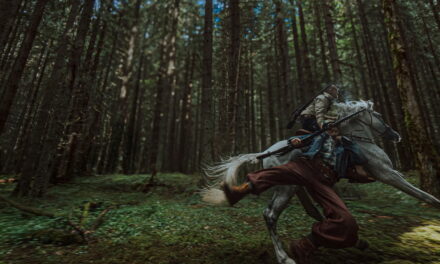

Based on Virginia Woolf’s 1925 book, Mrs. Dalloway, and set in Nigeria, Arie and Chuko Esiri’s Clarissa follows Clarissa (played at different times of her life by Sophie Okonedo and India Amarteifio), who reminisces about her teenage years as she prepares for her birthday party. This ensemble film (which also includes David Oyelowo, Joke Silva, Toheeb Jimoh, Ayo Edebiri, Jude Akuwudike, Fortune Nwafor, and Nikki Amuka-Bird) gives us a glimpse into each of its character’s lives, starting with the hopefulness of their youth and ending with the reality that those hopes may be long gone.
In her flashbacks, Clarissa and her friends, young people from high society families who live abroad, spend their holiday at her father’s countryside property. Here, they share love, dreams, and big (sometimes clashing) ideas. In the present, the friends reunite in Lagos and realise that they are all living lives different to what they had projected for themselves, including marriage, divorce, and a stalled passion. Meanwhile, Septimus, a young, once bright-eyed, soldier based in the north, visits Lagos seeking help for his PTSD.
To me, Clarissa is a tragically beautiful look into what happens when people resign to life.
It’s a reminder of the curiosity and innocence we tend to lose as we get older; of the ways life changes course over time until it cements- where making a move to change it has catastrophic effects; and of the things we do to get by, distract ourselves, or make the most of where we are. And it’s a strange mirror to me personally, because it is set in Lagos, where I spent my childhood, and where my own dreams – a lot of which honestly haven’t happened as I envisioned them – were born.
The Esiri brothers’ visual storytelling brings a stillness to the story, as if inviting you to contemplate with it: are you content where you are?
And if the answer is yes, is that enough?
Clarissa is playing at TIFF ’26. For more information, click here.