Pay no attention to that man behind the [Iron] Curtain.
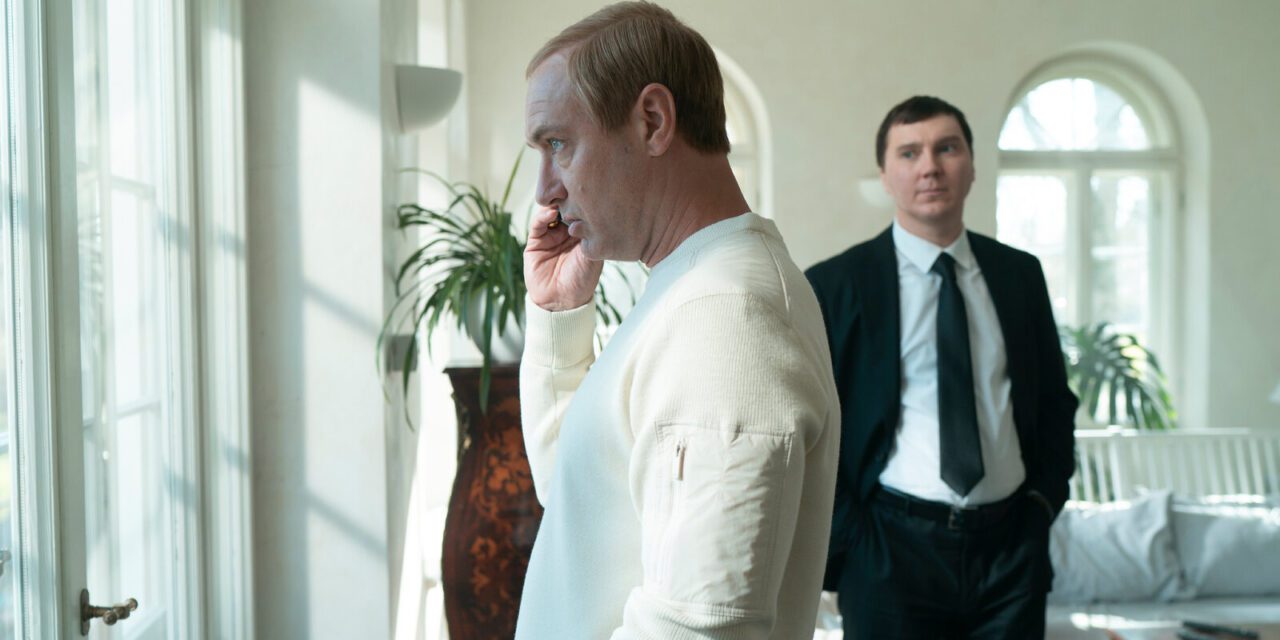
Directed by Olivier Assayas, The Wizard of the Kremlin follows Vadim Baranov (Paul Dano), a media-savvy manipulator that finds himself thrust into the most trusted corners of the Kremlin in the chaos of post-Soviet Russia. Teaming with rising KGB officer Vladamir Putin (Jude Law), Baranov helped guide the new regime with a reign of violence and deception that leads to tyranny and, eventually, all out war.
It’s worth noting that Kremlin is a solid (but imperfect) piece that wants to take the viewer behind the wall of the Iron Curtain. Despite being a fictionalized version of events, Assayas’ inclusion of news footage helps ground the film in reality. We know the public face of painful moments like the annex of Crimea and bombings of Russian cities. Yet Assayas wants us to understand the complexity of the hard realities and political machinations that brought them to life.
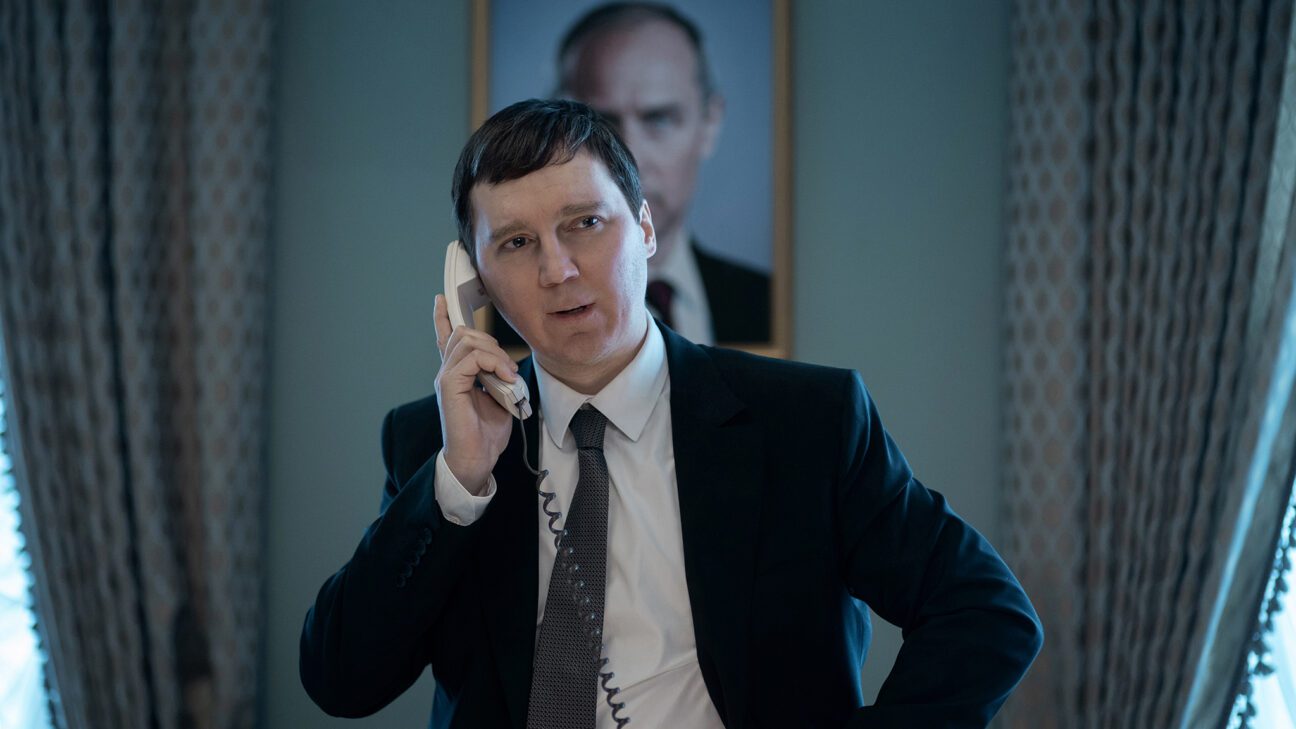
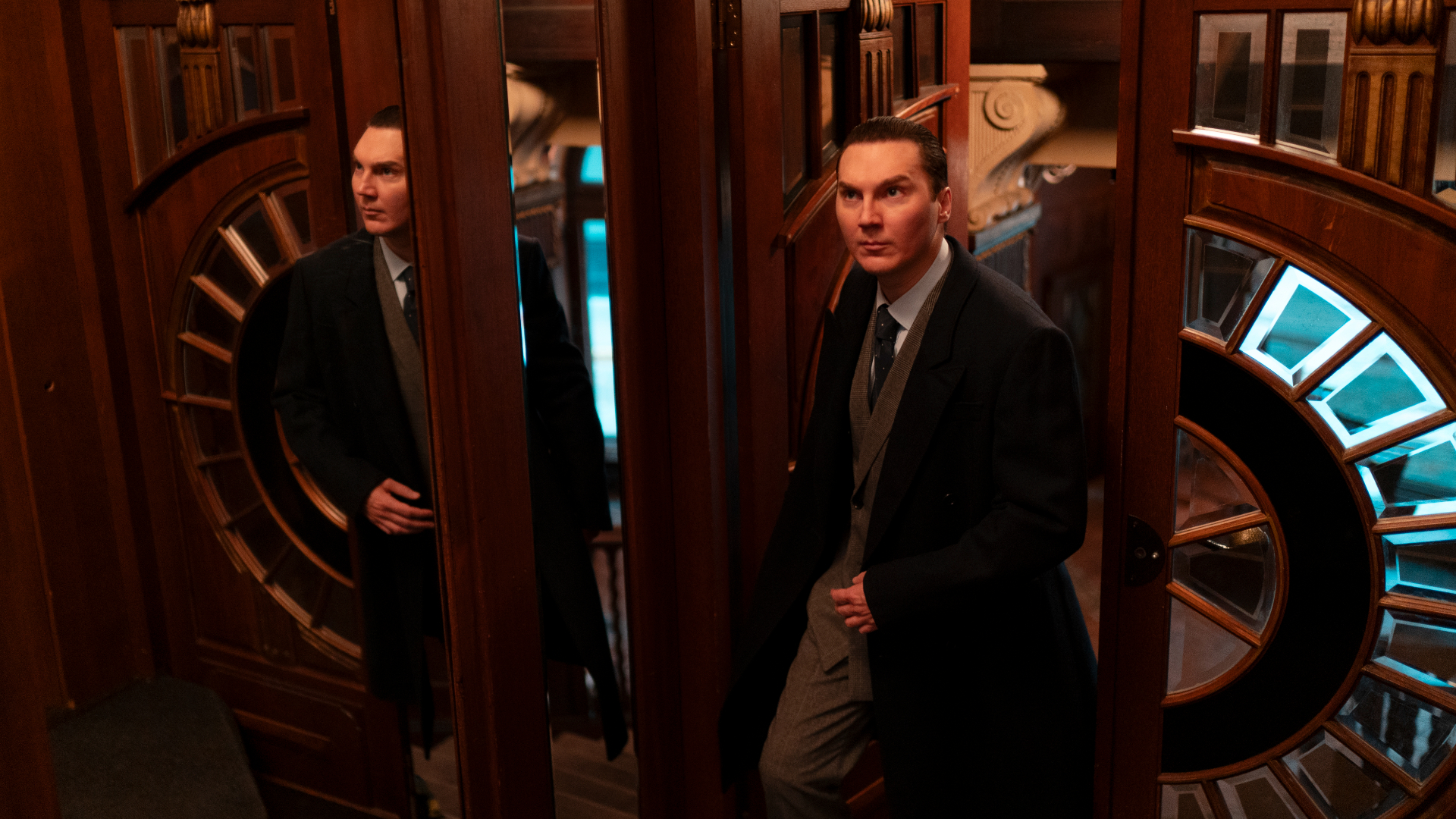
It’s worth noting that performances in the film are also both focused and fun. As the film’s central voice, Dano sleazes his way to the top with an almost soothing sense of ease. He’s not a fast-talking salesman. Instead, every word slides off his tongue with a smoothness that feels persuasive. He’s quiet, confident and yet, somehow, feels like the authority within the room.
But the real star of the film is Law as Putin himself. As the dictator-in-waiting, Law gradually grows in maniacal power yet never delivers any particularly ‘over-the-top’ moments. (However, it does somehow feel slightly jarring that he never attempts a Russian accent.) Rather, he keeps his rage inside, quietly simmering with increasing dominance. Though he resists at the opportunity for power at first, Law’s Putin slowly but surely begins to hold that authority with an iron fist, bullying anyone who appears to be a threat.
Interestingly though, Kremlin seems to be less about the corruptible nature of power than it is about the manipulative nature of power. After all, in this world, any form of power seems to cause its characters to change. Despite his early days in the artists’ world, Baranov is hardly a man battling his own moral compass. Given the opportunity to advance, he happily allows himself dive headfirst into whatever lies ahead. At the same time, Putin’s initial reluctance is only brief. For these men, the invitation to serve their country by serving themselves isn’t even a difficult decision. As such, the challenge of power here isn’t how to get it.
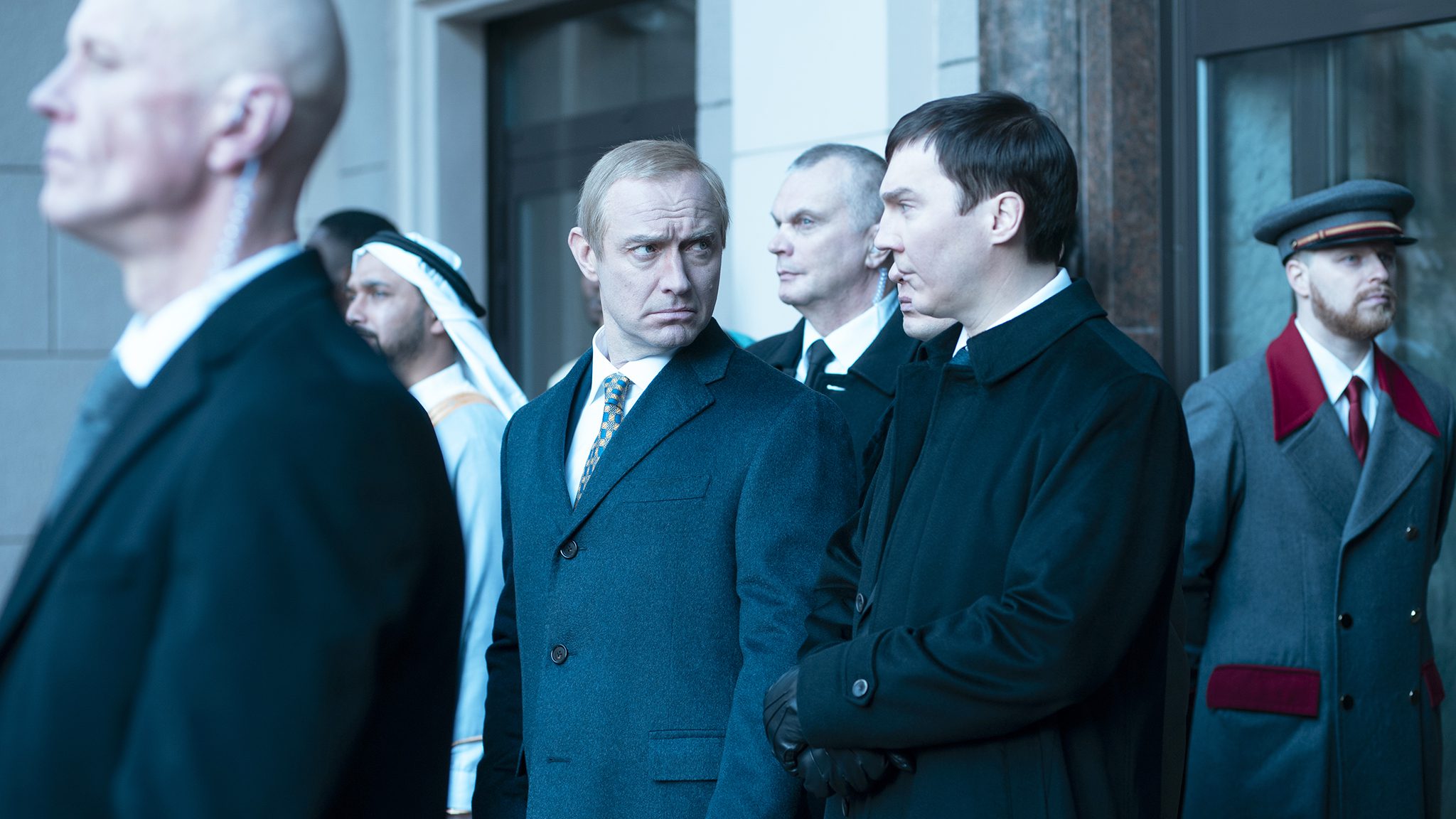
It’s how to keep it.
In this way, Kremlin tries to expose the modern mindset behind manipulation. Here, the old ways of control by fear have given way. In order to build an empire, it begins with the public’s consumption of media. From beauty contests to reality television, Baranov understands that the way to garner influence is through self-deprecation. In doing so, the general public feel like they can identify with those in power, even if the very act of doing so demands a form of subservience. It’s a fascinating argument that feels earnest beyond the Russian borders.
Having said this though, Kremlin is far from perfect. For example, it feels as though it takes too long to get to film’s best stories. While Baranov’s backstory is the film’s driving force, the film’s first half slows down the film’s pacing, creating something that takes a long time to become truly engaging. What’s more, while performances are strong and the story is current, Assayas does tend to make his messages murky. While there are some fascinating ideas within the script, few of them are explored with any great depth, leaving the film to feel emptier than expected.
And, for those reasons, this film ultimately becomes a wasted opportunity. After all, The Wizard of the Kremlin has many of the pieces necessary to make something truly special, offering insight into one of the more difficult political spaces of the 21st Century. Despite containing strong performances and some interesting conversations surrounding the corruptibility of absolute power, the film lacks urgency, leaving this Wizard with surprisingly little magic.
The Wizard of the Kremlin is available in theatres on Friday, May 15th, 2026.