
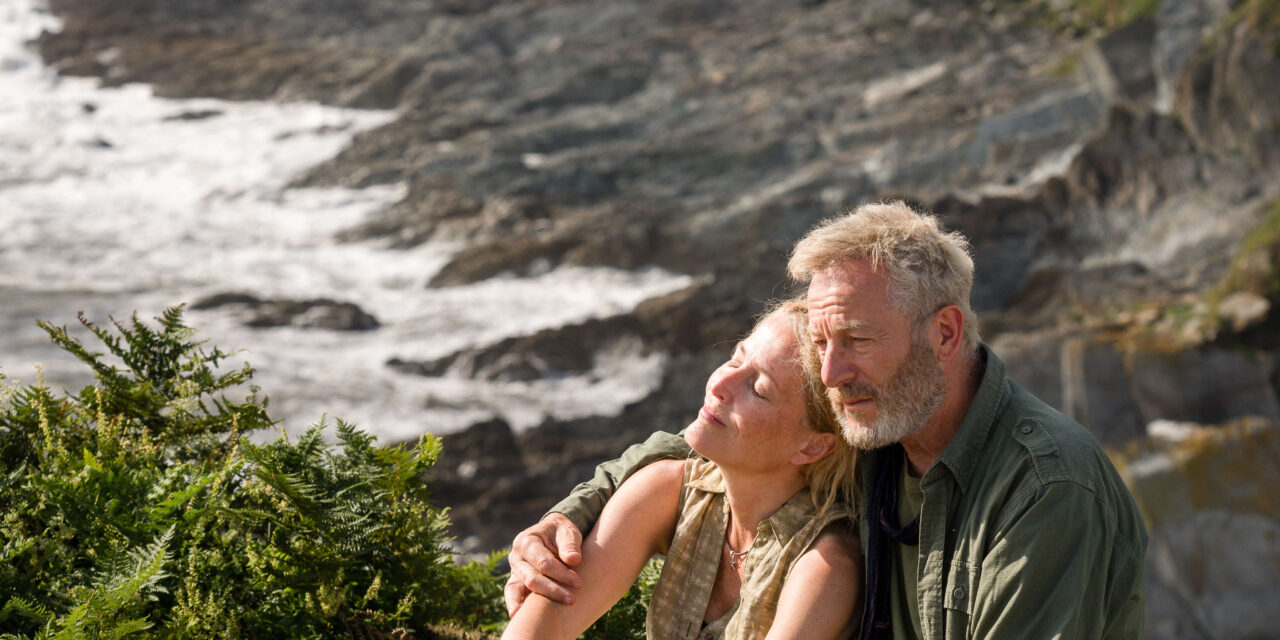
Raynor Winn (Gillian Anderson) and Moth Winn (Jason Isaacs) find themselves on a journey they never expected. Caught up in a legal kerfuffle, investment mistakes, and ultimately a court order forcing them from their home, their lives are suddenly turned upside down. Prior to this, Moth develops a limp, has difficulty moving his arm freely, and experiences tremors. He is diagnosed with CBD, a rare neurological disease that impedes his ability to control his body’s movements. Based on the 2018 memoir by the real Raynor Winn, this film highlights a love persevering through some of the toughest conditions modern England can throw at otherwise upstanding British people.
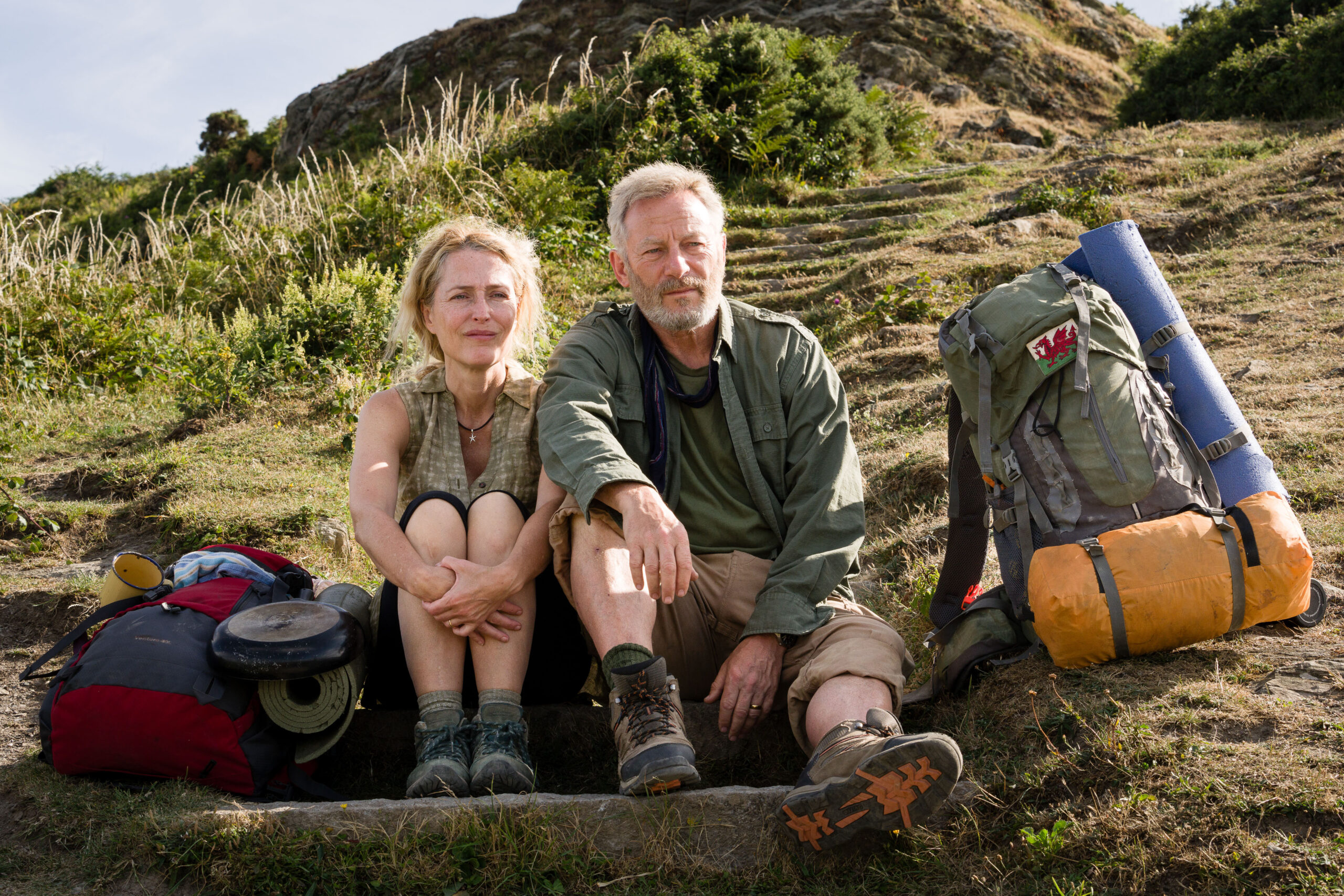
With challenges of almost biblical proportions pushing them toward this extraordinary journey of struggle and perseverance, Moth and Raynor lack funds, so they rely on tax benefits to fund their journey, good weather, and anywhere they can prop up their tent. Moth snores, and their connection is tested wholeheartedly as they continue without many of the modern luxuries that not only others experience but that they themselves thought they would always have. During this journey, we see flashback scenes that explain why they started their long walk along England’s South West Coast Path.
Their journey seems to be a representation of them running away, but what are they running toward, and how will they get there? That remains the mystery and dramatic intrigue of the film. It becomes clear that walking this coast is not an act of protest but one of desperation. Yet perhaps it also helps them hold onto some of their dignity as they face one of the most undignified situations adults and parents can experience in a first-world society. They are grasping onto that dignity and everything else they have held dear about their relationship, trying to live in a way that most people only ever talk about: in a romantic relationship without materialistic foundations. They simply rely on each other, the lucky encounters along their journey, and their own strength to keep going.
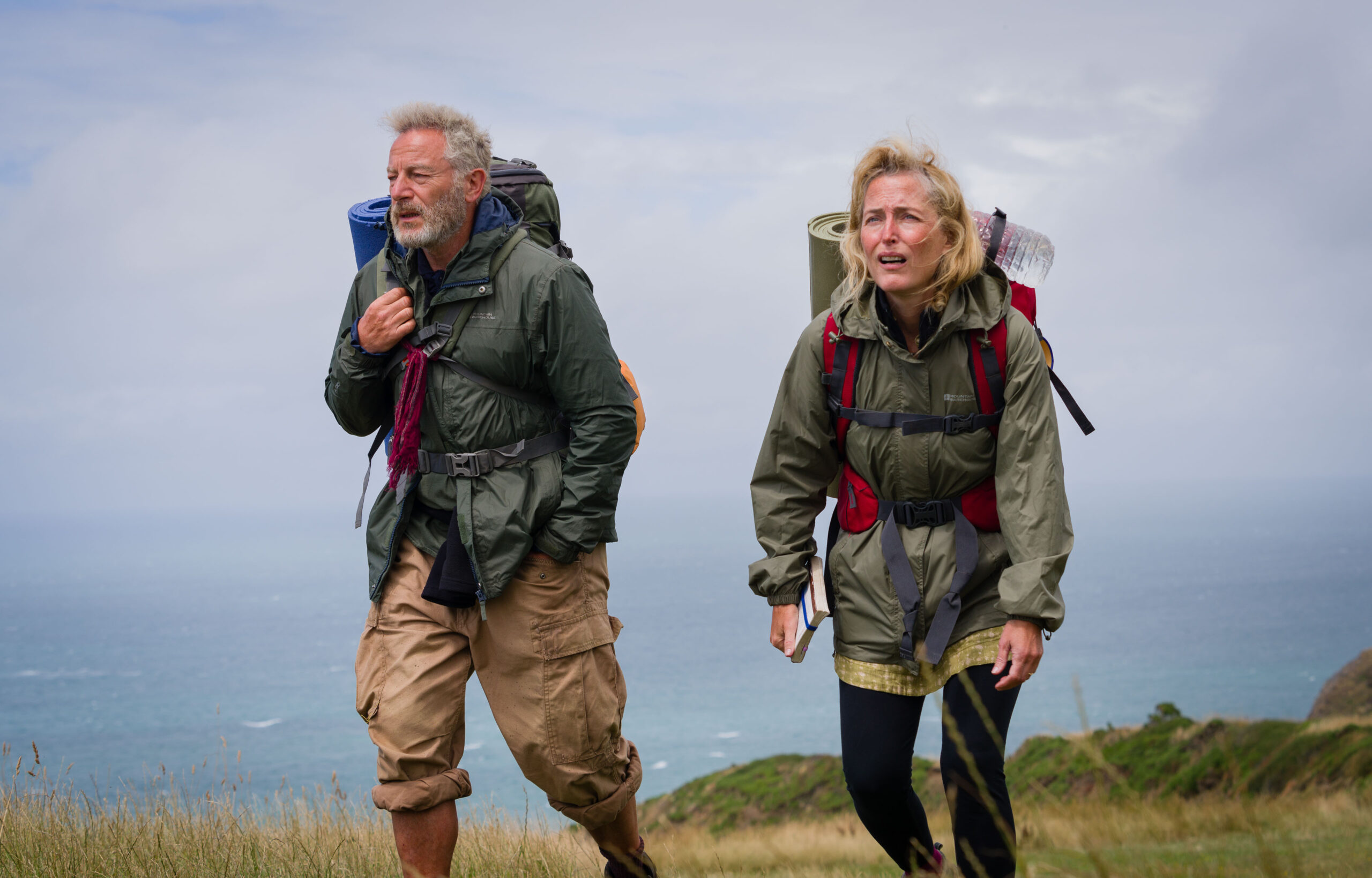
As a film, there are not a ton of interesting or innovative cinematic angles or lighting choices. The start of the film has a smaller aspect ratio, which is more reminiscent of older digital camera photos but, for some reason, did not fill the screen on my TV. It features very simple camerawork that doesn’t sit in between the couple but often seems like another person, almost like one of their children watching them as they go. The camera seems to take the journey with them, moving alongside them through these landscapes and the unique nature, hills, and communities that the path brings them through.
The music emulates that feeling too, momentarily interrupting their mostly natural journey filled with the sounds of nature and the hum of their movement. This sound choice is particularly interesting because it is highlighted by the sounds that indicate how out of rhythm Moth’s movements have become. The music tries to emphasize the beauty and majesty of these English coastal locations, giving them hope and a spring in their step as they are inspired and motivated by the beauty and new places they encounter. It falls away during the quieter, more depressing moments, of which there are many. The film lets you simply sit in the reality and harshness of their situation, not relying on music to emphasize it, which may make these moments more brutal but generally less cathartic.
The editing is quite glacial, as the journey is felt and its length is very much emphasized, but without a ton of dramatic intrigue in the scene-to-scene occurrences. The main problem is that even within the first 40 minutes, the film repeats the same structure: they run into a small problem, Moth continues to struggle, and then we flash back to something that happened in their past. The drama between them barely builds and is rarely highlighted. It is a dynamic that really felt to me like it needed to change more consistently, and for the amount of time that passes, I felt only partly satisfied by learning more about their life before the walk.
There is not as much to hold onto from scene to scene, which makes the journey not only seem long but less intriguing as a whole. There are a couple of scenes where they have more meaningful conversations. Isaacs and Anderson are excellent actors, but watching them act out the discomfort and pain of this journey can only grab your attention for so long. The lack of interesting dialogue and conversations makes the film feel mostly flat.
For example, the film hints at Moth’s ambition to have a richer and wealthier life being the kickstarter that led to their unfortunate situation, but that drama is never really explored. Instead, it is a small detail that feels like the beginning of dramatic development but is largely ignored in order to highlight the couple’s constant perseverance in the face of the hike’s challenges. But seeing the same kind of perseverance scene after scene does not always make the film an engrossing watch. In many ways, their long walk feels more like a grounded metaphor for their struggles. They can gain some relief by facing natural obstacles instead of the ones seemingly put up by people that led to their devastating loss of home.
Ultimately, this is like The Long Walk, but instead of a post-apocalypse and teenagers, it is about modern adults escaping debt and homelessness. No one is really forcing them to do it, and yet it never seems like anyone is going to help them either. It is an us-against-the-world film that inspires through its vision of a partnership and love that seems unshakeable, even in the face of some of the most difficult first-world circumstances imaginable for people who seemed to be upstanding citizens.
The film rarely changes its approach, so if you are intrigued and engrossed by the first 20 minutes, you will surely find plenty of things to ponder over the next hour and a half. If you are not, it may be a film that feels as challenging as walking many miles without knowing exactly what you are walking toward.
The Salt Path is available in theatres on Friday, August 28th, 2026.


![Disney Princ[ess]: 1on1 with Brooklynn Prince (The Florida Project)](https://screenfish.net/wp-content/uploads/2017/10/229627854-1.jpg)