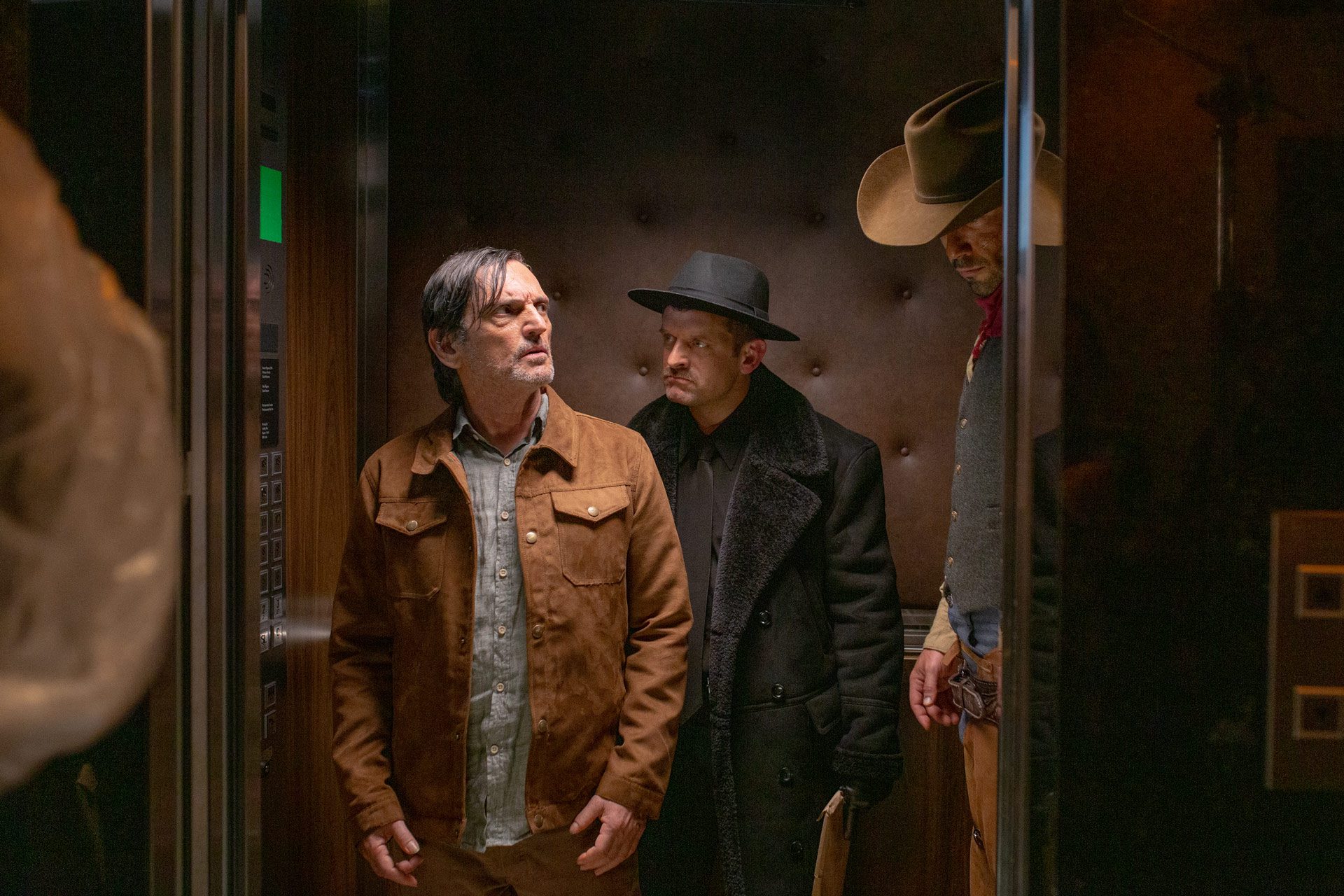
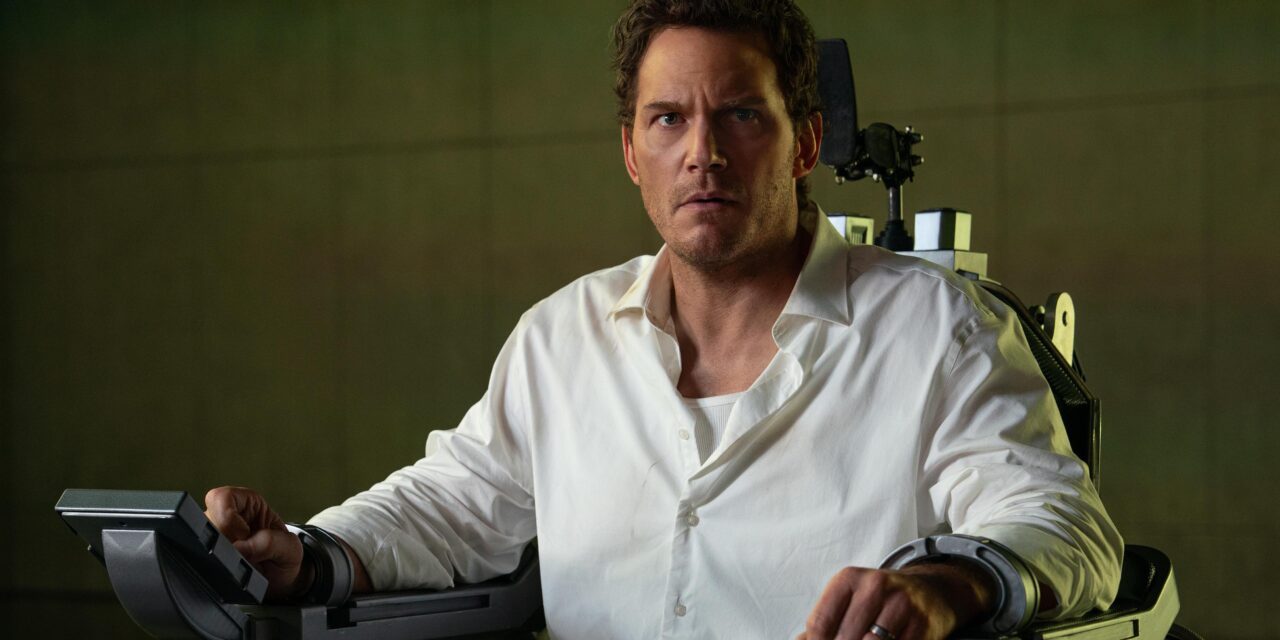
Directed by Timur Bekmambetov, Mercy tells the story of Chris Raven (Chris Pratt), an LA Detective who has championed the ‘Mercy Program’, an AI-driven legal process designed to speed up the system. However, when Raven awakens under accusations of the murder of his wife, he must prove his innocence in the face of his own advanced AI Judge Maddox (Rebecca Furguson). With the clock ticking down, Raven must decode the facts before him in order to uncover the truth about his own innocence.
As the director of the surprisingly delightful Searching and last year’s much-maligned War of the Worlds, Bekmambetov’s return to the digital thriller genre falls somewhere between his two previous efforts. While it has some intriguing elements, Mercy still stumbles to create something coherent.

To be fair, Mercy does have a few tricks up his sleeve that should entertain its audience. For example, I’m always impressed with the detail of a film that takes place in ‘real time’. Here, there’s a sense of urgency that’s created just by keeping the ticking clock onscreen. As such, Mercy actually does a fairly good job of keeping time as the ultimate villain of the piece.
What’s most surprising though is how well the film works in 3D. While it isn’t entirely locked into one room, Mercy does sit with Pratt extensively in the (ironically titled) Mercy chair. As a result, the use of 3D seems unnecessary, given that there’s no grand spectacle to take in. (Mercy isn’t exactly Avatar.) But, strangely, it actually works. Given the film’s face-paced digital screen grabs and constantly moving camera, the added effects help bring something fresh to the otherwise static visuals.
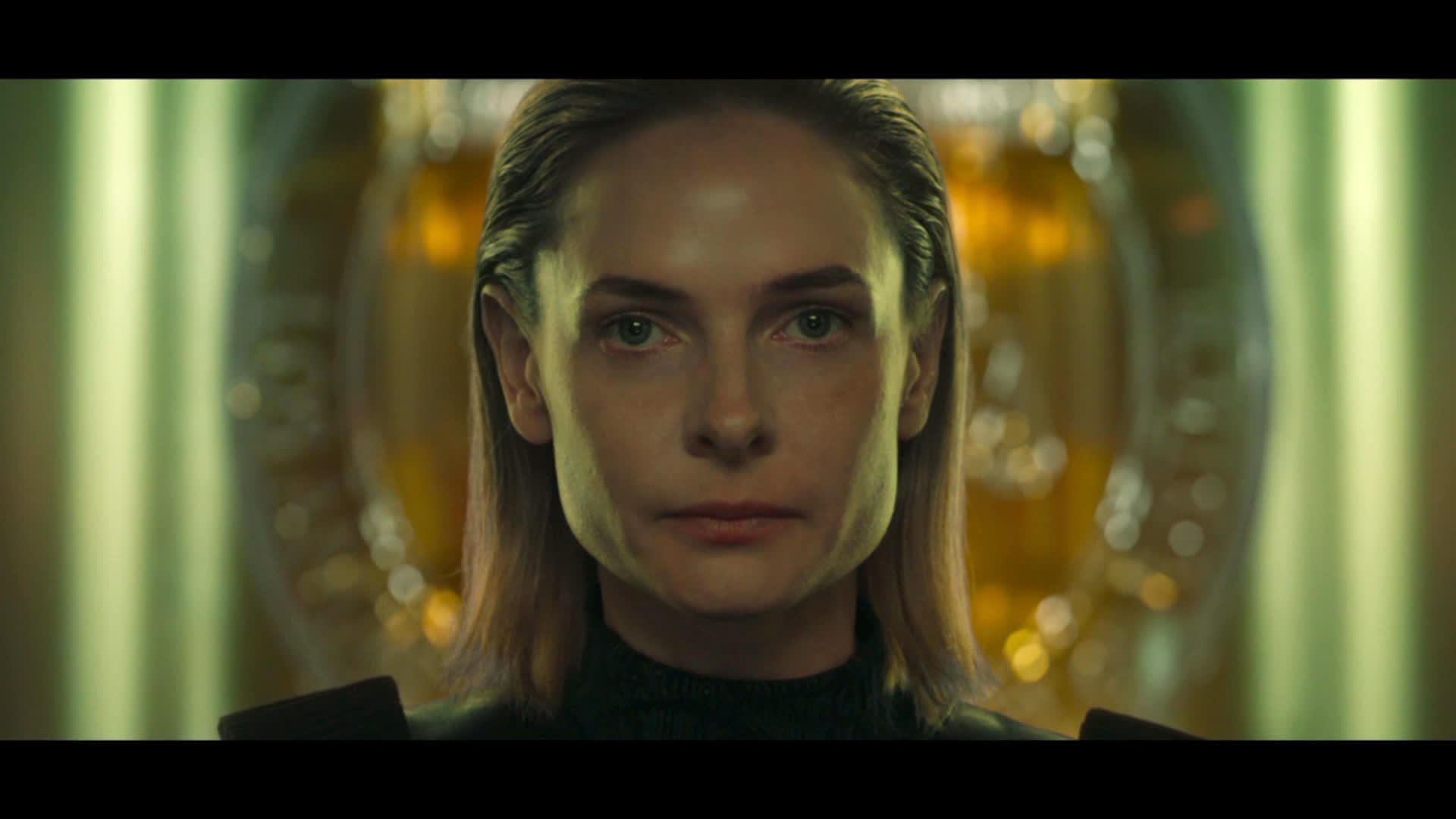
Films that take place primarily in one location frequently find it difficult to keep up their energy but Pratt and Hall work hard to keep things going. As Det. Chris Raven, Pratt does his best to bring the sort of physical presence that he carries in films such as Guardians of the Galaxy and Jurassic World. (Though, being strapped to a chair ultimately prevents him from doing so.) At the same time, Hall’s Judge Maddox counterbalances Raven’s emotional energy by remaining stoic and severe, creating a fairly interesting dynamic between the two.
And certainly, the concept of the film is topical in and of itself. Mercy is a ‘Big Brother’ world that still feels authentic to our experience. Every text message, body cam video and Instagram account creates a story about Detective Raven. To the rest of the world, his life is summed up in a flurry of online posts and videos but does it tell the whole story?
Having said this, Mercy remains flawed in its execution. Despite its interesting premise, the script falls flat in moments that feel like an opportunity to say something meaningful. (This is especially true in the film’s rushed finale which spins its wheels wildly to offer up a ‘twist’.) While AI remains a hot topic in our culture, Mercy tries to tap into the anxiety about our digital world but isn’t entirely sure how to do so. Beginning with an anti-AI stance, the film gradually tries to show the interdependence between humanity and technology along the way but it never fully fleshes out its ideas, creating absurd final beats.
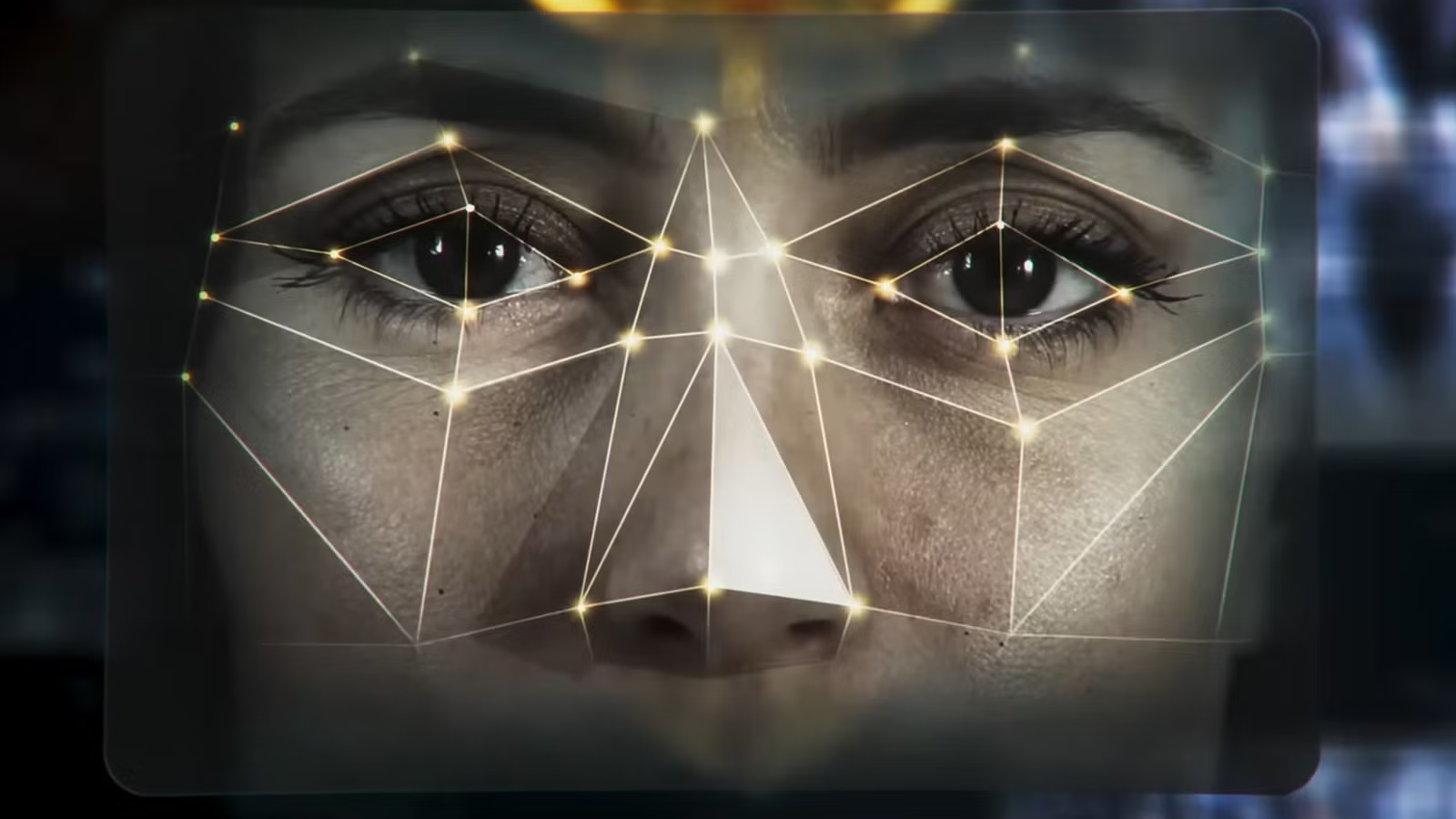
Nevertheless, what Mercy does very well is lean into the tension between ‘truth’ and ‘facts’. As Raven attempts to prove his innocence, he is faced with overwhelming proof of his guilt simply based on the facts that are laid before him. Even so, he remains steadfast in his attempt to create a new narrative by getting behind the story. Raven’s life is flawed, yes. But it’s also more to his story than what’s been created via postings on social media.
In short, the truth is more than the images and videos that we share.
That discussion actually buoys Mercy in moments, reminding the viewer that social media and online interactions only tell one segment of a person’s life. In this way, Mercy is often surprisingly fun. However, the film can’t escape the truth that its weaknesses overcome its strengths.
Mercy is available in theatres on Friday, January 23rd, 2026.