
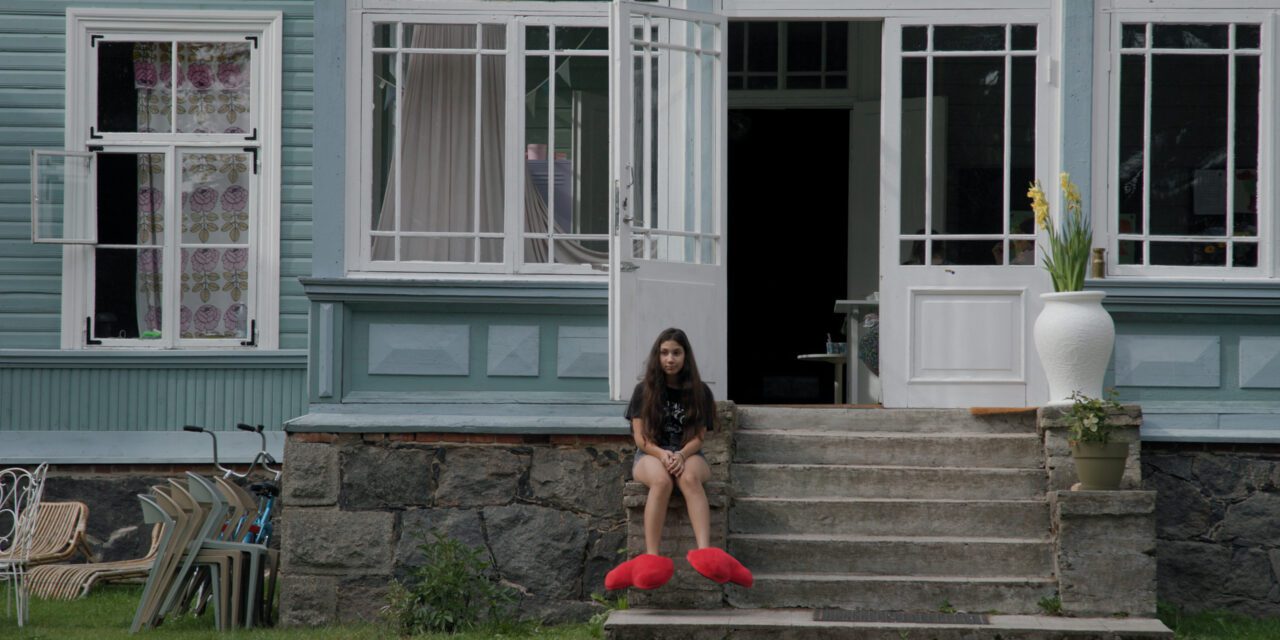
During the early months of the Russia/Ukraine war, Ukrainian children were rounded up and taken to Russia (according to Russia, it was for their protection). They were placed in orphanages or adopted by Russian families. After the Rain: Putin’s Stolen Children Come Home, from director Sarah McCarthy, give us a look at a few of those children who have been restored to their families, and the healing that must take place because of what has happened to them.
This, of course, is just one of the atrocities from that war. The act led to an indictment and an arrest warrant issued against President Vladimir Putin by the International Criminal Court. The deportation is seen by many as a war crime for which Russia needs to be held accountable.
This film really spends little time on this criminal act. Instead, it takes us to a small retreat center in Estonia where families that have been reunited can go to try to heal the damage to their souls. At the ten day retreat, therapists and therapy animals give the children and their parents ways to reflect and begin a healing process that will no doubt take many years.
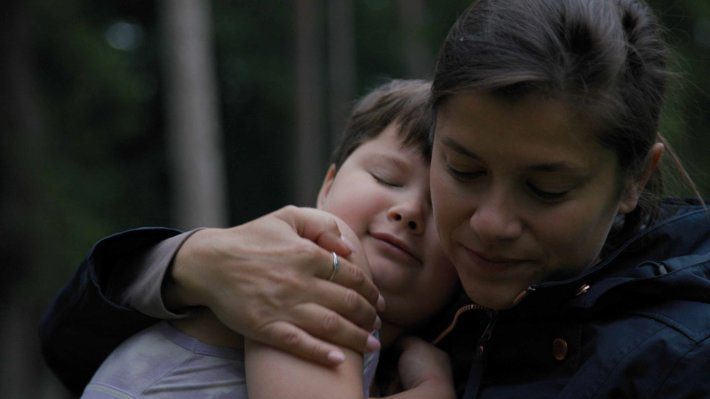
The film focuses on two of the children, Sasha, a seven year old (five when she was taken), who is there with her father and sister who was also taken; and Veronika, an early teenager, who is there with her grandmother, because her parents are serving in the miliary.
Sasha has a deep need to connect with a mother figure. This predates the abduction. After being abandoned by her mother, she is on the lookout for someone to be her mother. One of the most emotional scenes is when she asks one of the therapists, “Why don’t you want to be my Mama?” The issue is one that she and her father are going to have to continue to deal with.
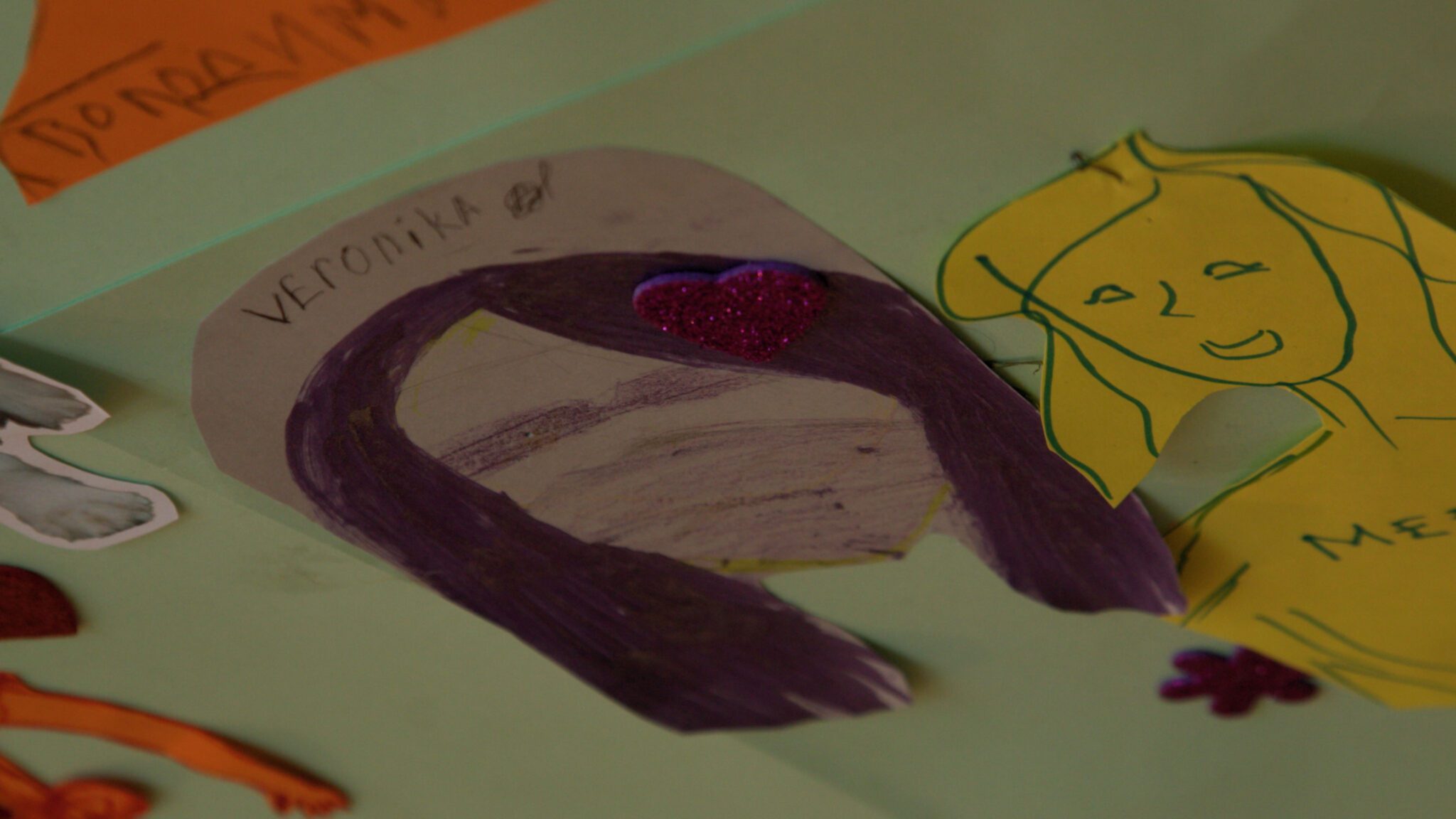
Veronika always seems to have a laugh in her voice, but that laugh, we soon see, is a defense against the trauma. One of the first exercises was to draw self-portraits. Veronika’s had no face. The goal that she is working toward is to rediscover what filled the emptiness she now feels and overcome her isolation.
While we hear small bits of the experiences of the children during the deportation, the film doesn’t dwell of those dark times. Rather, it wants to concentrate on the growth and healing that begins during this time when they have been able to come together.
After the Rain is available on IndiePix Unlimited.
Photos courtesy of IndiePix.