
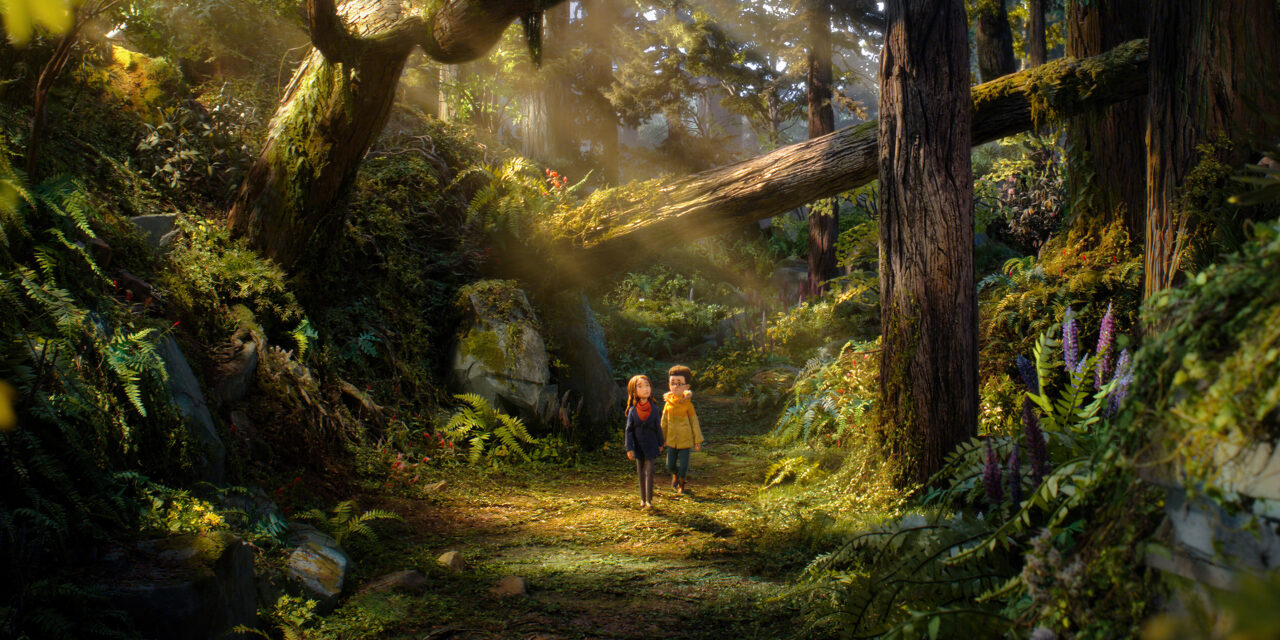
Directed by Travis Knight, Wildwood is the latest film from LAIKA Studios. If you are unfamiliar with that name, they are the company behind Coraline, Kubo and the Two Strings, and, most recently, Missing Link. Knight was behind Kubo, and as the studio’s president and CEO, it would be easy to doubt his creative leadership. Do not do that.
The film follows Prue (Peyton Elizabeth Lee) and her classmate Curtis (Jacob Tremblay), who end up in the magical world of Wildwood after Prue makes a big mistake and must find a missing person. In this world, they encounter Alexandra, a woman whose trustworthiness they must decipher in order to find the person they are looking for.
I was vague because this film is very well crafted, and the more surprised you are, the better! I do believe the film had even more potential, but what you do get is one of the most complex and entertaining fantasy films of the past decade. I talk a lot about the film’s missed potential, but know that I believe this is a good film.
The worlds that they create through these sets are remarkable. The details, even in the human world, where we are situated in both rural and urban Oregon, are great. We really get the specific atmosphere of the place, and the hippie energy plays into the magical realism that we later encounter. Wildwood itself has some great designs. One house is remarkably designed and provides a really strong playground for an action sequence.
The characters, in particular, are so full of life in every scene. Each one was crafted with so much care, and the small details, including facial features and expressions, are unique to each character. This makes even some of the most minor characters really stand out in their brief screen time and become memorable faces who make an impact visually.
There is a strong darkness to this film. Despite it being about children and taking place in a world with lots of whimsical figures, some of them have a real heaviness to them. There are strong themes, and the violence at different points is quite visceral. I commend the film for this because it helps spell out the real damage that violence does to other beings and the land they inhabit. Through these visuals, there is an effective anti-war sentiment for a film targeted at families. There are also some very scary things happening to characters and innocent people, again emphasising how horrific the violence used by characters in pursuit of their goals can be. Just be prepared for it.
Prue herself has an underdeveloped arc as the main character. At first, she seems to be someone who needs to be opened up to the magic of the world, but then she discovers how terrible the magical world can be due to different unfortunate circumstances. In the end, her big decisions are more motivated by a sense of guilt and loyalty. These are ideas that did not feel well built up through her character in the first half or so of the film. Thus, her final decisions and efforts to save the people around her don’t feel as well developed as other parts of the film. She acts more as a guide within this world than a fully fleshed-out protagonist. Her main trait, perseverance, can be inspirational, but it is not distinct or original.
Curtis, who is the secondary character, has an almost equally significant story. He starts out being seen by Prue–and even by himself–as a loser, a coward who is incapable of courage. Perhaps he embraces being the nerdy kid too much and could never see himself as courageous or able to make bold choices. His character will make a lot of sense to a lot of people, especially young men and boys. You can be nerdy and nervous, but you can learn to put yourself in more volatile social situations and do things you never thought you could do.
As a secondary character, Curtis is just as inspirational as Prue, and his more limited screen time is used really well. He does have one relationship with a character who feels overused, and they spend a scene being overly sentimental about this character, but this doesn’t hinder his personal arc. There is a really nice, clean arc for this character.
Alexandra, who is called the Queen Dowager, is probably the most interesting secondary character. She is someone who is living with and reckoning with the limits of her world and her abilities. More time with her felt like the most logical place to add runtime. Taking time away from someone else for her sake could have worked, as she becomes a very interesting anti-villain with a very well-done motivation. However, she also lacks some nuance due to her more limited time as a featured character.
The result is that she feels underdeveloped, considering how much potential thematic expression could have been communicated through her character. Carey Mulligan does an excellent job in the voice role, where she has both a menacing presence and a gentleness that makes her an empathetic anti-villain in some scenes and a manipulator in others.
Alexandra’s decisions have implications for the ethics of trying to recreate the past. We question her attempts to have an artificial person in her life, but these ideas, which have been the main subject of entire feature films (After Yang), are not really given the time I felt they deserved. The film does avoid becoming like one of those films and probably wouldn’t have the room to say as much, but it felt like one of the more interesting avenues the film chose not to explore. What it does choose to explore isn’t fully developed either.
A lot of the other tense scenes, where Curtis or Prue are in danger and escaping from threats, feel like they are not nearly as interesting as the themes explored through Alexandra’s character. The same goes for the scenes that rely more on humour, as they repeat similar Zootopia-like jokes about anthropomorphic animals who can talk but end up resorting to their animal instincts, to their own detriment or that of other characters.
The other thematic idea that is not explored as much as it could have been involves the Bandit characters. They are a group of people who are apparently native to their areas but are being displaced and threatened by the Queen Dowager. The implication of a coloniser having this complex story is already a very complicated subject for a film like this, and it leaves those ideas unexplored for the most part.
It is interesting that the film acknowledges that some of the people who wrong others and innocent societies may have their own issues, but it never really shows how complicated, complex, and generationally damaging the actions they take can be. I am glad it looks to allow people to discuss these important ideas, but this film certainly doesn’t serve as a great source of education, nor does it grasp the deep emotion this topic often conjures in people affected by it.
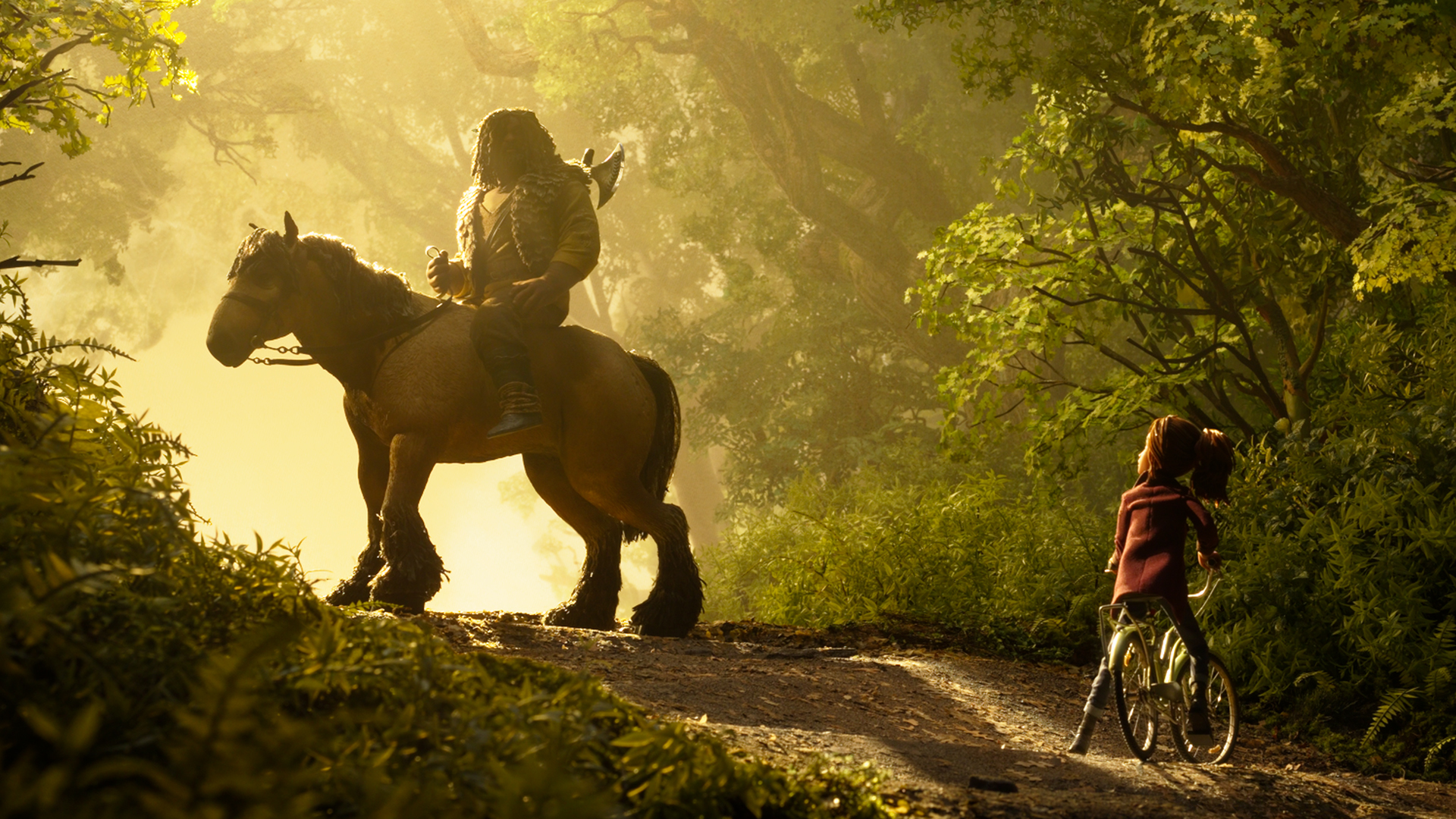
This group does have some really interesting personalities that the film explores briefly. The King of the Bandits, played by Mahershala Ali, is a fun character, and Ali brings his booming and ethereal voice to this role with apt effectiveness.
The music is very well done, never becoming too generic and often containing varied instrumentation that makes it really engaging. It complements many scenes really well and never falls into the common trap of using music to push a tone or emotion that is not present in the storytelling. It’s very nice to listen to and enhances the experience the way a good film score should.
The ending is very clean, not too convoluted, and uses something some may consider a convenient excuse or force that helps the film end in a way that will be satisfying to most audiences. However, the film does build up the importance of this force throughout the movie. So, while it is not completely earned, it has some thematic and storytelling importance.
Wildwood is in theatres on Friday, October 23rd, 2026.