Hail Bob Ross, full of grace.
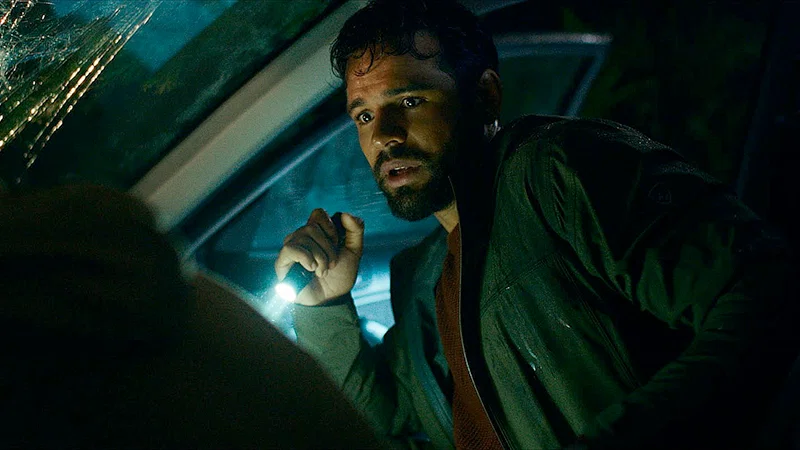
Directed by André Øvredal, Passenger tells the story of Tyler and Maddie (Jacob Scipio and Lou Llobell), a young couple who decide that settling down simply isn’t for them… at least, not in one place. Selling their condo, the two embark on the open road, committed to a life on the move. However, after they encounter a gruesome highway accident, the two discover that they unwittingly picked up a passenger along the way. Plagued by a demonic presence, the two find themselves under relentless attack by a creature that will not rest until he turns their van life adventure into a living nightmare.
With fits of fury, Passenger is an effective horror-thriller that knows when and how to scare its audience. With a (fairly) simple premise, Passenger leans heavily into horror tropes but executes them to so effectively that you can’t help but be glad you went for the trip.
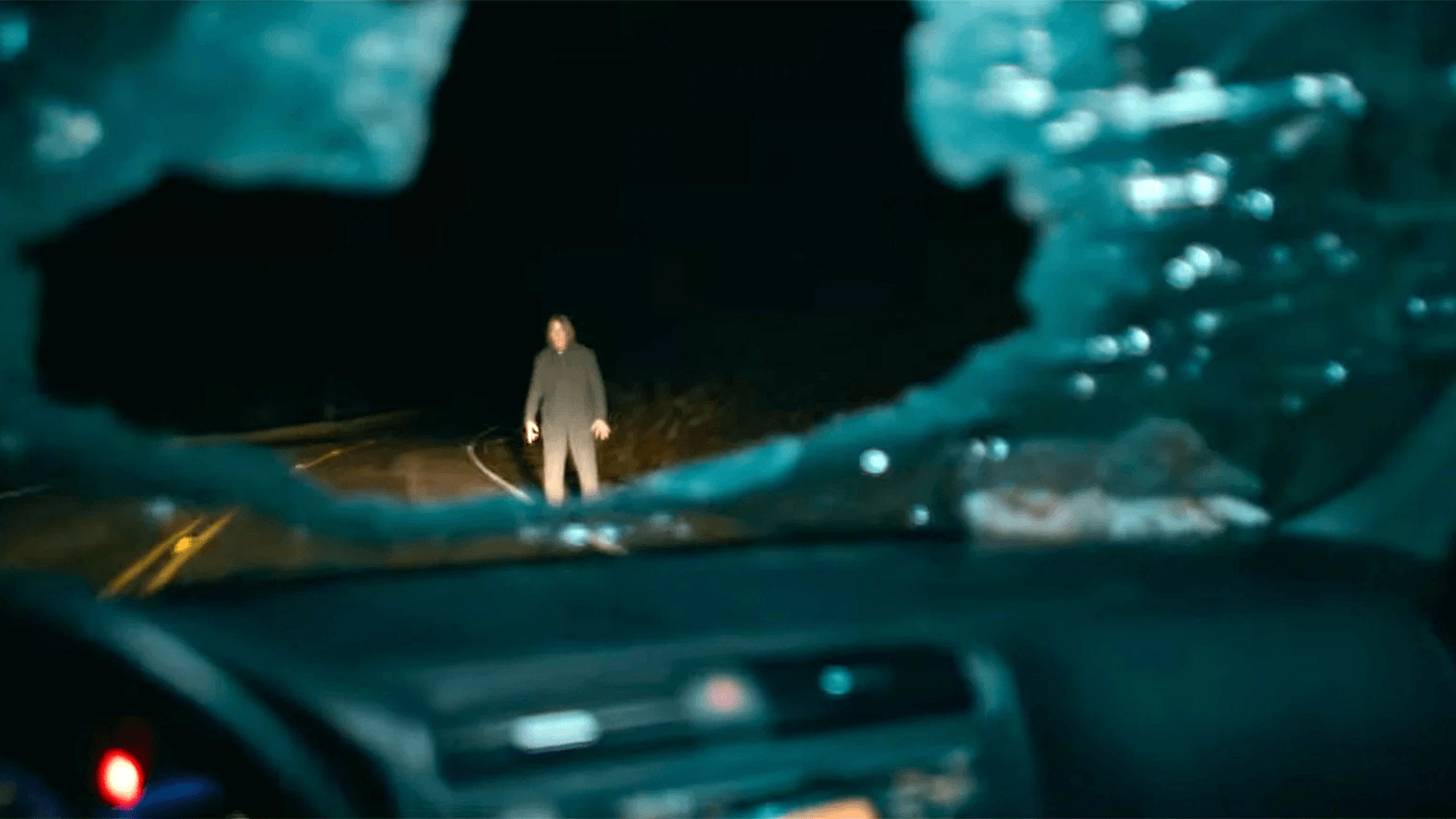
Drenching the screen in darkness, Øvredal leaves the viewer in a constant state of dread. Every flashlight, high beam and projector (!) feels like the only safe space in a world of darkness. (And, without saying too much, the scene with the brake lights is visually stunning.) In doing so, Øvredal ensures that his jump scares hit their mark. From the film’s opening sequence, he knows how to make the most out of his demonic beastie, causing him to appear out of nowhere without warning.
As the film progresses however, the tone shifts slightly. Shock and frights become less prominent, allowing the film to focus itself more on the characters. In doing so, the film loses some of its steam but, by then, the story has more than enough momentum to carry the film through to its gruesome finale.
Even so, ultimately, the greatest fear within Passenger’s big bad beastie is settling down. With a Bob Ross bobblehead bopping away on the dashboard, Tyler and Maddie’s quest for adventure on the open road seems like a good idea… but it doesn’t necessarily satisfy them. For Tyler, life in an RV seems like a great idea that kicks back against his own traumatic childhood. And, to be clear, Maddie is on board with the plan… at first. But, as time goes on, she seems to slowly yearn for a life that’s more traditional. And she’s not sure if Tyler is the one who can give that to her.
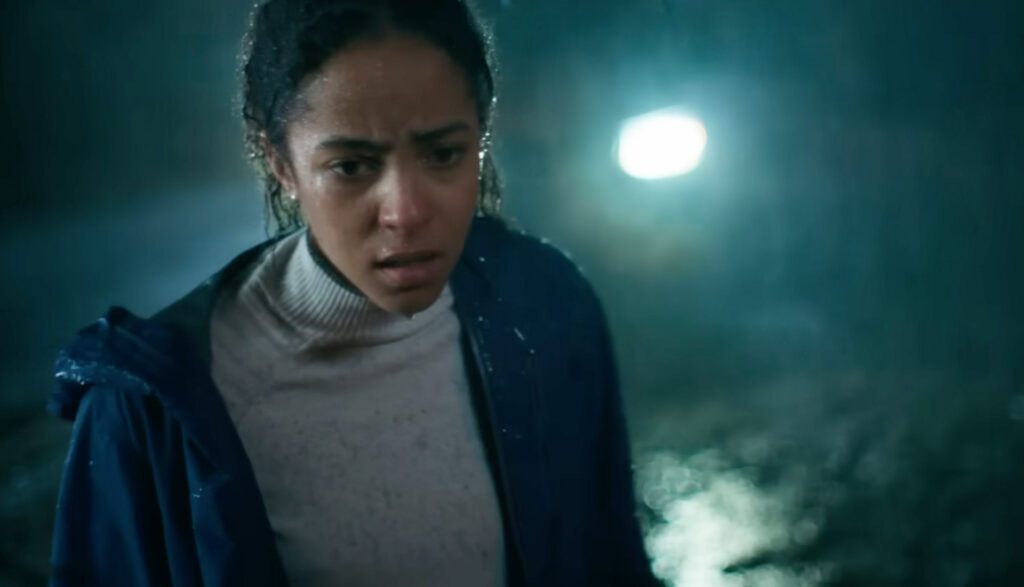
But that fear also makes the film’s monster so compelling. Øvredal connects the dots between its demonic passenger and Tyler and Maddie’s anxieties about more traditional systems. With every appearance and jump scare, Øvredal pushes his characters to examine their concerns in different ways. After all, they’re not necessarily scared of commitment.
They’re scared of being conventional.
Rather, to be more specific, Passenger is a film that taps into the Millennial dread of abandoning freedom for the sake of a ‘tradlife’. And, frankly, that makes their battle with the devil far more interesting than other ‘scare fare’. Øvredal understands that the world has changed, giving both Tyler and Maddie the desire to chart their own path. But, at the same time, there’s still something about the old ways that has their attention. (And confronting that tension is almost as important as facing off with their demonic passenger.)
Admittedly, Passenger doesn’t reinvent the genre but neither does it try to do so. In fact, despite leaning into the familiar stylistic tropes of the genre, Øvredal slays these moments so well that he seems to add something a little extra to his creepiest moments. But, ultimately, what makes Passenger so compelling is watching these characters wrestle with convention and attempt to decide if they’re really that scary after all.
Passenger is available in theatres now.