![The Mandalorian and Grogu: This is the [new] way](https://screenfish.net/wp-content/uploads/2026/05/THND-FF-000444-1280x640.jpg)
After seven years, Star Wars is back. And The Mandalorian and Grogu want you to believe that this is the [new] way.
In The Mandalorian and Grogu reintroduces us to Din Djarin (Pedro Pascal) and his miniature Jedi-in-waiting, Grogu as they are doing jobs around the galaxy. Living at a time when the Empire has fallen, the duo have teamed with the New Republic to hunt down Imperial warlords who still believe in the mantra of the Empire. But things become complicated when they are asked to find Rotta the Hutt, the kidnapped son of the now-deceased Jabba the Hutt. Though the duo are reluctant to take the job, they acquiesce, placing them in midst of a situation that they want nothing to do with but that they also can’t ignore.
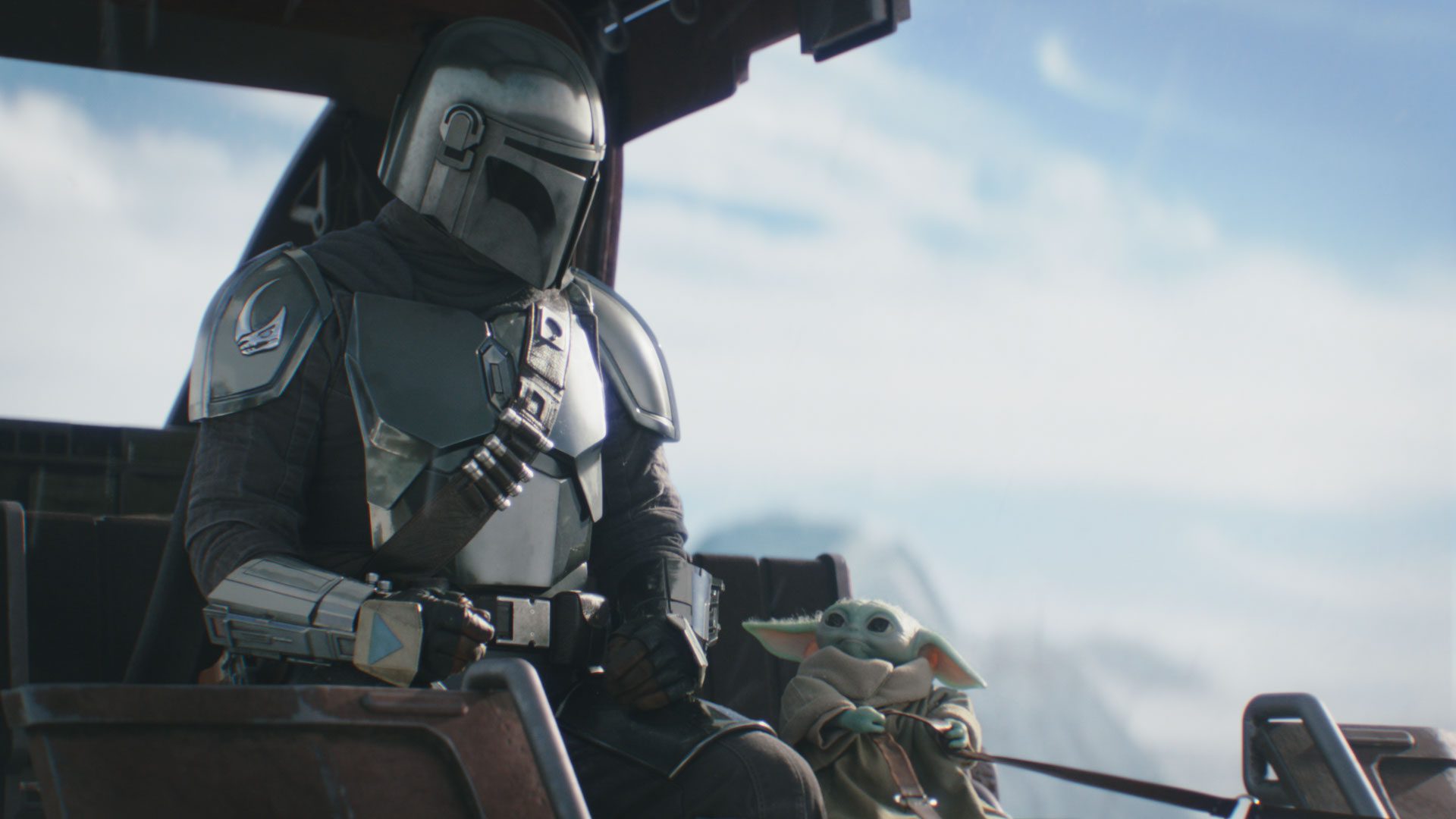
(L-R) Mandalorian (Pedro Pascal) and Grogu in Lucasfilm’s THE MANDALORIAN AND GROGU. Photo by Francois Duhamel. © 2025 Lucasfilm Ltd™. All Rights Reserved.
Directed by Jon Favreau, The Mandalorian and Grogu is an entirely unique experiment to the Star Wars universe. (And, frankly, that’s a sentence that I never expected to say.) Though fuelled by heart and humour, it is likely the quietest film in the mega-franchise canon, offering a sweet and soulful meditation on family legacy beyond the space battles.
And, for that reason, it’s also going to be extremely divisive.
Though well in keeping with the tone of the series, it admittedly does feel like an odd way to reintroduce the world of Star Wars on the big screen. After all, this simply isn’t the type of story that we’re accustomed to in a theatrical tentpole film. Comments are going to be made regarding the film’s reliance on storytelling that ‘could’ve been told on Disney+’. There will people clamouring for more size. More scope.
More… more.
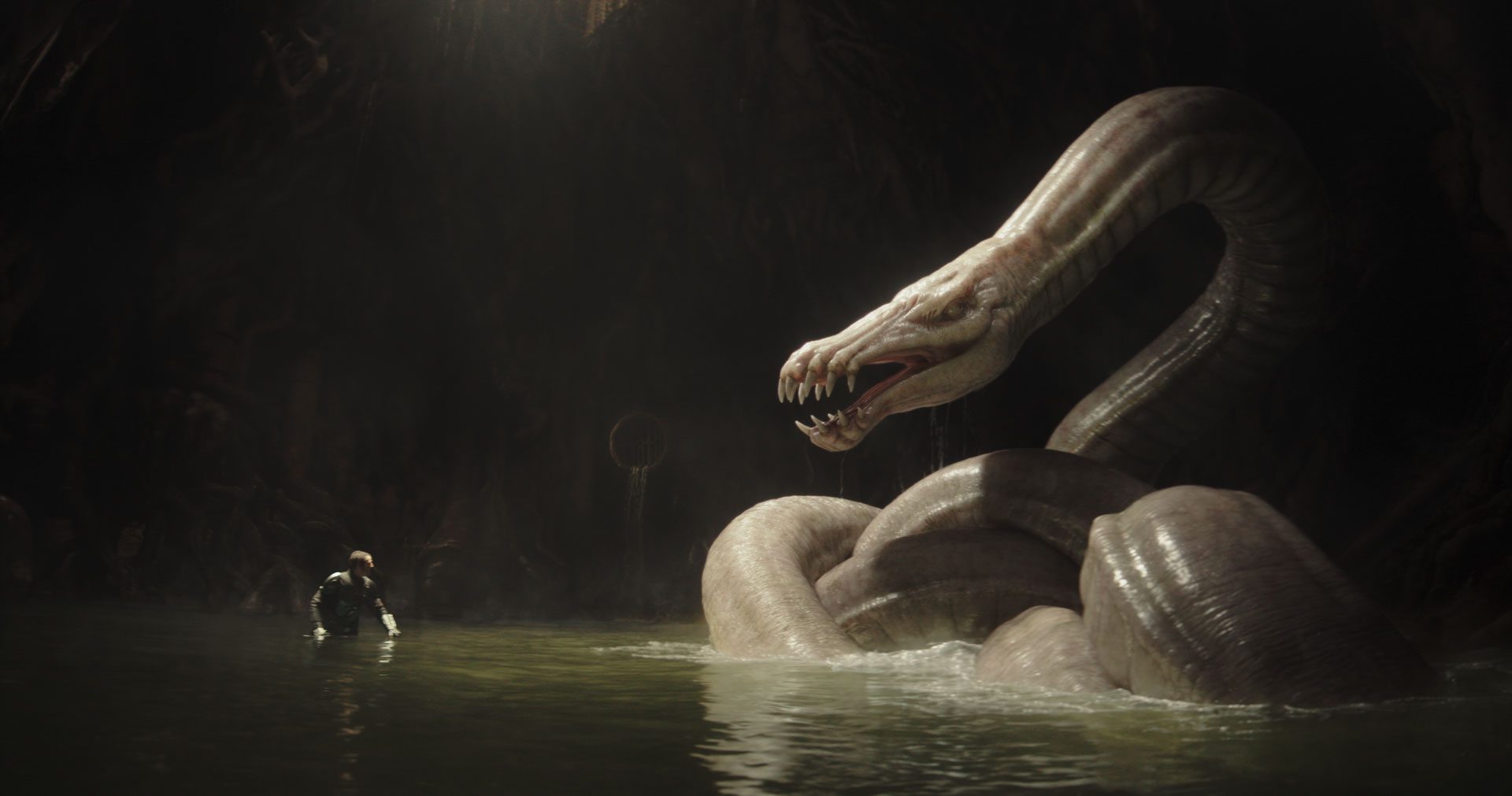
The Mandalorian (Pedro Pascal) and Dragonsnake in Lucasfilm’s THE MANDALORIAN AND GROGU. Photo courtesy of Lucasfilm. © 2026 Lucasfilm Ltd™. All Rights Reserved.
And, to be fair, there’s something to be said about that. As a franchise, Star Wars historically hasn’t required us to invest anything into it. It’s not that it hasn’t had emotion or spiritual depth to its storytelling. Instead, it’s always been something designed to be a spectacle. Death Stars, lightsabers and intergalactic warfare are staples of the series… and none of those things are to be found here.
Rather, Mandalorian deliberately steers away from all of those things. Yes, it manages to include stunning worlds and massive action sequences. (The AT-ATs and the giant pit viper look particularly great on the big screens, especially on IMAX.) But Favreau’s story is the first Star Wars entry that finds its magic in conflicts that don’t require any particularly larger stakes. As Mando and Grogu fly off to their adventure, they’re not trying to save the galaxy. They’re just working another job and doing their best to stay out of the way of larger politics.
In a lot of ways, Mandalorian is the closest thing to an indie film that Star Wars is ever going to make. Its story is small in scope, focusing on the emotional journey of two primary characters. The film operates with subtly and slower pacing, creating space for character growth in unexpected spaces. In fact, the script almost feels personal in parts, giving the film a surprising self-awareness that we don’t always find in a galaxy far, far away. (To be specific, the extended scene with Grogu is surprisingly powerful.) Moments like this give weight to Mandalorian and Grogu, making it a film that doesn’t always try to dazzle you in order to make you appreciate what’s going on. Though it has its bombastic moments, it’s these smaller spaces that not only make Mandalorian unique but also feel special.
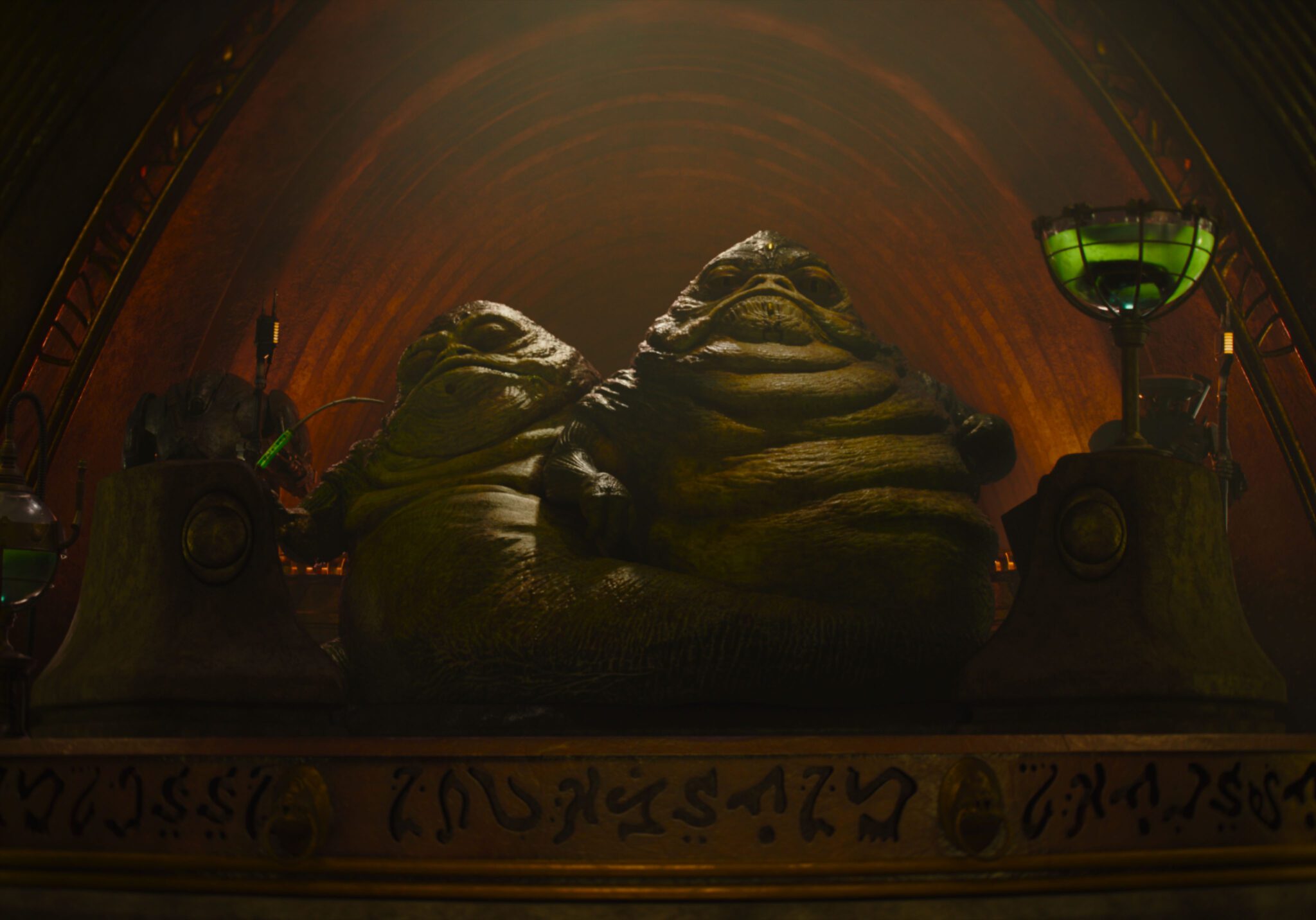
Droid Mercenary Guard, Sister Hutt, Brother Hutt and Droid Mercenary Guard in Lucasfilm’s THE MANDALORIAN AND GROGU. Photo courtesy of Lucasfilm. © 2026 Lucasfilm Ltd™. All Rights Reserved.
While all the Wars films have focused on family relationships, Mandalorian seems particularly interested in delving into the relationship between fathers and sons in its own way. Unlike the toxic relationship of Luke and Anakin, Mando and Grogu have a healthy connection.
But that doesn’t mean it’s going to last forever.
For this reason, Mandalorian wants to explore the unique dynamic between the two characters. As a Mandalorian, Din Djarin will age normally but not Grogu. Instead, the young padawan will outlive his mentor by many lifetimes. As such, this is a film that looks at the legacy passed down from fathers to sons in health (and unhealthy) ways. Without giving spoilers, what does it mean for Grogu to be set up on his own? What sort of legacy can a (formerly) disgraced warrior like Din Djarin pass on to the next generation? And, of course, what happens when father figures don’t match our expectations?
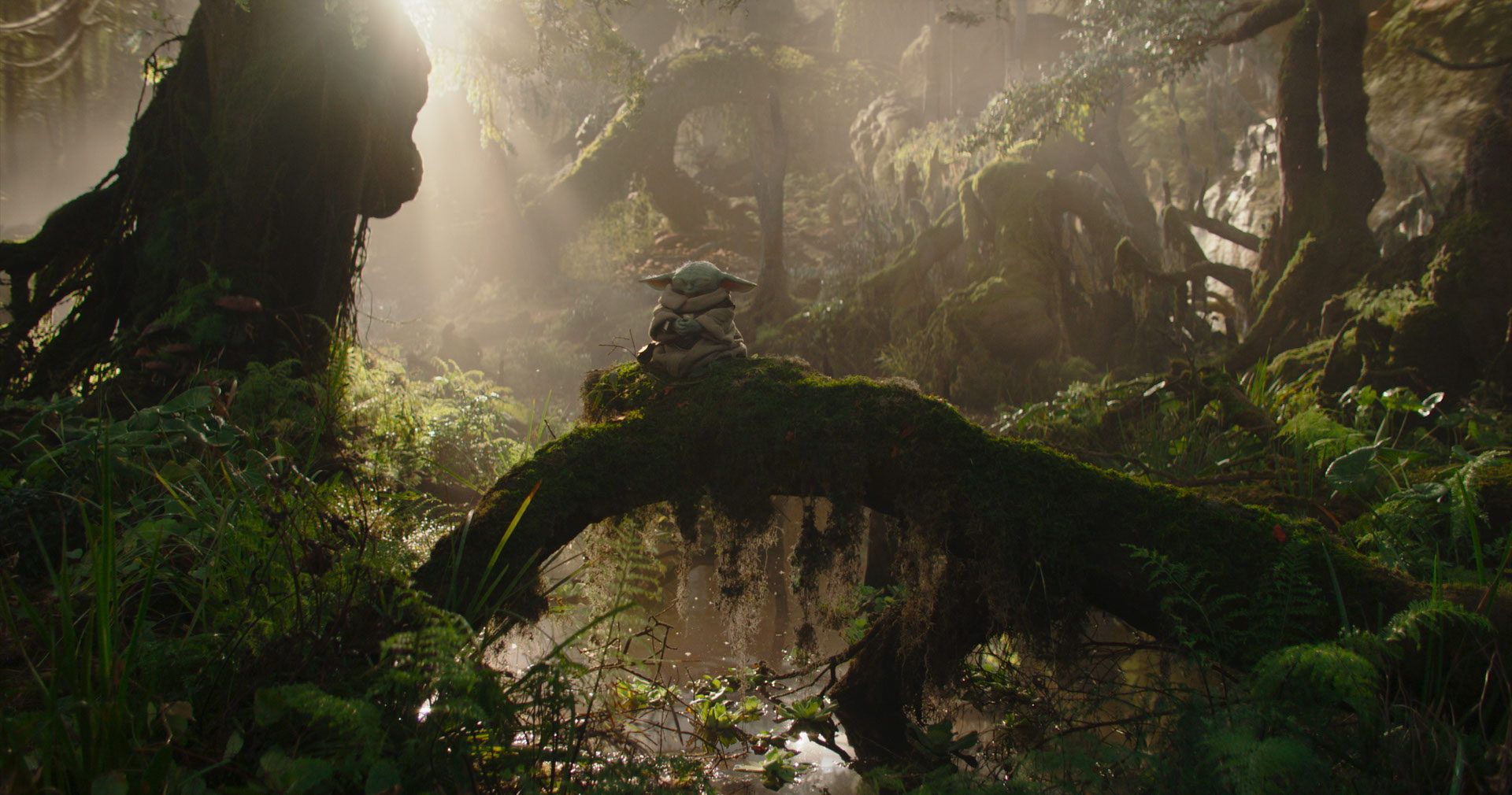
Grogu in Lucasfilm’s THE MANDALORIAN AND GROGU. Photo courtesy of Lucasfilm. © 2026 Lucasfilm Ltd™. All Rights Reserved.
All of these questions provide the emotional core of Mandalorian and Grogu, adding wonderful emotional subtext to the explosions and X-Wings. Though, is it enough to make fans happy? It’s hard to say. There’s no question that, for fans unwilling to unpack their expectations about Star Wars, there will be those saying that ‘this is [not] the way’ to revive the franchise. However, I can’t deny that it’s that same depth of family drama that gives the film meaning, making it well worth the trip onto the Razer Crest. (And frankly, it is the perfect film for Father’s Day.)
The Mandalorian and Grogu is available in theatres on Friday, May 22nd, 2026.