Here’s a look at a pair of international documentaries that we picked from the selection at Sundance 2026. Both are award winners.
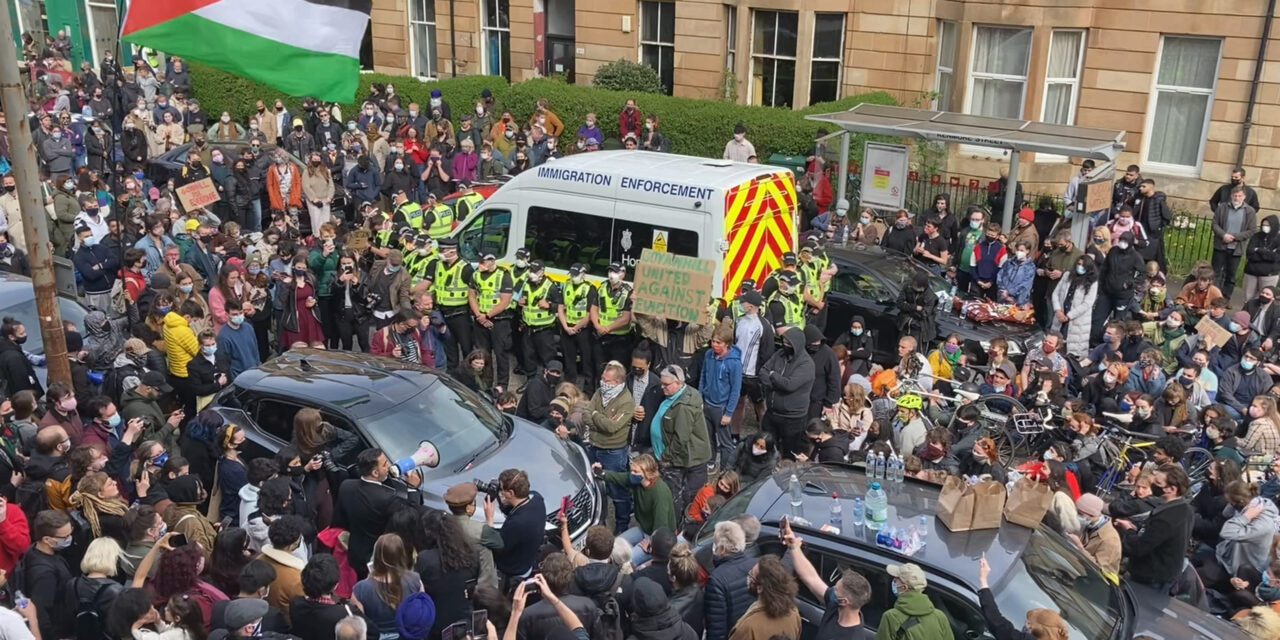
Everybody to Kenmure Street, directed by Felipe Bustos Sierra, was perhaps the most timely film at the festival. In 2021, the British Home Office conducted a dawn immigration raid in Glasgow. It was especially insensitive because it occurred on Eid al-Fitr, the end of Ramadan. Two men were taken into a van marked as Immigration Enforcement. Neighbors quickly began to demand to know what has happening. One man slipped under the van and grabbed the axle to prevent them from driving off. This allowed time for the news to get out to others in the vicinity. Soon, a hundred people were blocking the street. And they kept coming.
Police were called to the scene to try to bring order. More protestors came. More police came. Throughout the day, the confrontation grew into an impasse. This was not a planned protest—it was a spontaneous event of caring for neighbors. The film includes footage from TV coverage, cell phones, and interviews of those who were there.
Part of the film traces the history of protests in Glasgow—going back to the times of slavery (and Glasgow’s part in the slave trade). Glasgow has taken part in many issues, especially labor related. I also sensed that what was playing out that day had no small dose of Scottish nationalism involved. Part of what the crowd objected to was that this was a matter of the Home Office in London.
This played during the time that Minneapolis streets were filled with anti-ICE protests in the wake of the killings of Renee Nicole Good and Alex Pretti. In the Q&A following the screening, filmmakers made note of the protests and how much it becomes even more serious with the presence of guns. (British police generally do not carry firearms.)
Everyone to Kenmure Street was given a World Cinema Documentary Special Jury Award for Civil Resistance. The citation said, “Not your typical social issue film, this documentary utilizes a touch of humor and a wide diversity of perspectives to call upon people to stand up for their neighbors. In a time when xenophobia and authoritarianism are on the rise, the power of collective action here is a global rallying cry.”
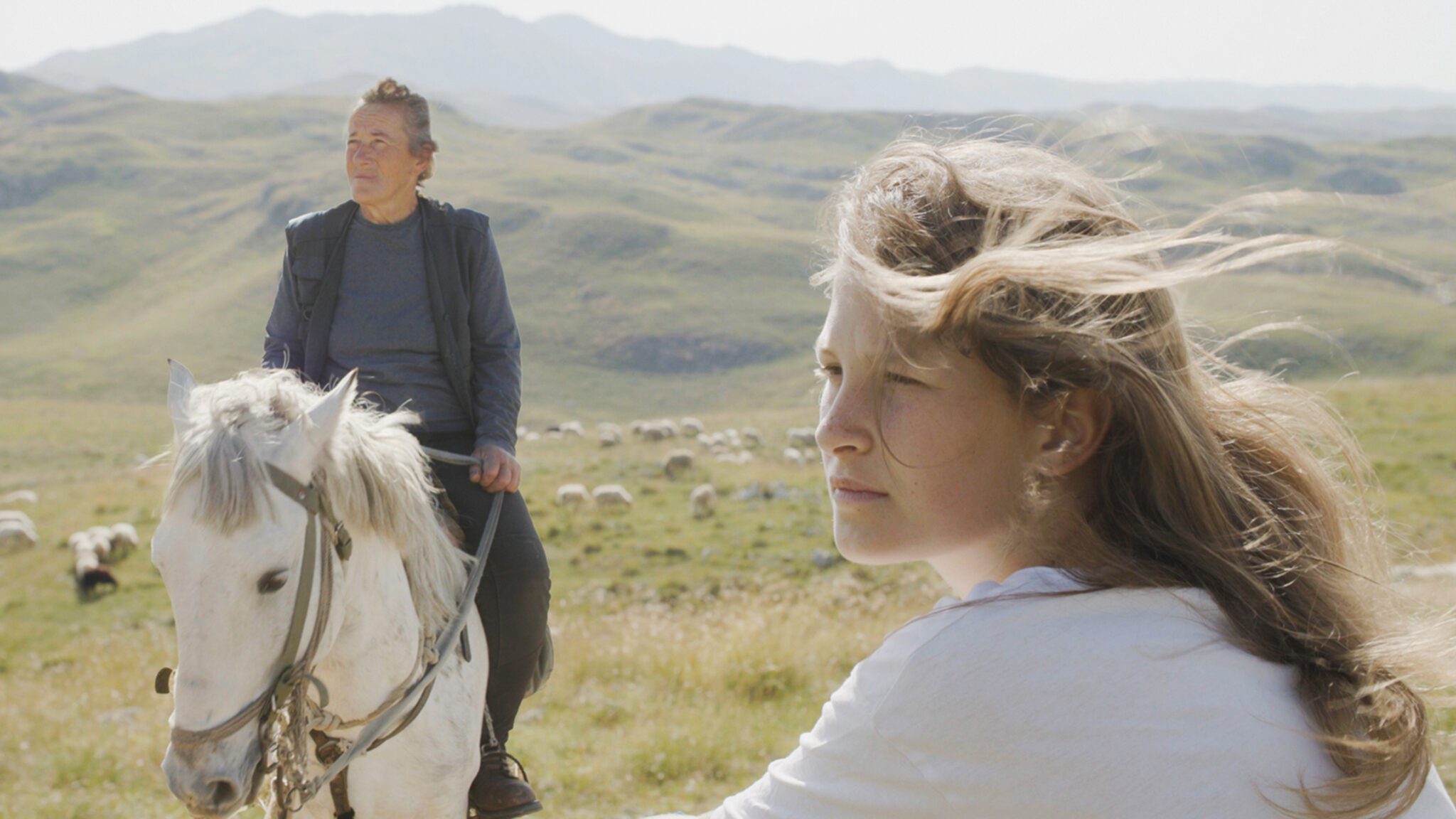
Mileva – Gara Jovanović and Nada Stanišić appear in To Hold a Mountain by Biljana Tutorov and Petar Glomazić, an official selection of the 2026 Sundance Film Festival. Courtesy of Sundance Institute | photo by Eva Kraljeviċ
To Hold a Mountain, directed by Biljana Totorov and Peter Glomazić, takes us to remote Montenegro. Gara and her daughter Nada are shepherds in Sinjajevina. We observe their quotidian life caring for their animals, their neighbors, and each other. Much of the film gives us a voyeuristic (in a good way) look at a rural way of life that continues in the midst of modernity. In this the film shows the beauty of life and of a way of life.
But there is a bit of trouble in this world that they see as a paradise. It is planned for NATO forces to use the mountains for training exercises. Gara is a spokesperson for the residents as they fight against making their homeland a battlefield. This film gives us an understanding of the love of home. Gara is clear that she loves Montenegro, but she loves her home even more.
To Hold a Mountain won the World Cinema Grand Jury Prize: Documentary. The citation said, “This visually and emotionally stunning film transported us to a remote mountain top and into the most intimate moments of a family fighting to protect not only their land, but their way of life. The truest example of the power of cinema to make the personal political.”