Elphaba and Glinda are back. And it’s a very different world from when we left them last.
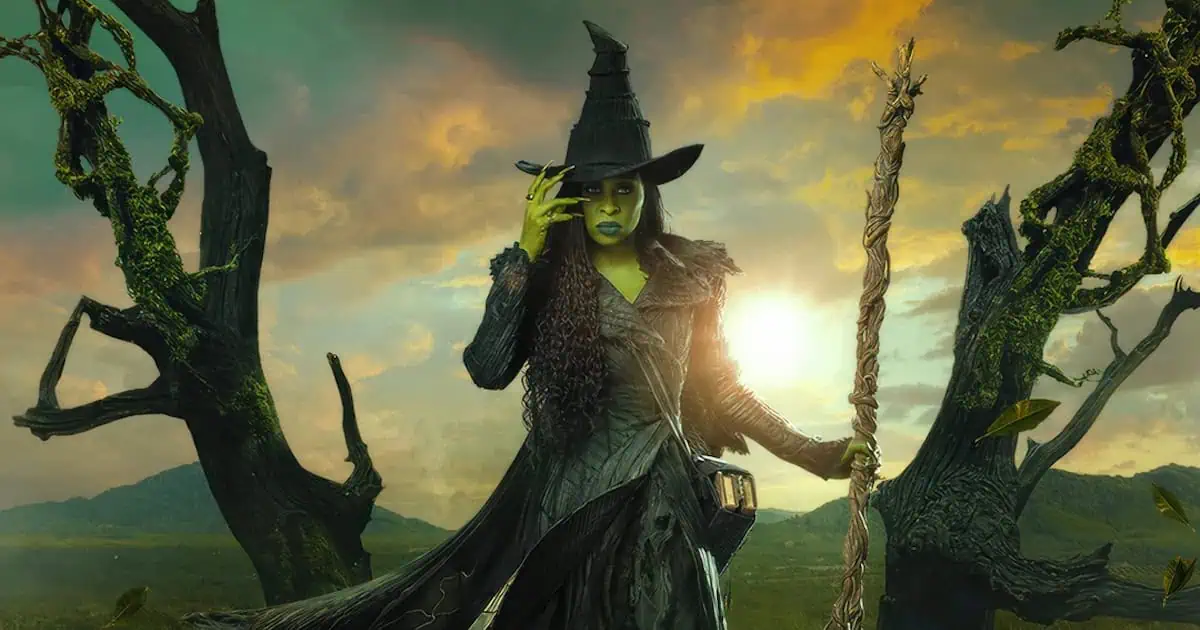
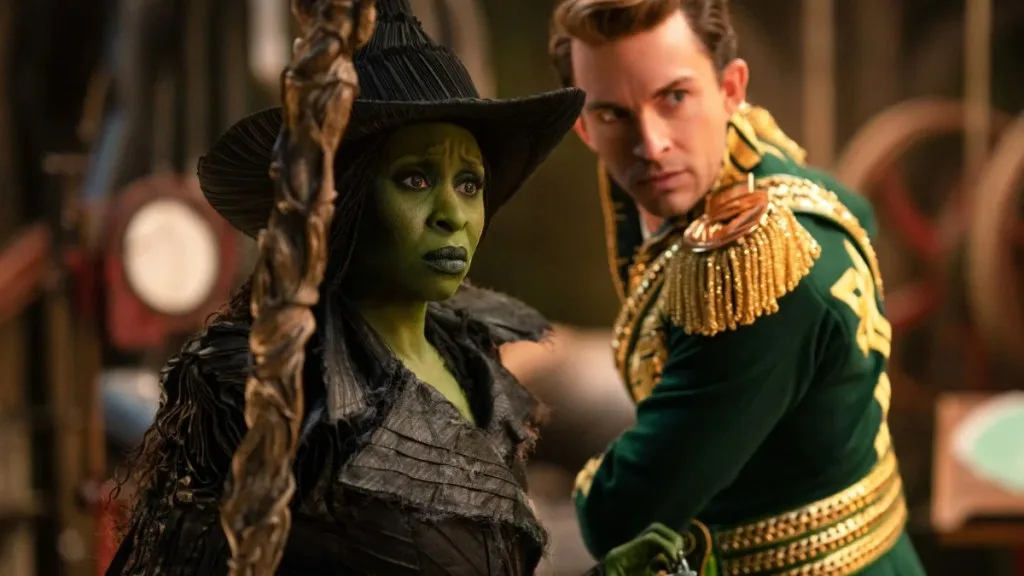
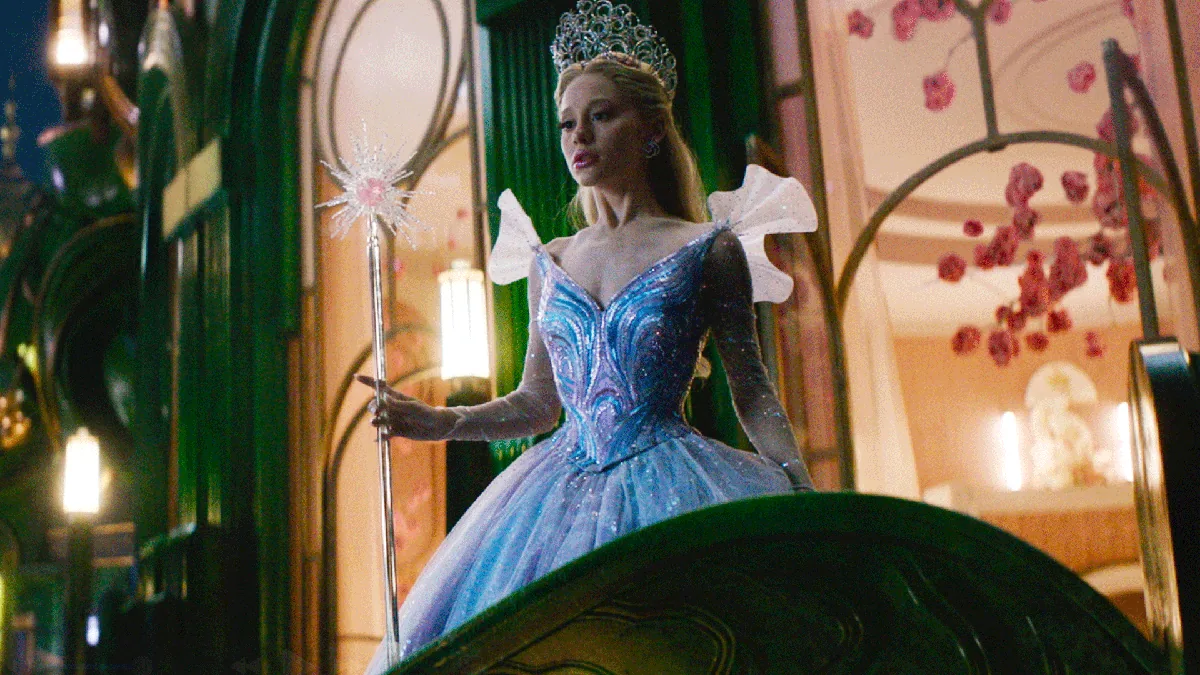
Once again directed by Jon M. Chu, Wicked: For Good is set shortly after the events of the first film as Elphaba (Cynthia Erivo) finds herself in the crosshairs of the Wizard. Despite hiding from his flying monkeys and elite military, she remains committed to exposing the Wizard’s lies to a world that remains devoted to him. At the same time, Glinda (Ariana Grande) has climbed the ranks within the government as their resident ‘Good Witch’. However, while she gleefully prepares to marry Prince Fiyero (Jonathan Bailey), she is still haunted by her separation from her former bestie. As Glinda works towards restoring the relationship between Elphaba and the Wizard, what happens next will change their lives… for good.
Frankly, it’s difficult to consider Wicked: For Good as a standalone sequel. This isn’t a ‘follow-up’ film but, rather, the second half of one narrative. And Chu does a masterful job of bringing this iconic stage production to life onscreen, creating memorable characters and stunning visuals that make this the play’s definitive cinematic vision. Together, Wicked and Wicked: For Good may be the musical equivalent of Peter Jackson’s The Lord of the Rings. Like Jackson, Chu takes one iconic work of art and shows meticulous detail in bringing the pieces to life together onscreen. It is an utterly remarkable achievement in filmmaking that may be remembered as one of the greatest stage-to-screen productions ever produced.
And it is worth of its accolades.
Even so, held up against one another, the two Wicked films are staggeringly different. (Again, this is the same structure as the play itself.) Whereas the first half is brightly coloured that pop onscreen, For Good is more muted in tones. Furthermore, the musical numbers have less pop and force than their predecessor. Although Erivo’s ‘No Good Deed’ is a standout performances and new tracks like ‘Girl in the Bubble’ and ‘No Place Like Home’ are solid, For Good has fewer of the first film’s production numbers. (It’s worth noting that the second half of the play is notably fewer tracks in the play as well.)
While these differences might be off-putting for fans of the first film, all of them follow the film’s change in narrative style. If the first film was the musical’s Star Wars, For Good is it’s The Empire Strikes Back. After all, Elphaba and Glinda are now living under the realization that the Wizard is not who he portrays himself to be. Now branded the ‘Wicked Witch’, Elphaba is no longer the innocent young woman who first appeared at Shiz. Now, she’s taken it upon herself to upend the Wizard’s lies by revealing the damage that his actions are having upon their world and its people. In this way, while the first film was about the discovery of darkness in a world that seems filled with light, For Good sits within the darkness scratching and clawing for the light.
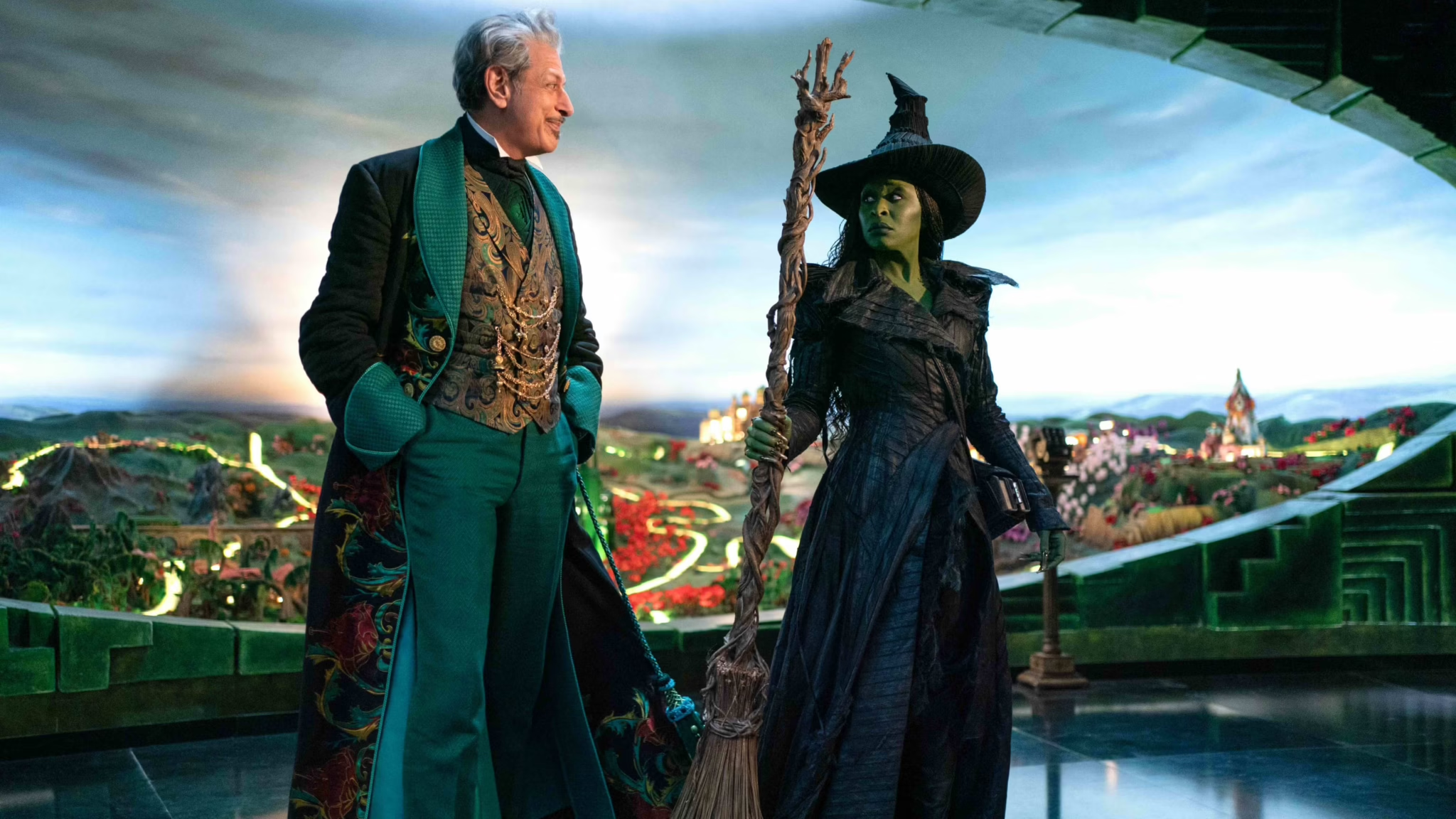
And, just as the film’s tagline suggests, there’s no going back.
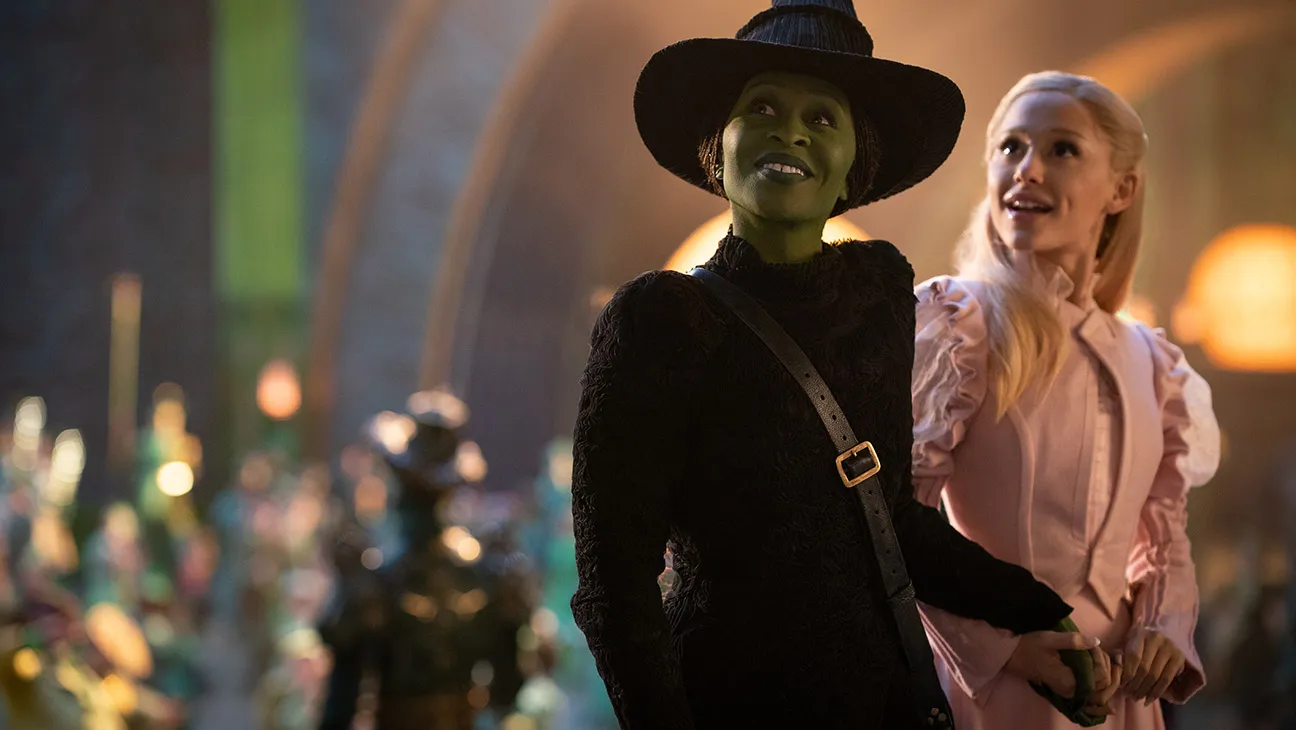
One thing that hasn’t changed however is the quality of its lead performances. Once again, Erivo and Grande deliver absolutely unbelievable performances as Elphaba and Glinda. Erivo brings a deeper sense of gravitas to the role that shows maturity and focus. Whereas Wicked showed her as a woman coming into her power, For Good allows her to step into that magical (and feminine) strength. She’s now a force to be reckoned with, determined to do the right thing at a time when the world wants to believe the wrong thing.
Not to be outdone, however, is an utterly stunning Ariana Grande who holds her own in every scene. In the previous film, the charm stemmed from her comedic talents as the privileged and deliberately naïve Glinda. But now, she’s caught between worlds. On the one hand, she yearns for Elphaba to join the Wizard and make peace so that they can lead the land of Oz together. On the other, there’s something gnawing away within her that she knows this isn’t right. In these moments, Grande truly shows how she’s grown as a performer. Even in moments when Glinda’s pleading for the wrong side, we see the conflict within her. At all times, we love her.
Without giving spoilers, the second half also connects more deeply with 1939’s The Wizard of Oz than the first film. In essence, For Good moves away from being of an ‘origin’ story and becomes more of an ‘alternate perspective’ on the events we know and love. But that’s always been part of its charm. Although it ties directly into an iconic film that many have memorized, it’s the film’s fresh take on old characters that provides us with a new lens through which to understand heroes and villains in today’s culture. (And, despite being written almost 25 years ago, themes of oppression, isolation and the need for truth feel almost more relevant today than they once did.)
Admittedly though, For Good might be slightly over-stuffed with additional content. As the shorter of the two halves, Chu has added more new material than he did in the first film. (For example, the first half of the play is roughly 90 minutes before the intermission and about 50 minutes afterwards, yet both films reach almost 2 ½ hours in length.) As a result, unlike the first film, For Good does feel like it has a few spaces that could have been trimmed for the sake of brevity, even if its pacing is fairly even through.
But let that not take away from the truly incredible filmmaking on display here. Yes, on its own, Wicked: For Good may be less ‘fun’ than the first entry. But that’s kind of the point of the play itself. For Good is a story that’s set in a world trying to find hope when the truth about its leaders is finally revealed. It’s a story about finding who you are and fighting back ‘for [the greater] good’.
And that’s what makes it wickedly brilliant.
Wicked: For Good is available on 4K and Blu-Ray now.