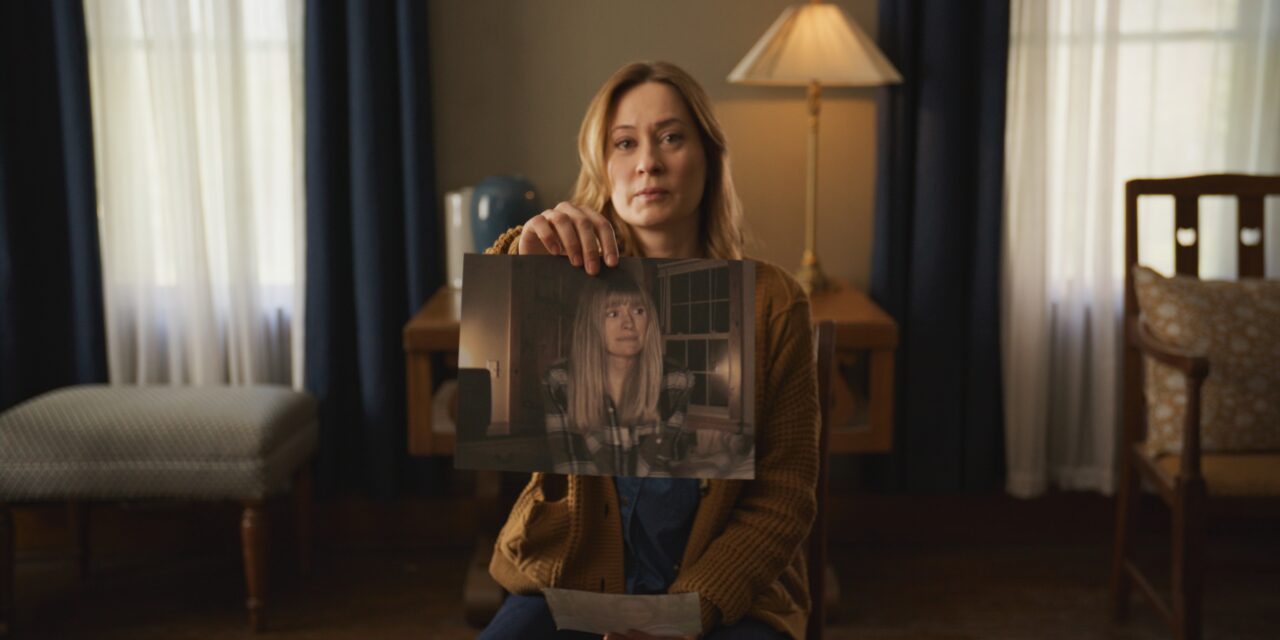
In Shelby Oaks, the things we really fear may not be what we expect.
Directed by Chris Stuckmann, Shelby Oaks tells the story of Riley (Sarah Durn), a YouTube sensation known for exploring the paranormal with her team. However, Riley’s channel ended after she disappeared suddenly, leaving few clues as to her whereabouts. Years later, Riley’s sister Mia (Camille Sullivan) still hasn’t given up the search for her sister and, when new evidence presents itself, she jumps at the chance to bring her home. However, Riley’s disappearance seems to be rooted in the dark shadows of the spirit world and Mia enters into a space that threatens everything (and everyone) that she loves.
For his first feature, Stuckmann has created something that feels truly original while never straying from films of the past. With a passion for the horror genre, Stuckmann never fully strays from the things that have worked in other films. Found footage of a young woman who’s disappeared. A mysterious demon-like entity. A not-so-empty cabin in the woods. All of these are classic horror set-ups that Stuckmann wants to emulate in his storytelling.
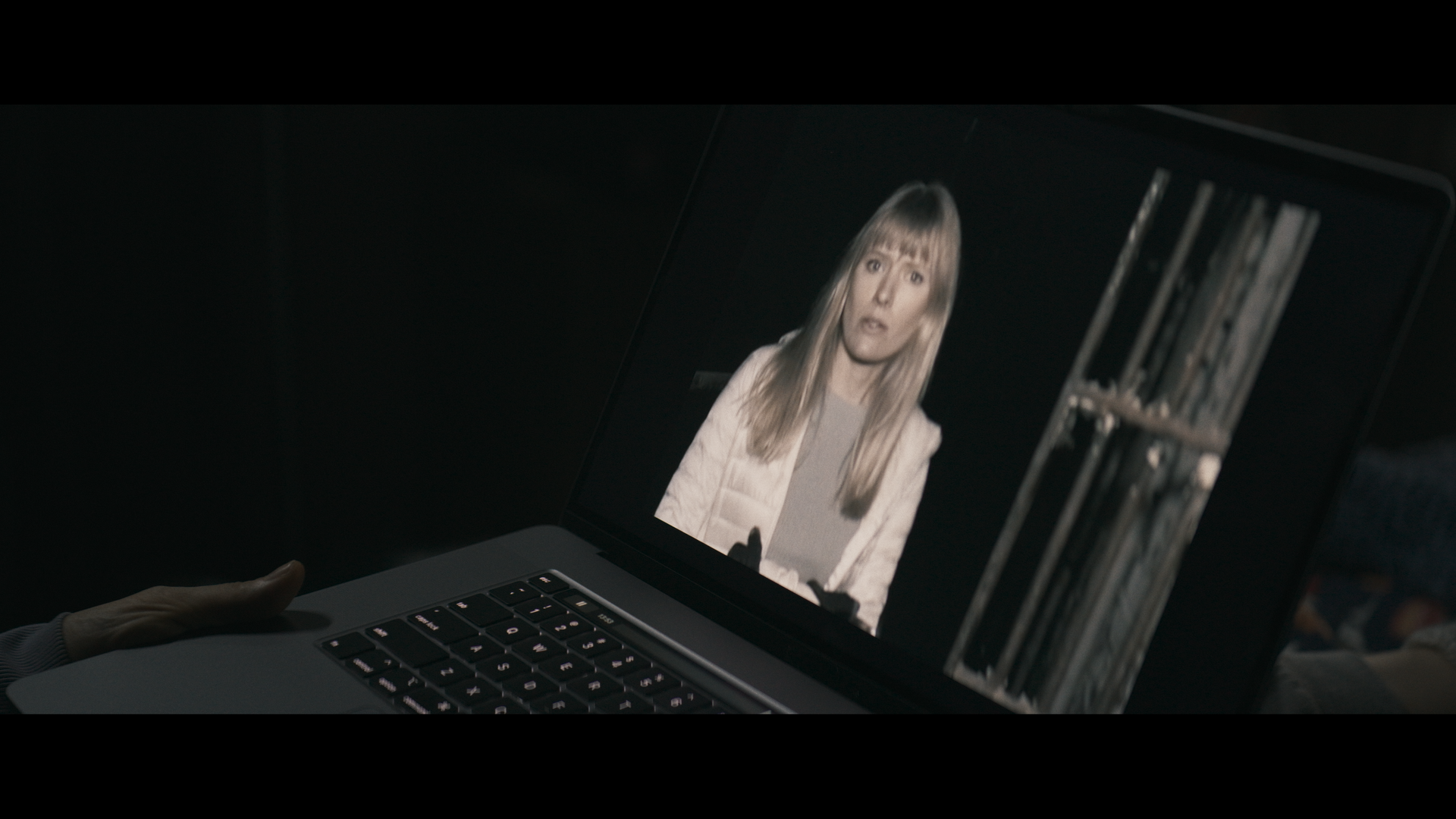
Even so, it’s his execution that makes the film feel unique. Rather than commit to one signature style, Stuckmann’s film bounces between tones. Instead of forcing the film to come up with reasons that keep the found footage logical, the changes in style actually keep the viewer engaged. Each change breathes life into Shelby Oaks, giving the audience different experiences without ever losing the film’s mood and tone. Beginning as a found footage genre, Shelby Oaks also contains elements of the supernatural thriller while sprinkling in further shades of a cult horror. But somehow, all of these wildly different styles come together into something that feels relatively seamless. Stuckmann’s love of the genre brings Shelby Oaks’ homages to films of the past into something that feels genuinely new, even if the pieces remain familiar.
Credit must be given to the film’s leads as well as they bring the energy necessary for the best of horror. As Mia, Sullivan fixates on her quest to find Riley. The loss of her sister has left a hole in her heart that has yet to be fulfilled. As such, Sullivan never loses her heart of concern, even as she feverishly searches for her long-lost sibling. It’s a fascinating blend of obsession and compassion (comp-session?) that makes her character compelling to watch. Meanwhile, Durn balances her performance as Riley with the charm of an online persona and a shattered soul that stems back to her early childhood. Even in moments when she’s bouncing with energy, there’s a dead feeling behind her eyes that reveals scars of a past that she keeps buried within.
But the deepest fears within Shelby Oaks lie not with the supernatural. Instead, the film exposes the fear that can be experienced before having children. Here, having children is portrayed as the natural goal of life. For example, it’s clear that the reality of being unable to have a child of her own has left scars on Mia’s soul. After the safe return of her sister, having kids seems to be her greatest dream. But that doesn’t mean that it doesn’t come with anxiety.
Even amidst the jump scares and spiritual spookiness, Stuckmann does a good job of embedding the film with the possibility of disaster when it comes to having children. The potential of passing down our own trauma to the next generation is very real in Shelby Oaks. To be more specific would be to say too much but Stuckmann’s film operates under the assumption that child-rearing comes at its own peril. They are the eyes of innocence to the world and, therefore, are the ones who are most easily corrupted, intentionally or otherwise.
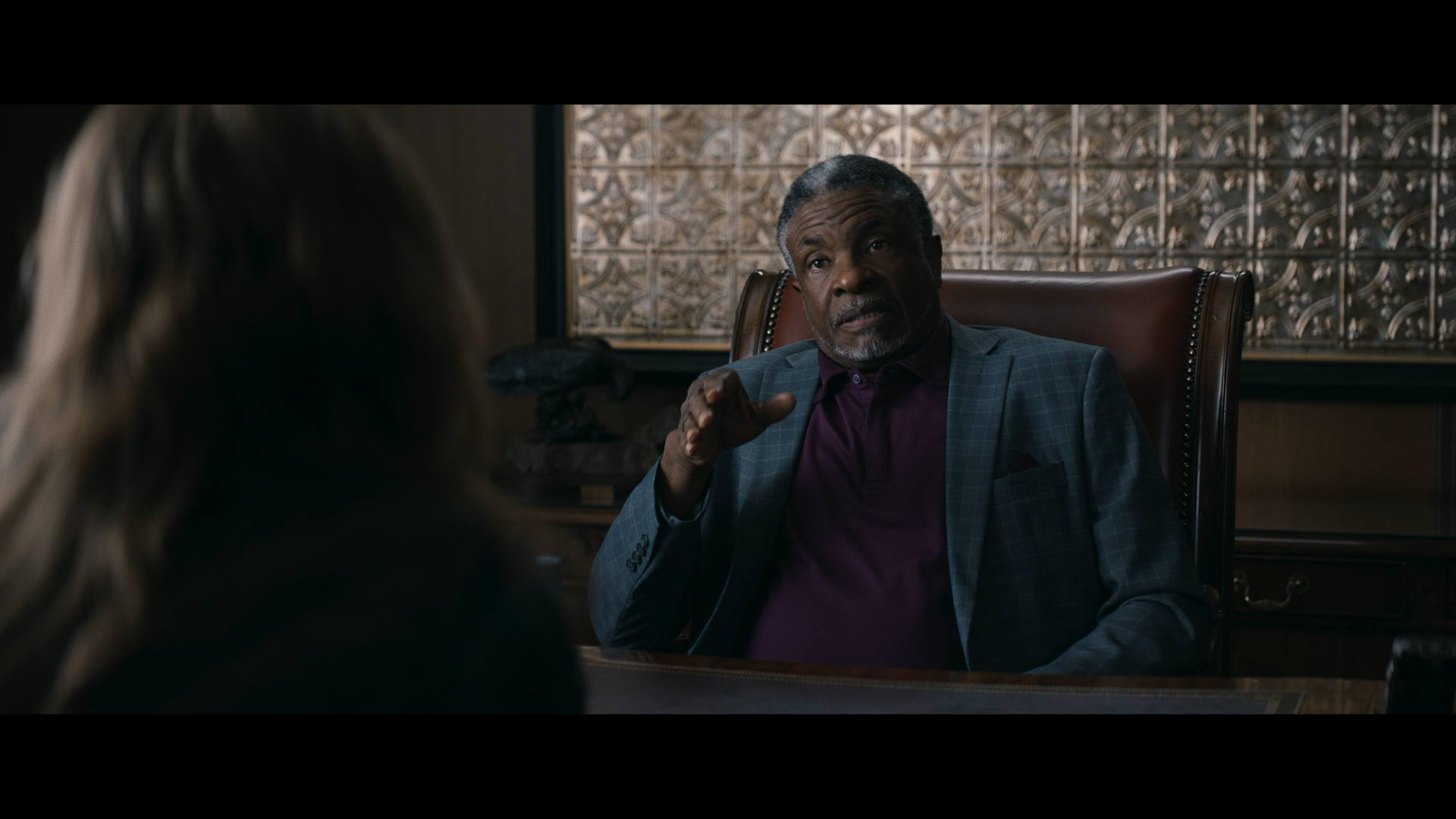
And, in Shelby Oaks, there’s more than enough evil to pass along.
And that’s part of the fun of Shelby Oaks. Stuckmann may rely on tropes from other films but the mixture never feels stale. Yet it’s the subtext that makes it something more interesting than other horror fare. This isn’t just about the jump scares. Stuckmann uses his film as an opportunity to process fears and anxieties that extend beyond the horrors that go bump in the night. Here, the deepest horrors may lie within.
Shelby Oaks is available in theatres on Friday, October 24th, 2025.