You can’t help but love Out Standing.
Directed by Melanie Charbonneau, Out Standing follows the journey of Sandra Perron (Nina Kiri), Canada’s first female infantry officer. Based on Perron’s acclaimed book, the film begins as she resigns from the military after a controversial photo surfaces. Struggling to adapt to life as a civilian, Perron adamantly denies any wrongdoing or abuse within her unit, despite evidence to the contrary.
In Out Standing, Charbonneau offers a solid dramatic film that never shies away from its dark corners. Weaving between past and present, Charbonneau effectively allows the two timelines to inform one another, creating a truly compelling narrative structure. This is a film that features confident direction and solid storytelling. Most importantly though, Charbonneau keeps the film firmly focused on the steely glare and furious intensity of its star.
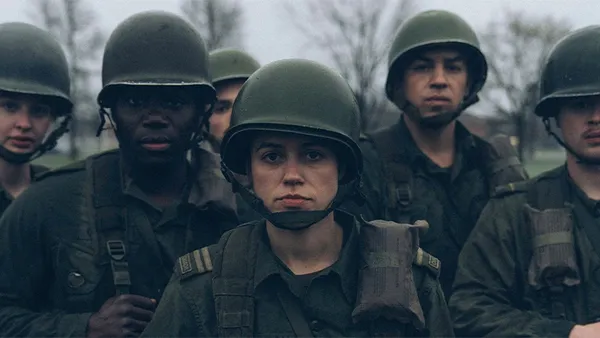
As a result, the strongest asset to Standing is easily the standout work by Kiri. As Perron, she delivers an utterly remarkable performance that could be recognized during awards season. There’s fire burning behind her eyes that demands attention. However, Kiri never pushes the performance too far. In the film’s most dramatic moments, she remains focused and present, stepping up to every challenge with furious confidence. In doing so, Perron is shown to be a woman who is above her oppressors, even when the walls are crashing in around her.
Similarly, Charbonneau walks an interesting line in Standing that elevates the film’s tension. Even at its most brutal, the film never really glorifies the trauma or exploits the moment for dramatic purposes. Yes, we bear witness to Perron’s overwhelming struggles. However, Charbonneau keeps the emphasis on the courage and strength of Perron and her journey forward. For example, although sexual assault is implied, the film chooses not to go into detail on the events. We recognize the damage that has been done but Standing is more interested in Perron’s determination to survive, rather than sit in the graphic details of what took place. This is a system that seems determined to poison her soul yet she remains stalwart.
As such, Standing elevates the quality of Perron’s character in a space that fought to destroy it. Sitting in the toxicity of the male-dominated military, the film focuses on the various challenges that Perron had to face as she moved up the ranks. Sexist comments, repeated rejections from ‘higher ups’ and general disrespect were frequent in her journey through the ranks. Believed to be lesser than her male counterparts, we see that she is forced to prove that she’s not only equal to them but better in every way.
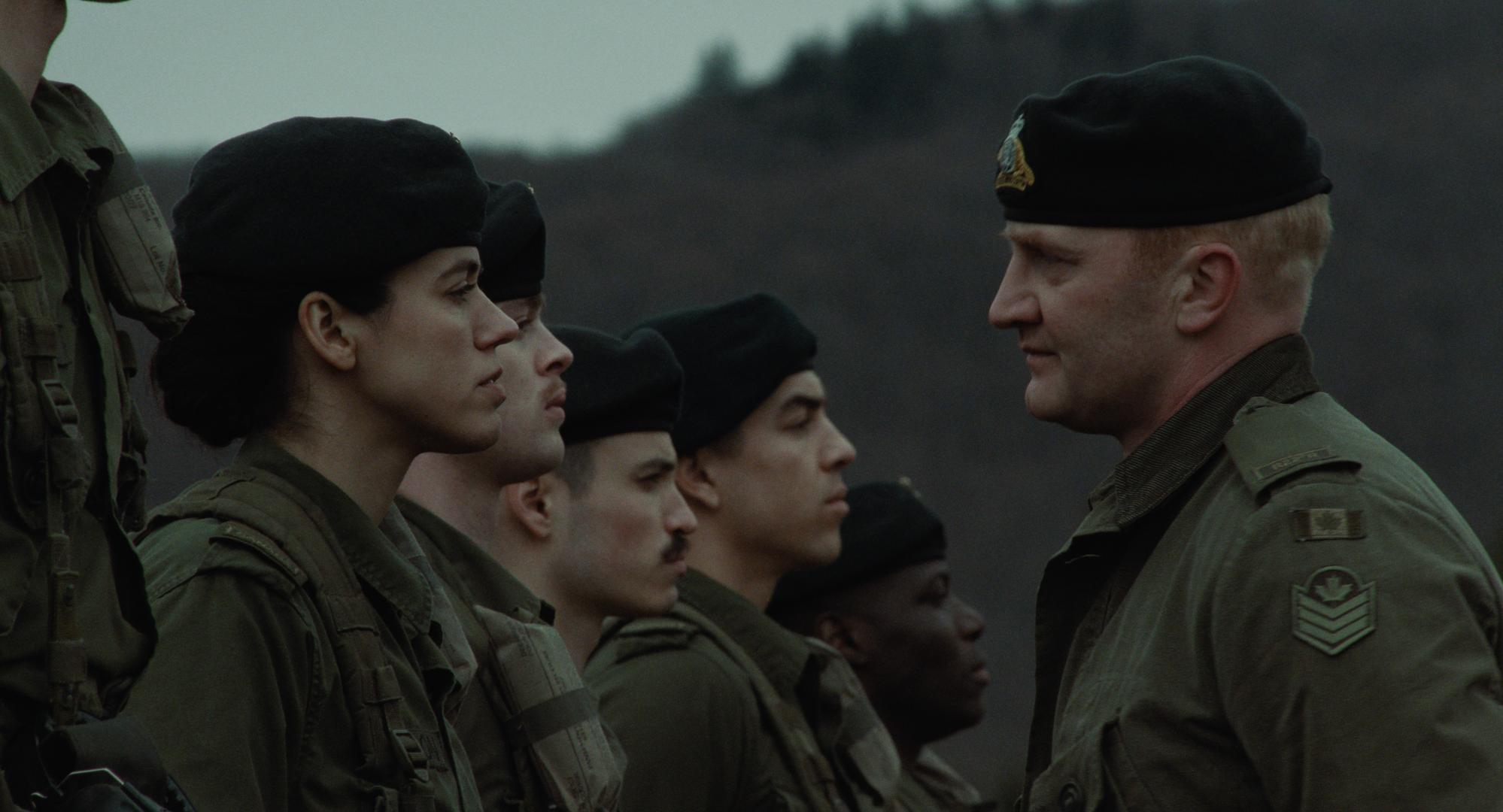
It isn’t a question of ‘good enough’. Here, Perron had to be undeniable.
For her, the standard of excellence was considered to be higher than everyone else, solely because of gender bias. But Standing recognizes that the importance of Perron’s success lies beyond herself as well. Her resolve to succeed is for herself but, also, the film reminds us that she was breaking down barriers for the next generation as well. As the first woman to smash through the Canadian military’s glass ceiling, the attacks seem to come from (almost) all sides. However, Standing recognizes the value of Perron’s sacrifices for the sake of the next generation of young women who wish to serve.
In the end, Out Standing works primarily due to is strong direction and a fantastic performance by its lead. But, more than this, it feels like an important piece of Canadian history. Although the film plays out like a political thriller, Perron’s journey is of far greater significance. With the future in mind, her battle against the endless barrage of men who refused to acknowledge her strength set her up to fail. Yet her grit and resolve ensured that she’s still Standing.
Out Standing is available in theatres on Friday, September 26th, 2025.