
Everyone’s story matters. But Eleanor the Great wonders who gets to tell them.
Directed by Scarlett Johannson, Eleanor the Great tells the story of Eleanor Morgenstein (June Squibb), a widow who lives with her best friend (and Holocaust survivor), Bessie (Rita Zohar). Together, the two are inseparable. But, after Bessie’s sudden passing, Eleanor’s world is upended. Forced to move in with her estranged daughter (Jessica Hecht) in Manhatten, she feels lost and very lonely in the big city. Things change though when Eleanor accidentally finds herself in a Holocaust survivor’s group at the local community centre. When asked to share her story, the non-Jewish Eleanor makes a grievous error by telling Bessie’s story as her own. While she’s uncomfortable, the lie feels innocent enough, until a young reporter (Erin Kellyman) smells a story and latches on to Eleanor, creating chaos in her home.
For her debut as a filmmaker, Johansson does a good job keeping the film on track. Resisting the temptation to use flashy camera tricks or fancy editing, Johansson keeps the camera firmly focused on the performances. In doing so, she allows the strong work of her team to lead the way.
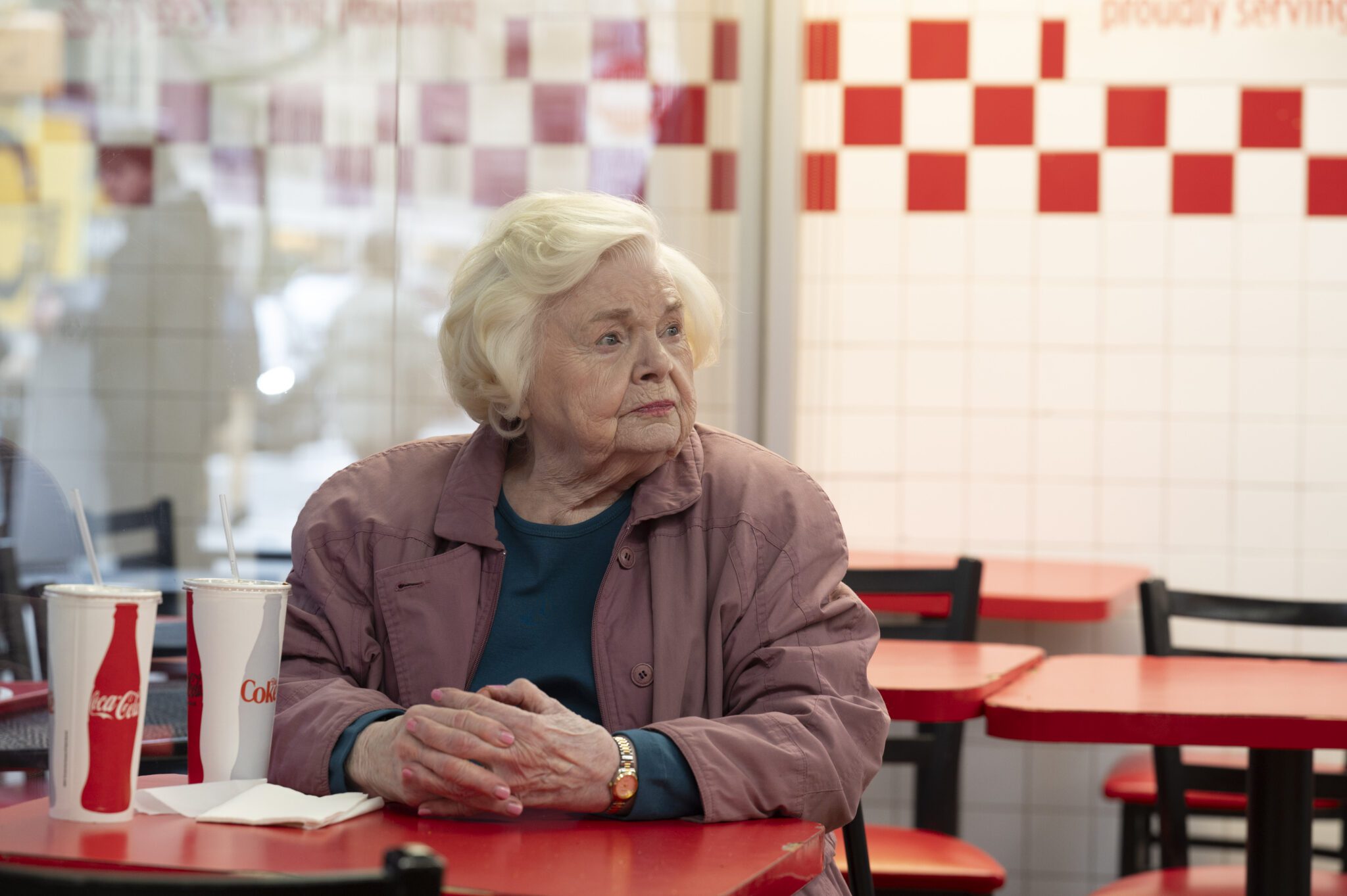
Though, to be fair, when you’re working with June Squibb, it has to be an easy day at the office.
Simply put, June Squibb is a national treasure that must be protected at all costs. At the age of 94, she continues to bring a balance of affability and ferocity that feels rare. And, as Eleanor, she sparkles once again. Despite the obviously dark implications of her ‘little white lie’, we still empathize with her journey. We believe that her sharing of Bessie’s story stems not out of a need for self-importance but, rather, a need for relationships. Left emotionally adrift after her friend’s passing, her pain drives her to speak up at a time when she should not. To be clear, the film never shrugs off her lie as unimportant. Even so, our empathy for her situation gives us slightly different lenses on the situation.
Eleanor is neither an angel nor the devil. Instead, she’s portrayed as a human that’s hurting.
In this spirit, this is very much a film that wants to explore the damage that grief can do to the soul. For Eleanor, the loss of Bessie leaves her broken. As Eleanor’s primary emotional support, Bessie helped energize her friend, giving her life when others seem to have dismissed her. But Bessie’s death steals Eleanor of more than her joy. She steals her of a life-partner. As a result, when the ‘moment’ arrives, Eleanor reluctantly tells her bestie’s story as her own in an effort to find friendships once again. And grief can make you do crazy things.
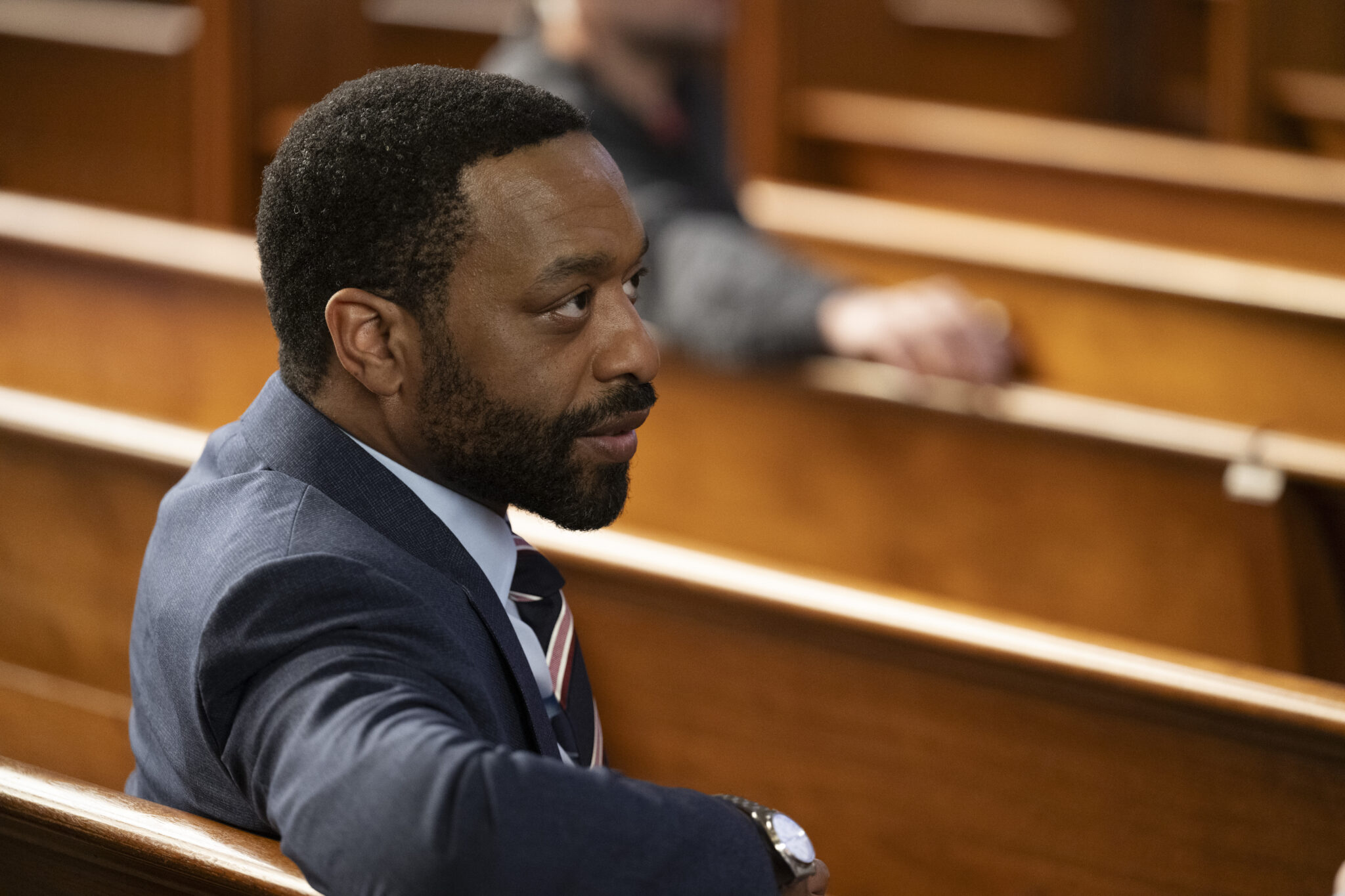
At the same time, Eleanor’s journey is held in juxtaposition with Nina and Roger’s suffering. Dealing with the death of his wife (and Nina’s mother), Roger’s grief takes the opposite approach. He shuts down entirely, causing a deepening rift with his daughter. It’s worth noting that Chiwetel Ejiofor is at the top of his game here when the moment allows. He is shown as a man forced to pick up the pieces yet has no idea how to do so.
At the same time, young Kellyman lights up the screen as Nina. Admittedly, as a young woman suffering from the loss of her mother, Kellyman never delves too deeply into her emotions yet she absolutely shines in her scenes with Squibb. Together, they form one of the year’s most delightful pairings. Eleanor becomes Nina’s mentor and muse while Nina fuels Eleanor with a newfound sense of life. They are simply remarkable to watch together on screen.
But Kamen’s script also adds another layer to Eleanor’s big lie that surprises. No, Eleanor is never justified in her actions. However, her re-telling of Bessie’s experiences gives voice to a woman who did not have one before this moment. As a holocaust survivor, Eleanor holds Bessie’s story with reverence. Yet, until Eleanor shares her story at the community centre, nobody knew that Bessie existed. As a result, there’s a certain sense of empowerment to Eleanor’s lie that elevates her friend’s experiences, even if under the guise of falsehood.
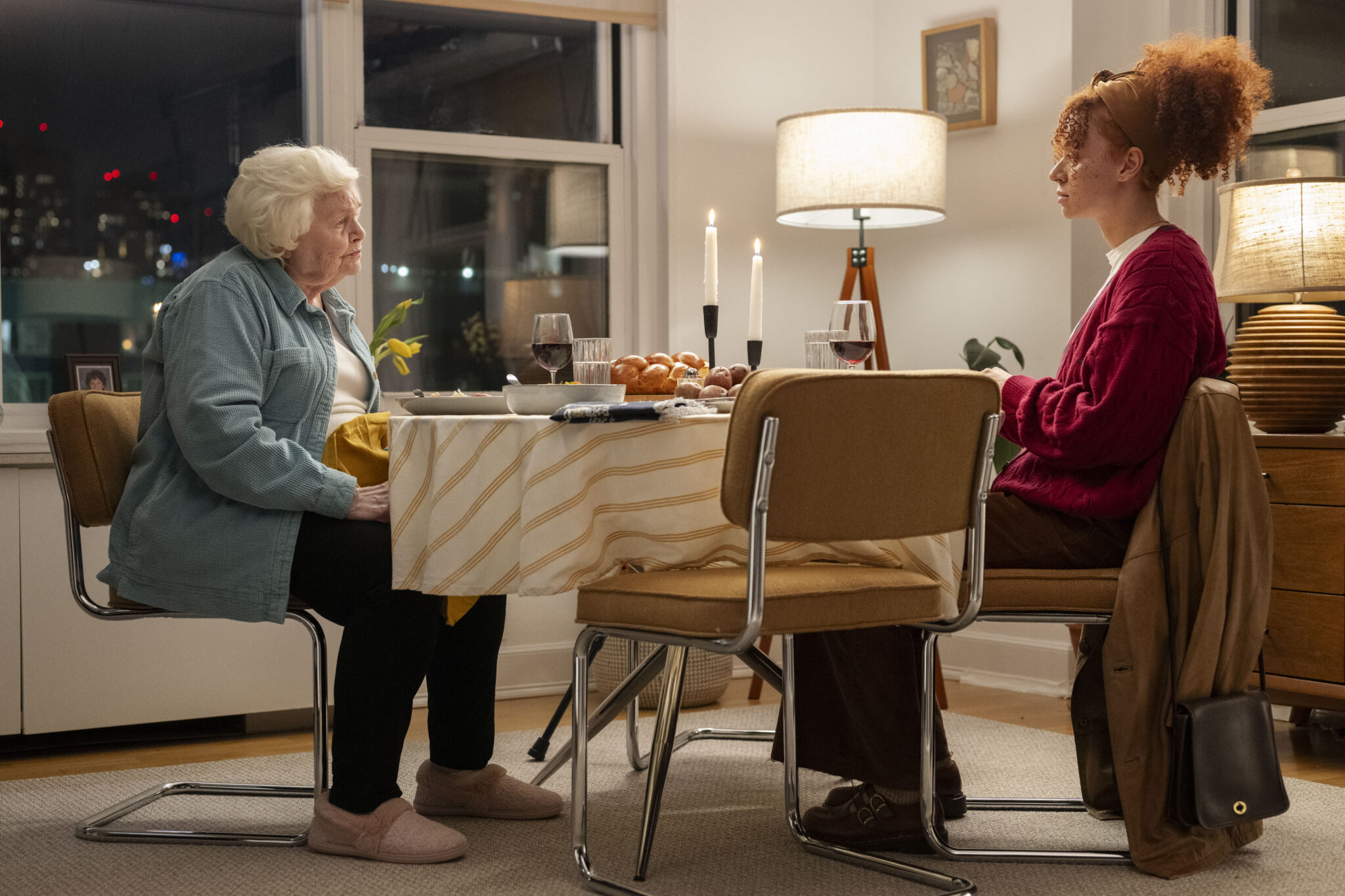
In this way, Kamen’s script reminds us of the power of speaking our stories of trauma, especially those with historical significance. Although Eleanor technically culturally appropriates Bessie’s journey, she doesn’t do so out of malice. Instead, she speaks on behalf of the deceased in order to honour her friend’s journey (even if the way she does so isn’t ethical). And Kamen recognizes the importance of telling the stories that have shaped history and, more specifically here, the Holocaust. Through these characters, Kamen wants the viewer to understand the echoes of damage that have been done to the survivors and their communities.
Their stories matter. And Eleanor the Great speaks to that belief.
In the end, Eleanor the Great proves to be the delight that its name suggests. Admittedly, the tone feels light considering the subject matter. Even so, Johannson’s first film in the director’s chair has an undeniable charm, even in moments when it takes its material very seriously. On the back of a wonderful performance by Squibb, there is much to love about Eleanor, even if you don’t agree with her actions.
Eleanor the Great is available in theatres on Friday, September 26th, 2025.