In many ways, the revived 28 Years Later is a fascinating experiment.
Banking on the popularity of a franchise that hadn’t seen the big screen in almost twenty years, Boyle and Garland’s reclamation of the world that they created was an interesting prospect. But to weave Garland’s story over three directly interconnected films took incredible confidence, especially considering the fact that the first film contained so many loose plot threads.
Even so, the results continue to be spectacular.
Directed by Nia DaCosta, 28 Years Later: The Bone Temple picks up immediately after the events of last year’s revival of the franchise. Having been captured by the Jimmys, Spike (Alfie Williams) is forced into their ranks at the hands of Jimmy Crystal (Jack O’Connell), a villainous leader committed to reshaping the world in the face of evil. Meanwhile, Dr. Kelson (Ralph Fiennes) finds himself involved in a relationship that has the same potential for change, albeit with entirely different results. As the two stories head towards a collision course, it becomes increasingly apparent that the infected are potentially less threatening to world than the inhumanity of the survivors themselves.
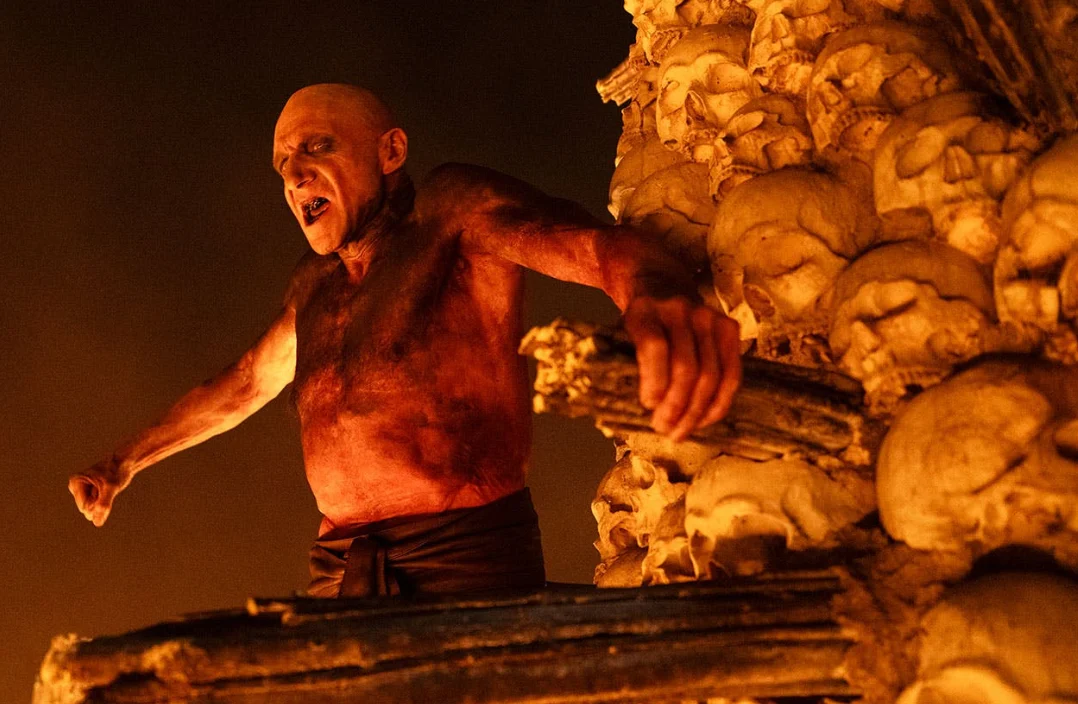
Brilliantly brought to life by DaCosta’s detailed visual style, Bone Temple is a raw and eccentric experience. As the second chapter to Boyle’s relaunch of the franchise, the film flows (almost) seamlessly from Garland and Boyle’s first film. (Boyle is said to be returning for the third and final entry.) There’s a fury at the heart of this film that is palpable—and it wears its heart on its sleeve.
By writing the films as one unified narrative, Garland’s scripts feel more tightly written than any other trilogy in recent memory. The Jimmys, villains only teased in the first film, are allowed to become fully fleshed out in the second. Young Alfie continues to cling to his innocence but is pushed to the brink of darkness.
And Dr. Kelson. Oh, Dr. Kelson.
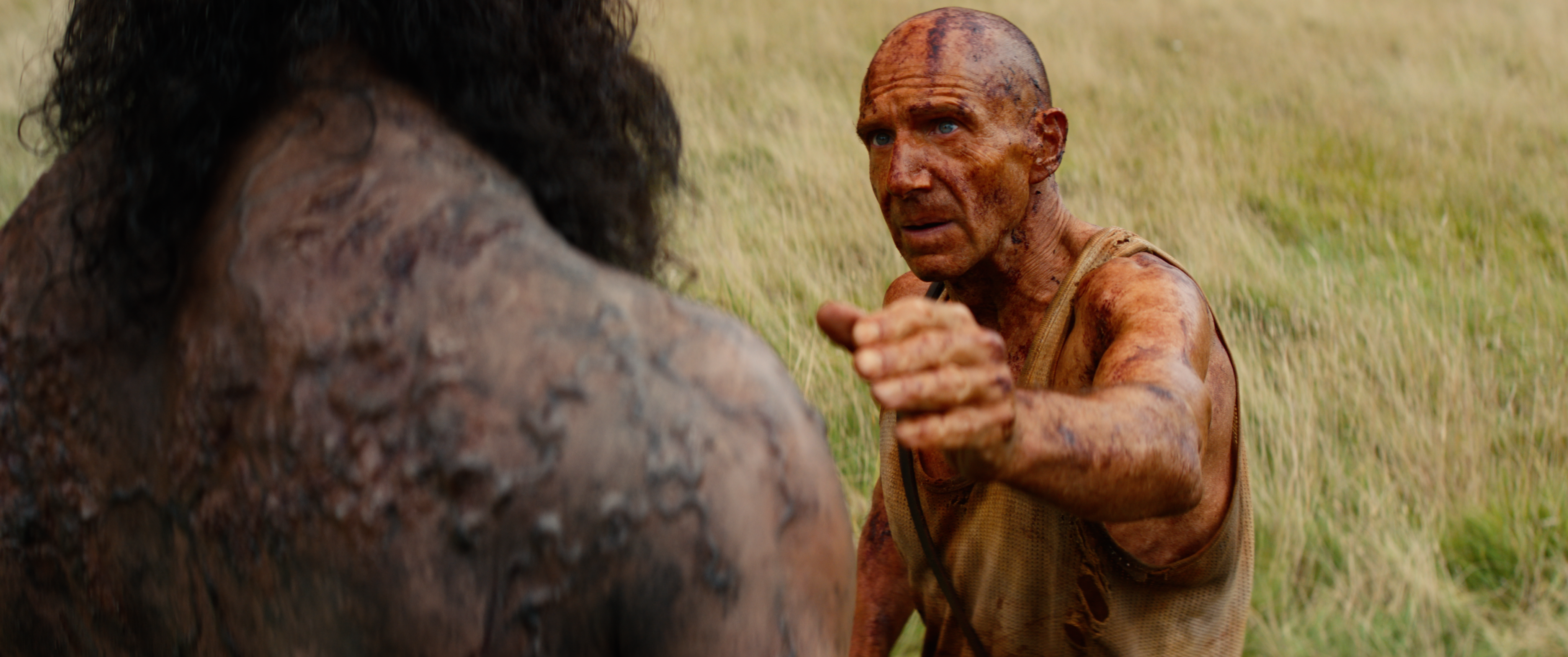
As the returning doctor, Ralph Fiennes is at the top of his game. He continues to bring an almost spiritual reverence to the franchise that stabilizes the chaos of the world in which they live. He is empathetic, wise and fueled by grace. But, when called upon to do so, he has the ability to become completely unhinged. (Without giving any spoilers, whereas last year’s ‘memento amoris’ speech showed his gravitas, he is given the opportunity to let loose in Bone Temple in an entirely different manner.) Somehow, Fiennes manages to keep his character feels fully authentic and present.
And, of course, Dr. Kelson is entirely necessary given the enlarged role of the Jimmys. Having only briefly been introduced in 28 Years Later, the Jimmys are the epitome of chaos. Dedicated to the bidding of their spiritual guide, Old Nick, the Jimmys are determined to wreak havoc on a world that has done the same to them. Led by O’Connell’s spectacularly sickening Jimmy Crystal, the Jimmys are ready to set fire to the rain if need be. They are virile and violent; rageful and reckless.
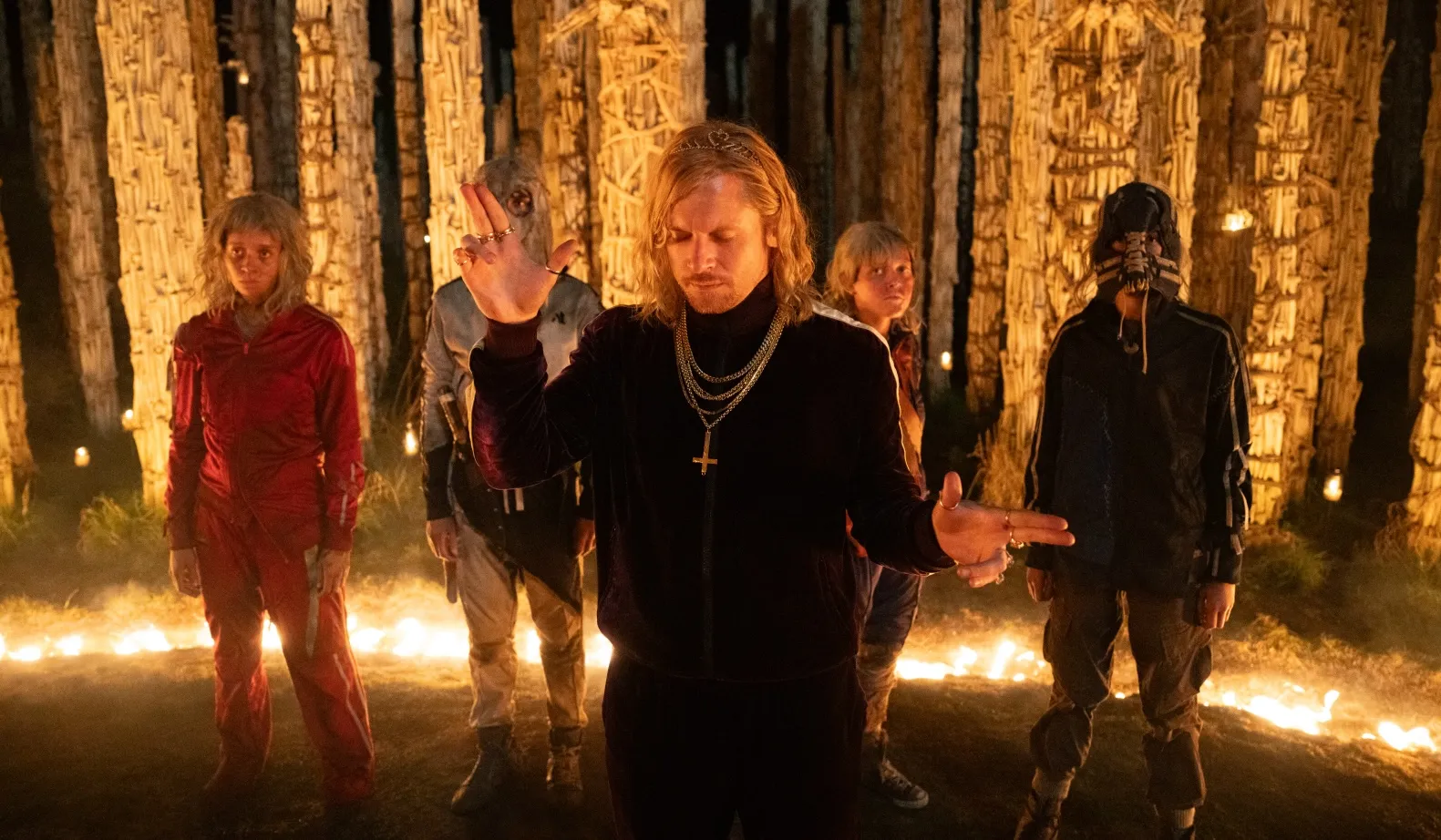
In short, they’re everything that Dr. Kelson is not.
But that’s what makes these films so fascinating. Garland’s wonderful storytelling has given him the opportunity to explore the darkest corners of humanity. Whereas the first film explored family dynamics in a shattered world, Bone Temple dives deeply into the nature of evil. Set in a lawless world, these are people who are trying to make sense of nonsensical times. While the Jimmys are perfect examples of the chaos, they cling to their beliefs out of pure hateful rage. On the other hand, Kelson’s devotion to scientific inquiry stems from his desire to find a rational response to the madness. As the two forces come face-to-face, their belief systems appear to scratch and claw at one another as they simply want to understand how they got in this situation (and, potentially, to find a way out).
Having said this, it’s worth noting that Bone Temple is not for the faint of heart. DaCosta allows the Jimmys to be as unhinged visually as they are psychologically, leading to some particularly graphic moments. The intensity here is turned up to 11 in every way. Yet, this wild west shootout of infected anarchy never loses the soul of the first film either.
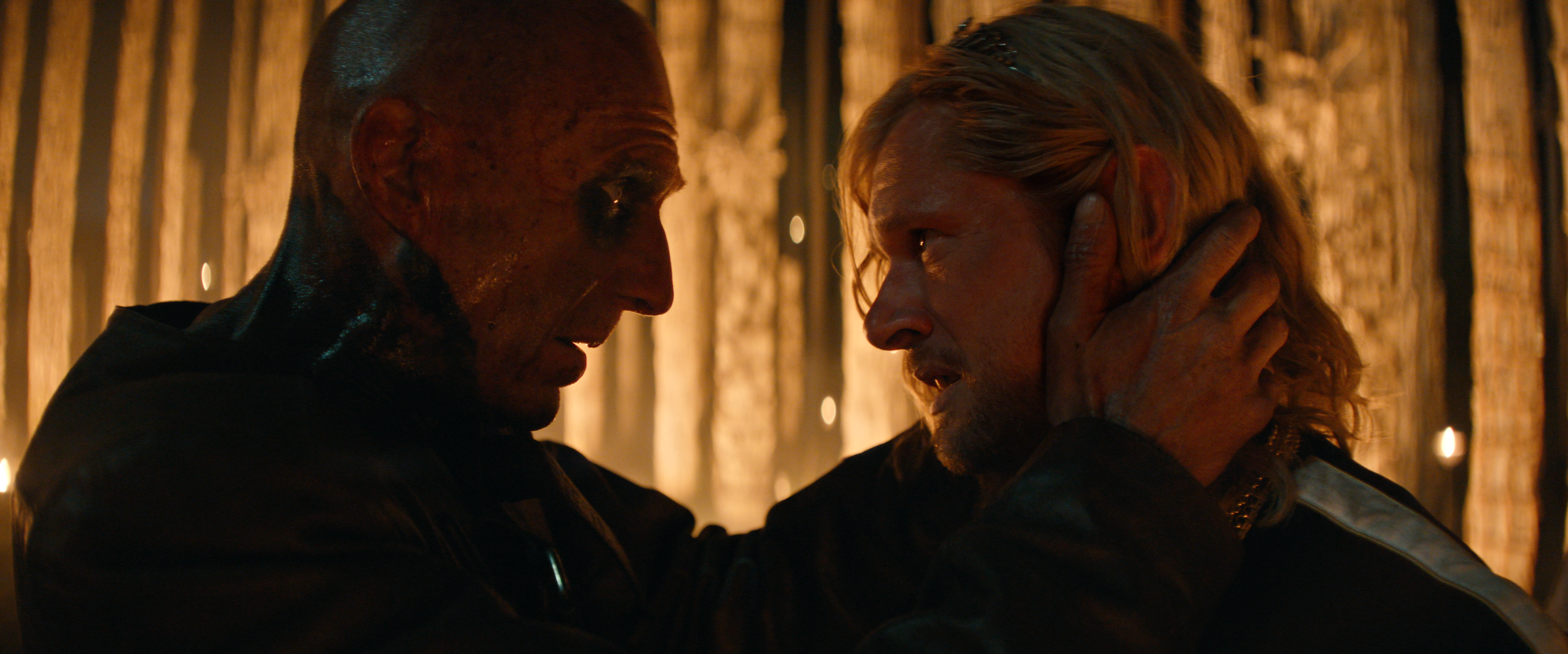
There’s a depth of inquiry here that prevents it from becoming just another banquet of blood and gore. Matched with DaCosta’s meticulous filmmaking, Garland’s script continues to take us into places that we need to go, even if it’s uncomfortable to do so. With hope (potentially) on the horizon, one can only imagine what sorts of answers the series is setting up to the questions that it’s asking. And I can’t wait to find out.
28 Years Later: The Bone Temple is available in theatres on Friday, January 16th, 2026