Feature – The Studio Season 1 Finale – Created by Seth Rogen & Evan Goldberg
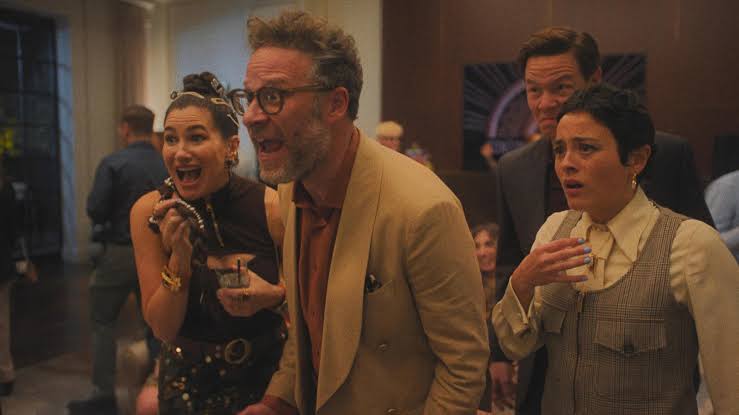
The finale of The Studio was very well made. It brings everyone back together from Episode 9 for more hijinks as the team at Continental Studios tries to pull off the best CinemaCon presentation of all time. For a finale in a show with 35-minute or longer episodes, I did expect it to be a bit longer. The show doesn’t deviate very much from what it set up in the penultimate episode, which is mostly a good thing. It doesn’t try to do anything it didn’t already establish, but at the same time, the ending feels a little underwhelming.
Some of the side bits were probably the best parts, like Dave Franco doing a funny Glee-like intro narrating what happened in the previous episode, which was even funnier when presented in that style. I appreciated how the show continues getting actors to give interesting and different performances from their usual personas. They show off their strong stage presence and charisma during the actual presentations and, in the spirit of Curb Your Enthusiasm, are clearly having a lot of fun playing ridiculous, unprofessional, and exaggerated versions of themselves.
During the finale, we do get a little more introspection into the characters, but that is also something the show has generally avoided exploring too deeply. I don’t know if they will embrace revealing more about the characters later, but it feels more natural to do so through their actions. Unfortunately, I don’t think enough meaningful actions are taken in this finale to create that deeper understanding.
There are still creative setups and payoffs in this episode, particularly with Brian Cranston and how his drug-induced state leads him to present at CinemaCon in a very interesting way. The long-take sequences, however, were probably extended too much, especially in this episode. I think the finale uses the long-take format as an excuse to create a shot that doesn’t necessarily fit the moment as well as other approaches could have.
The music choice, particularly at the end, also felt a bit unearned. It doesn’t quite provide the emotional finality you would want from a finale. It leaves you with an ending that would work emotionally if the show ended here, but there are no direct story elements that create excitement for Season 2 because there isn’t much specifically to anticipate.
That being said, it is still a show I will absolutely watch a second season of. I hope they can make one of these every year. This feels like the new Curb Your Enthusiasm, while also offering a more direct meta-commentary on the film industry. The industry jokes and commentary are not necessarily new or surprising in this episode. There isn’t much introduced that wasn’t already present in previous episodes, nor are many comedic ideas pushed further, particularly when it comes to visual and physical comedy.
The episodes I enjoyed most were the ones that focused specifically on a character’s psychology and how they dealt with their position in the industry. The finale doesn’t really explore that side of the characters. It feels like perhaps this should have been one longer final episode rather than being split into two parts.
My favourite episodes from the season remain the one-take episode and the episode titled “War Between Sal and Quinn,” where I think Sal and Quinn are just as interesting, if not more interesting, characters than the lead character Matt. Seth Rogen plays Matt well, but I feel the show doesn’t fully explore the complexities and hypocrisies that come with a wealthy, profit-driven studio head.
You can understand why they made Matt more likeable, especially because the show is being viewed positively by the industry itself and by the people at Apple who oversee film and television production. However, this final episode especially reveals the show’s lack of edge, which could have made it even more unique.
Andor Season 1 – Created by Tony Gilroy
In its first episode, Andor does not necessarily create something spectacular or revolutionary from a story perspective, but it takes the important step of separating itself from other Star Wars projects by giving real weight to crime and death. It also does a strong job establishing the politics and characters trapped within this particular system, as well as how they are forced to navigate it.
The actors are all exciting, and you can immediately see why Adria Arjona, in particular, was such an exciting addition. She has screen presence and charisma that should separate her from other characters in the series.
I am not entirely sure where the flashback scenes are going, and it was slightly odd that they appeared at the end of the episode. It is not the strongest hook, but the rest of the episode provides enough interesting elements to set up what I have heard is one of the best things Star Wars has given audiences in a long time.
Looking forward to more.