
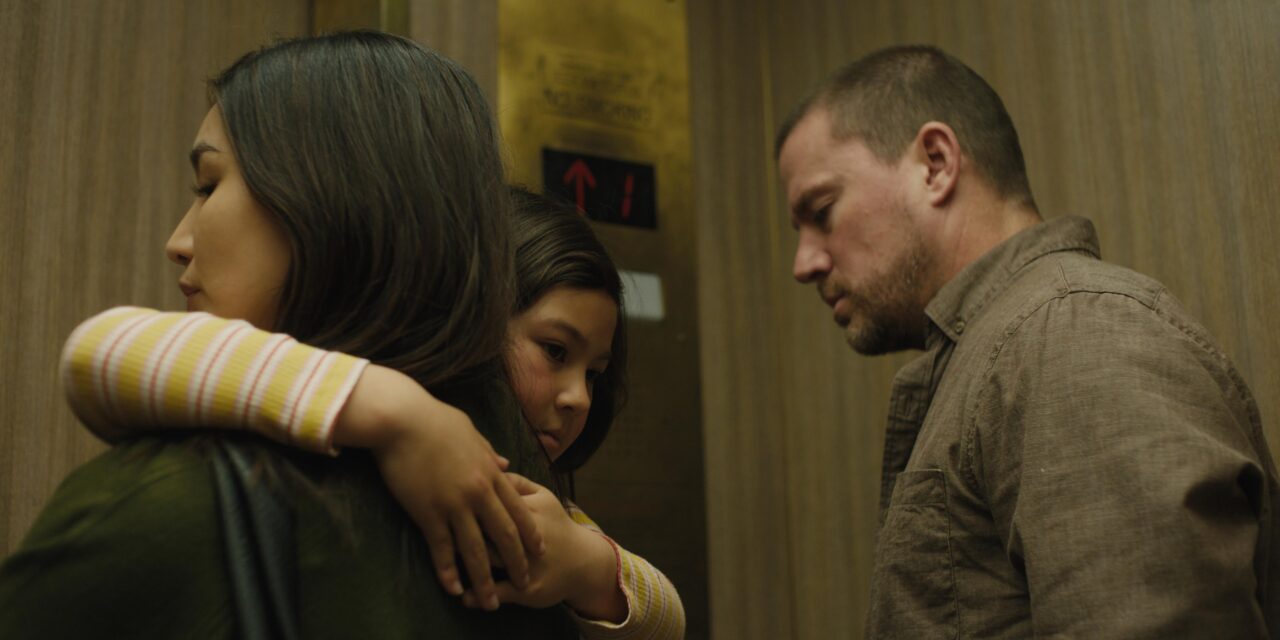
Josephine looks at the effects of trauma on Josephine (Mason Reeves), a young girl who witnesses a violent sexual assault against a woman in the park one day. Her father, Damien (Channing Tatum), was there when it happened and is becoming more present in Josephine’s life because of his wife Claire’s (Gemma Chan) pregnancy.
This film looks at how a child deals with trauma and how that forces the parents to confront how they deal with the heaviest parts of their own lives. We see how Damien and Claire’s parenting affects their ability to take care of their daughter under such tense and disturbing circumstances. We also see a girl who can’t escape the violence because of her memories and because of a trial looming over them, where she is the key witness and potentially the only way to ensure that the man who committed the crime will go to prison.
It features a fantastic atmospheric score that often uses electronic pulses to echo a heartbeat. The score helps communicate how the heaviness of what the characters are dealing with weighs on them, even in situations that are benign on the surface. There are distinct and fantastic camera choices and framing details that really hone in on the ideas the film wants to explore: a child’s perspective, the mental crisis she is experiencing, and a lived-in perspective that allows the actors to emphasize their performances.
It’s a very strong script where every scene is potent with the tension of how Josephine will respond to the world around her after witnessing the assault and how her parents react to and coach her in the wake of her acting-out incidents. It evolves the dynamics between Josephine and her parents, her normal life, and the police who need her testimony. It paces this evolution very well, making each encounter between Josephine and the new dynamics in her world a powerful dramatic scene.
Josephine is playing at TIFF ’26. For more information, click here.