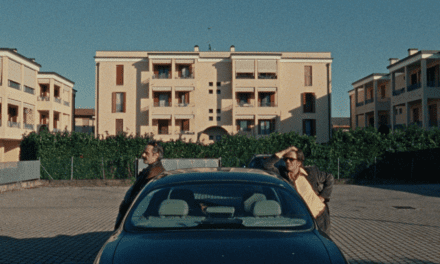
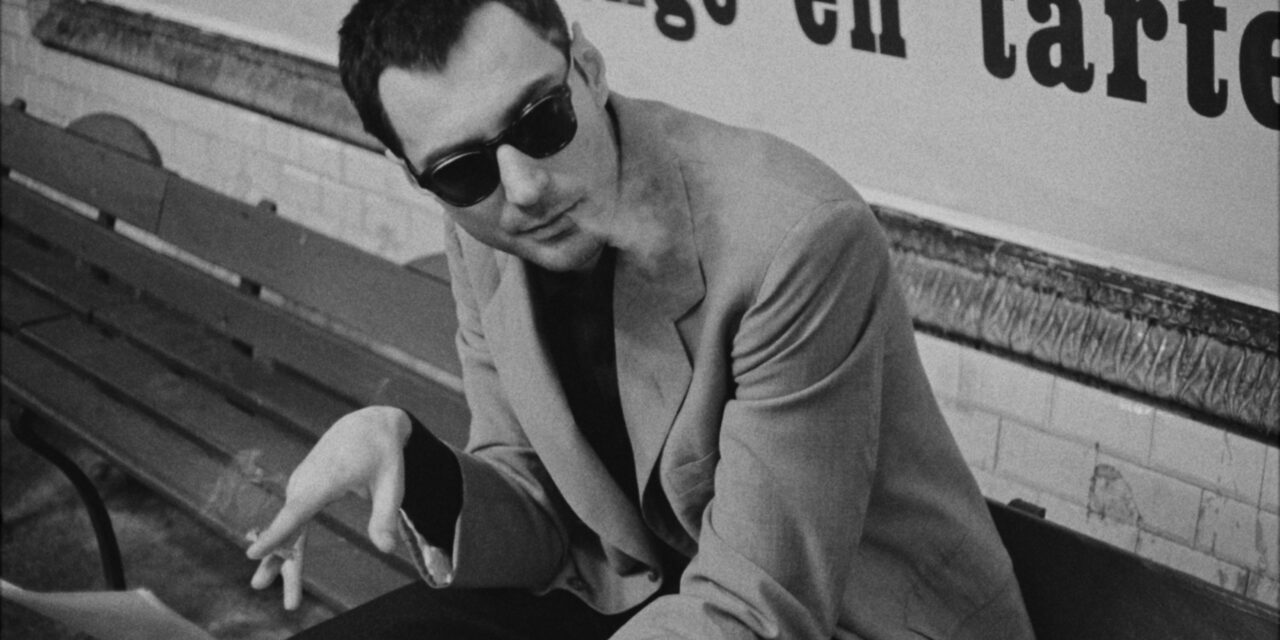
Set in late 1950s Paris, Nouvelle Vague follows Jean-Luc Godard (the positively stellar Guillaume Marbeck) as he frustratedly watches his peers create their own films. As a critic, Godard believes he has something to say and, finally, gets the funding in place to begin his own cinematic opus. Yet, as Godard runs up against corporations and marketing, he continues to fight for the right to create in his own voice, ultimately leading to the release of his classic film, Breathless.
Structurally, Linklater ensures that Vague emulates the very style that wants to honour. The New Wave was a movement that sought to find what’s real on film and Vague taps into these sensibilities with enthusiasm. Long takes, reflective glances and awkward moments tap into the very soul of the era.
At the same time though, the film never abandons its more traditional structure. After all, this is a film about making a film. And Linklater never leaves modern audiences cold in his narrative style. In the wrong hands, Nouvelle Vague is a film that could easily alienate those who have no prior knowledge of Breathless or the revolutionary style it celebrates. But Linklater never makes this into a ‘film school’ project. Although the French New Wave was highly experimental, Vague brings the audience along for the ride. We follow the filmmaking process through the eyes of Marbeck’s Godard as he battles systems the attempt to corral his vision.
Linklater doesn’t just make it a film about making a movie. Instead, he seeks to remind the audience of the power of the medium itself. Although Godard’s passion borders on arrogance, it stems from his very real passion of the power of the cinematic experience. To Godard, cinema is “a moral affair”; a “priesthood” with the power to change the world. It’s language like this that bleeds through Nouvelle Vague, revealing his believe that the theatre can create genuine spiritual revival.
Nouvelle Vague is premiered at TIFF ’25. For more information, click here.