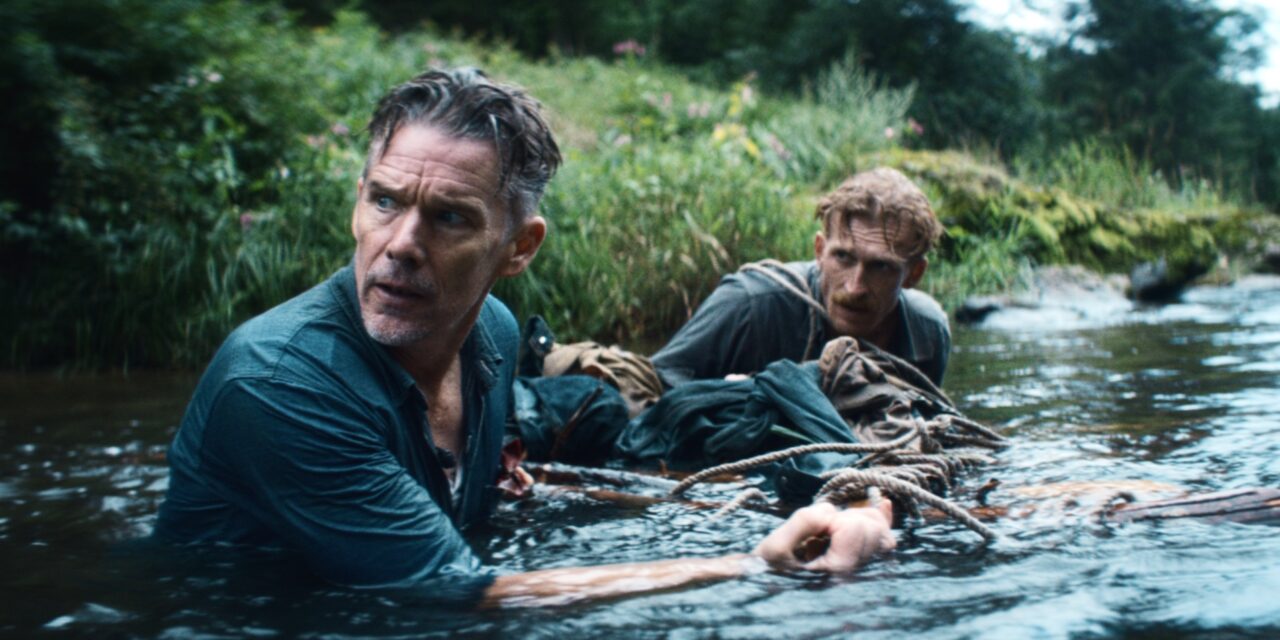
The Weight stars Ethan Hawke in a classic movie-star role as Murphy, a man who, during the Great Depression, despite his mechanical skills and wits, cannot find a way to use them to make the money he and his daughter require to make ends meet. When they have to move on from their home, they find themselves caught in a misunderstanding that lands Murphy with a years-long prison sentence, where he is shipped off to a work camp. The camp’s warden, Clancy, a lover of baseball, hard work, and control, slowly comes to trust Murphy and offers him a job in exchange for his freedom.
Murphy soon discovers that the job is not only illegal but dangerous, as he has to take four men and two armed surveyors through the forest carrying a mine’s worth of gold bars. If they lose even one of the bars, they will be killed, and the world will be told they were runaways. Thus, with no other choice, Murphy must use all his wits to lead the men through the forest while conquering nature, infighting, and opportunists who wander the forest looking for anything of value.
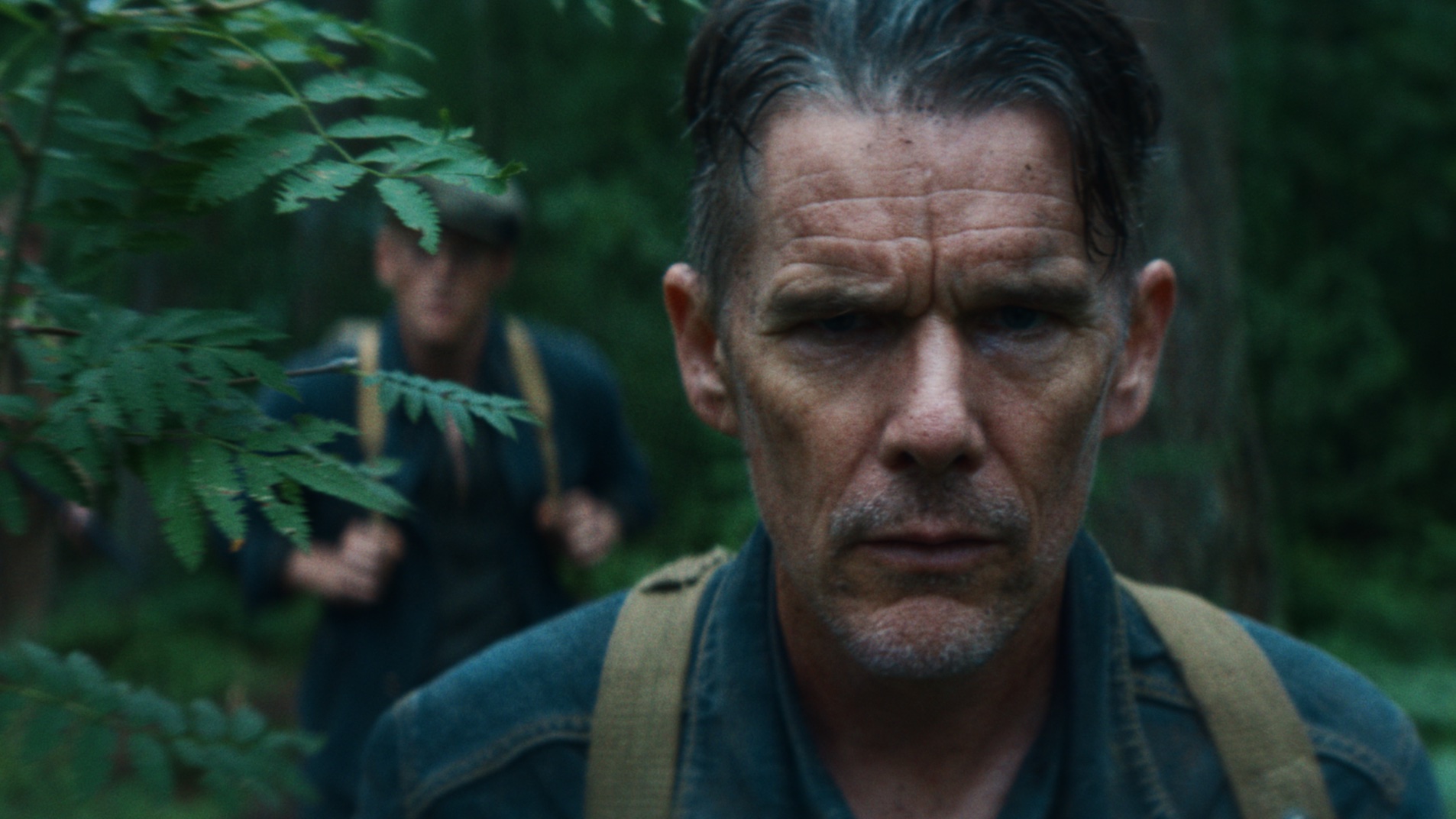
Ethan Hawke is very good, as always. He holds the movie together as a very likeable character who is easy to root for, while his methods and way of thinking make him stand out. He gets to be a very charismatic person, and Hawke embodies that really well. The character is designed in many ways to be almost a superhero amongst men, but he is also just as mortal as they are and just as powerless as any other prisoner. His lack of power is what keeps him from seeing his daughter so, throughout the journey, he has to use whatever power he does gain to try to save himself and ensure that he can get back to her, no matter what happens to the gold he and his fellow prisoners have to carry.
He takes the punches and not only wears the makeup showing the damage but, through his movements and mannerisms, you can tell how much he is being beaten down both physically and mentally by their struggle.
The music is fun and fresh. It uses electric guitar and energetic riffs despite its Great Depression-era setting, and it works so well. Personally, I love when a film is bold enough to include newer musical styles in a period piece, especially one set in an older Americana setting like this one. Sinners did the same thing, and it won an Oscar. While there are a lot fewer vampires in this film, the approach still works really well.
The music fits many scenes especially well, including some of the fast driving they do with the cars throughout the movie. At points, though, the score does feel overused. It also feels like it is occasionally used as a crutch to force the idea of danger instead of allowing the film’s scenarios and shooting style to impart that danger themselves.
There are some creative and interesting set pieces that work really well with or without music or even extensive sound design. There is important use of sound in those scenes that makes them even more intense, but one sequence involving a drawbridge is particularly memorable and well thought out. It is shot and edited in an intense, nail-biting manner. Director Padraic McKinley, making his debut, brings some needed style and excitement to a period piece by turning it into a classic thriller on a budget. He even finds space to make old-fashioned car chases feel fun and intense.
The screenplay sets up many of its elements well with a tight, well-thought-out story. Some parts work out too cleanly, but it is a very professional screenplay that keeps you on the edge of your seat. It keeps advancing the plot, and every scene feels essential, even if some scenes are a lot more exciting than others. Thus, the film does feel a bit long, but overall, it is pretty engrossing.
It is shot nicely, but there is nothing particularly new or surprising about the filmmaking. The camera angles are sometimes fun and refreshing for the time period but never truly innovative. The lighting and composition of the film’s shots never feel like they are aiming to be the spectacle. Rather, they are placed in such a way as to primarily serve the characters and their actions more than anything else. Location is established and important, but it is often more about what is directly in front of the characters as we take this journey with them.
The other weakness of the script is that it feels like it loses sight of what it is ultimately about. The story is so clean and well resolved that we never feel a serious sense of consequence or discover a larger lesson within the film. Instead, it remains in the category of classic films that are inspiring simply because we see a mostly innocent, good person using his wits, integrity, and intelligence to try to make a positive difference despite the conspiring and planning of those who are more powerful and corrupt trying to keep him down and in servitude.
It is one of the most classic story setups ever used, and one that is still often employed in bigger superhero and blockbuster films. But McKinley uses an indie budget and smaller-scale settings to create something with those same archetypes that still manages to feel exciting in 2026.
The Weight is available in theatres on September 18th, 2026.