“Life is short. So sing.”
Music is an emotive art. It can convey joy, sorrow, grief, patriotism. The act of singing can often bring people—even whole communities together. The Choral is the fourth collaboration between director Nicholas Hytner and screenwriter Alan Bennett. (Previously bringing us The Madness of King George, The History Boys, and The Lady in the Van.) This film, set during World War I, show us the power music can have, even when it’s not top grade.
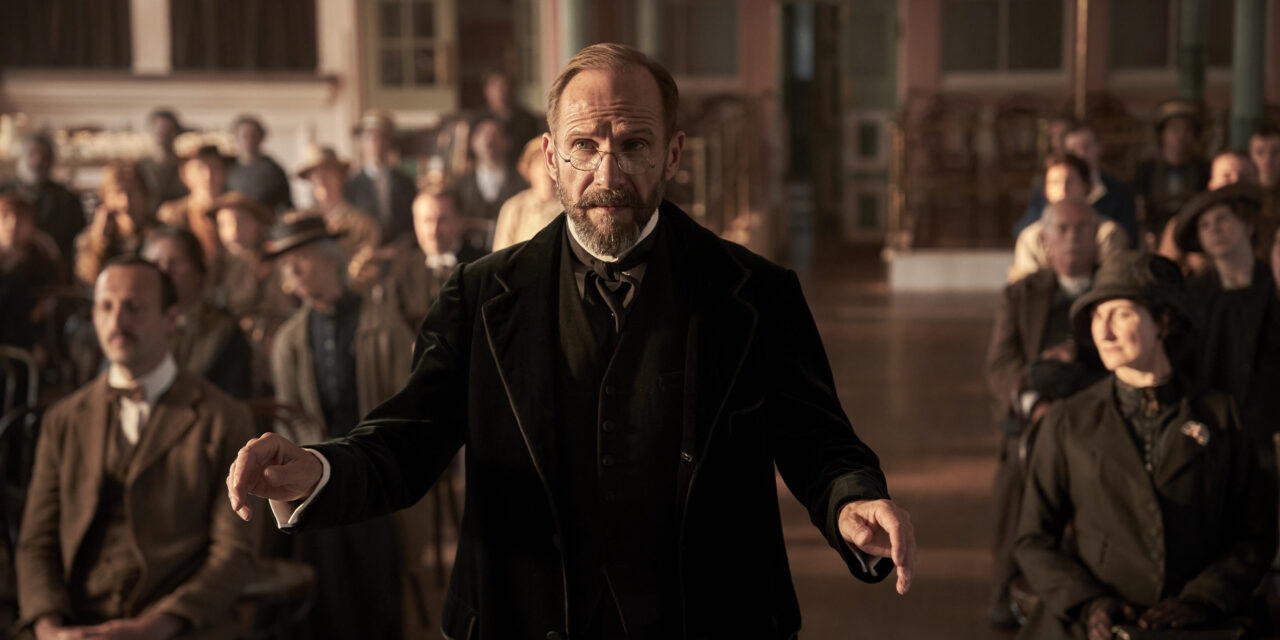
In the fictional mill town of Ramsden, Yorkshire, the community choral is struggling because there are so few men left in town. They’ve all gone off to the war, and conscription will soon take the few that haven’t reached age yet. To top it off, the choral master has just enlisted. As they begin recruiting younger singers (with little experience), they also much find a director. The settle reluctantly on Dr. Henry Guthrie (Ralph Fiennes), who has spent the last several years working in (gasp!) Germany. He is also said to be an atheist. And he is unmarried. Yet, there are no others readily available.
The plan is to perform “St. Matthew’s Passion”. But some in the community object to that because it was written by Johann Sebastian Bach—German. Guthrie suggests that he could get permission from Sir Edward Elgar (how much more British can you get?) to perform his little-known oratorio “The Dream of Gerontius”. Even this is not without controversy. The local Anglican vicar doesn’t like that it is based in a long poem by Catholic theologian Cardinal John Henry Newman.
Meanwhile, life is going on in this town. Young people are falling in love. There is a Salvation Army street singer who is attracted to the town bad boy—and vice versa. A young man courts a girl whose fiancé is MIA. Hearts will be broken. Telegrams with bad news will be delivered. Choir rehearsals move on.
“The Dream of Gerontius” is the story of an old man who dies at the beginning. The rest of the oratorio is an angel and a devil working to determine what will happen to his soul. Will he be condemned or make his way to Purgatory where he will be made fit for heaven?
Guthrie makes some changes to account for the small choral and lack of orchestra. It also begins to take on a meaning that reflects what is happening in the war. What of those thousands in the trenches, or buried in foreign soil? Is their salvation assured?
This is a film that I came away from wanting more from—and possible less from. It tries to be both comedy and drama, without ever quite finding the balance. The community stories—young people, families, recruits heading to war—are an important part of the story that don’t quite give us enough to truly appreciate this small town. And when the oratorio if performed, it has become a powerful statement about the death of the young (rather than the elderly Gerontius), but that power has been somewhat muted.
This is a story about the interplay between life and death. The opening scene is two young men off on bikes. They are friends and are enjoying their youth. But one of the two is working—he delivers telegrams. He knocks on the doors, hands the envelope, and says “Sorry missus”. That scene is the essential blending of life and death that is constantly working itself out in the film. It is that blend that, with the war going on, is changing the life of the community. It seems, in the film, that the choice of “The Dream of Gerontius” for the choral is an accident, but it is one that will come to bring clarity to the town and its people—including the young men who have been singing and have been called up to head into the deadly battle.
The Choral is in theaters on November 7th, 2025..
Photos courtesy of Sony Pictures Classics.