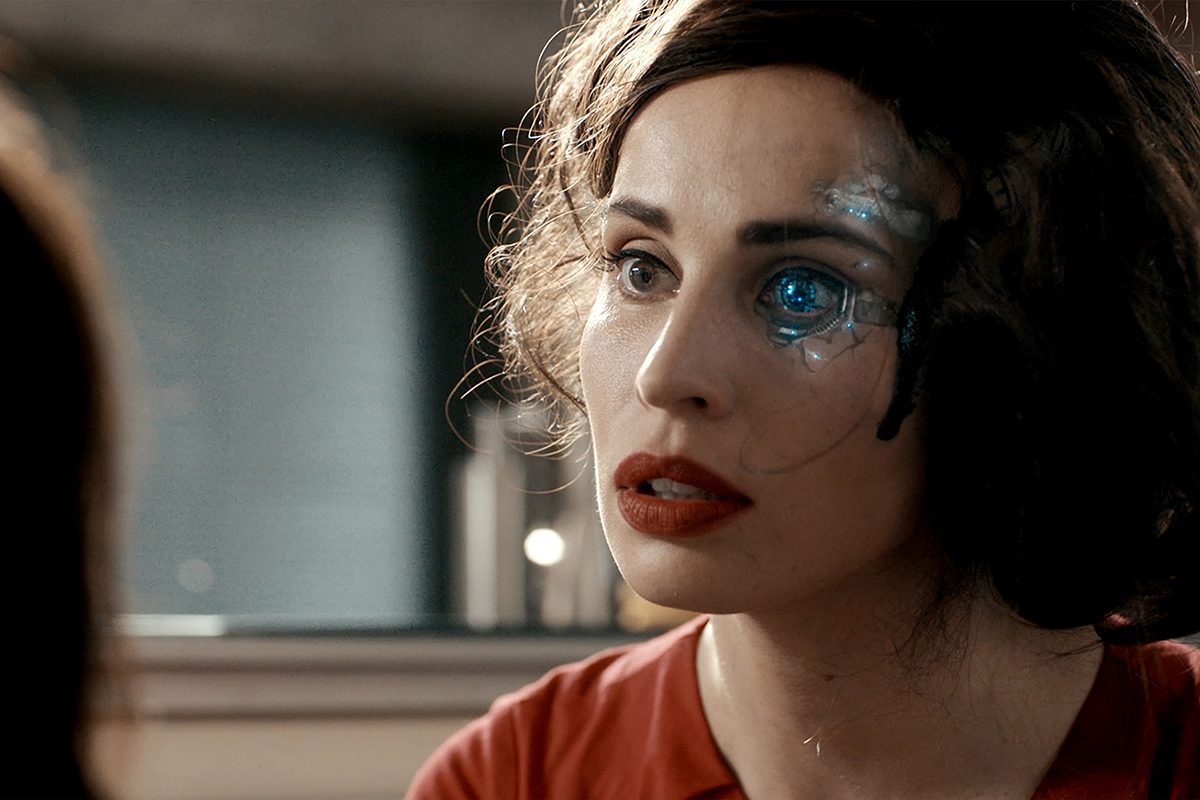
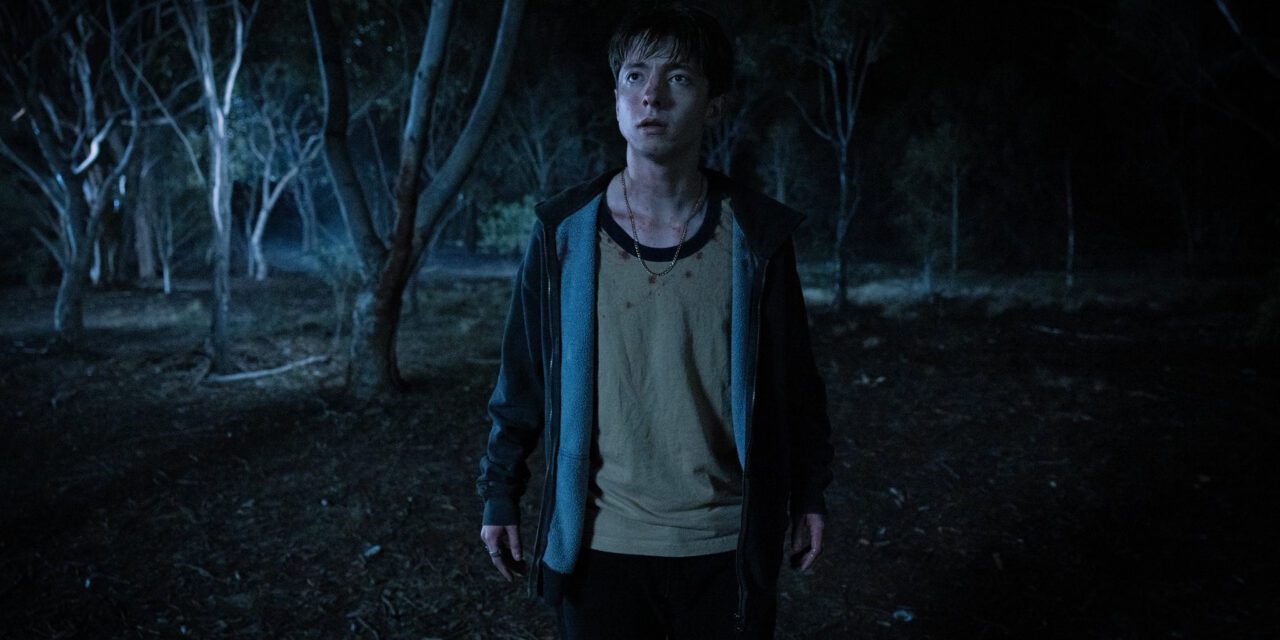
What if the person you desire the most is also the person you can’t safely be near? Worse yet, what if being close to them could get you killed?
This is the eerie premise behind Leviticus, a gender-expressive horror debut written and directed by Adrian Chiarella, where desire and danger intertwine.
At the center of the film are two teenage boys, Naim (portrayed by Joe Bird), and Ryan (portrayed by debut actor Stacy Clausen), trying to understand their feelings for each other while living in a society that treats those feelings as something shameful.
As Naim and Ryan grow closer, they are constantly faced with the overwhelming weight of lust, indecency, and desire; all of which are looked down upon in the small-minded Australian community, where the film takes place. This weight is enforced through the presence of the town’s “deliverance healer” (portrayed by Nicholas Hope), whose teachings frame anything outside his narrow idea of morality as something that must be “corrected”, in this case, homosexuality.
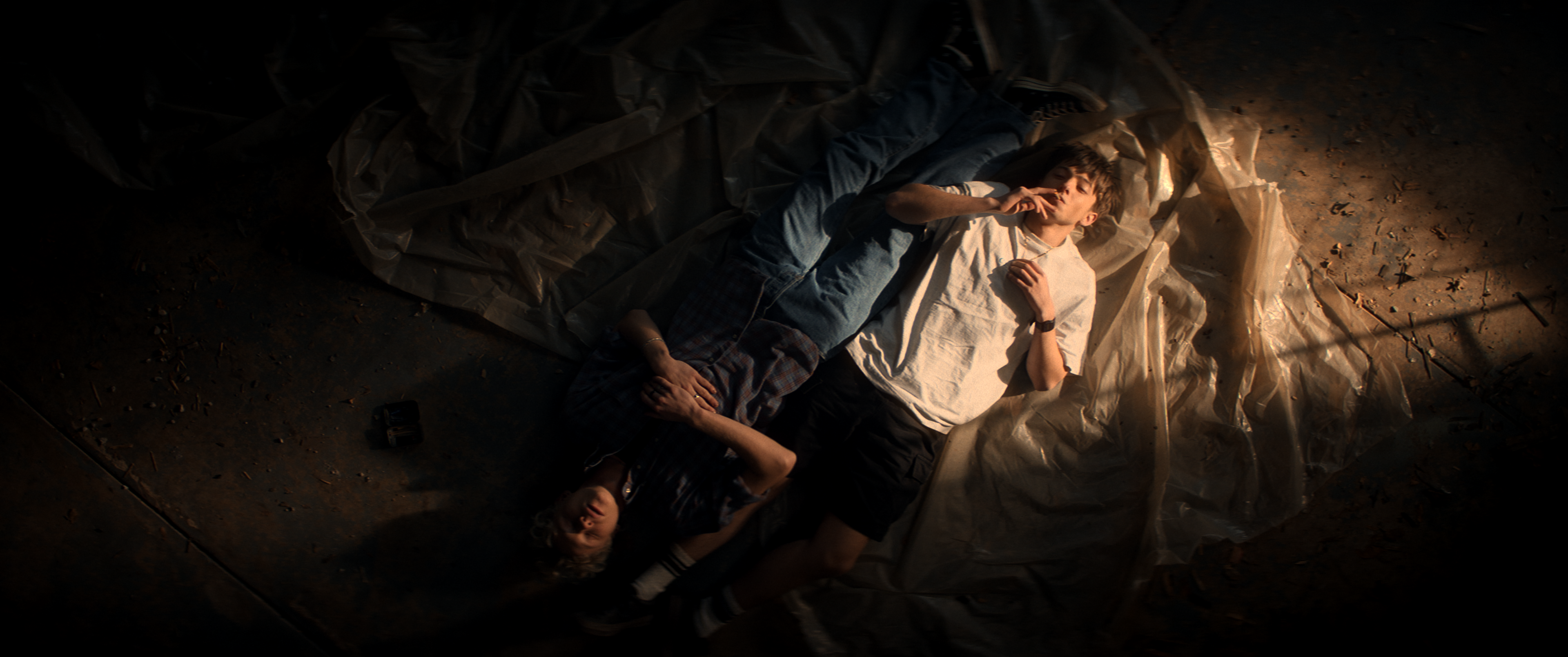
At first, the film portrays this entity as something external, a presence that stalks and threatens them, similar vibes to the 2014 psychological horror, It Follows. But as the plot unwinds, it becomes clear that the real tension lies within the beliefs the characters have been taught about themselves.
Chiarella constructs a world where desire is not simply an emotion to navigate, but something that appears to take a physical form, an evil that follows, mimics, and distorts the very act of wanting. As Naim and Ryan’s relationship intensifies, that internal pressure begins to manifest externally, with an entity that seems to feed on desire itself, taking shape through the very emotions they are taught to suppress.
In that sense, the horror is not only found in what is chasing them, but in the weight of what they carry within themselves.
“We need fear, it’s how we survive”, says the mother of one of the boys.

This idea echoes throughout the film. Fear is often presented as something that is necessary, a source of protection from danger. But what happens when fear becomes the only way to understand love, identity, and desire? Is fear keeping us safe by pushing away the people we care about the most? The tension between the conflicting themes of fear and desire carries the plot of the story, as the boys struggle to decide if what they feel is something to embrace or to run from. Instead, the people who are supposed to protect the boys — parents, religious figures, and medical professionals — become the source of fear and control, leaving viewers with the feeling that the entity may not be the most dangerous presence after all.
The title Leviticus adds an additional layer of weight to the story, drawing on the Old Testament book of the Bible with the same name, containing a passage that detests homosexuality, one which is contested by many modern scholars. Whether one agrees with those interpretations or not, this goes to show how systems of belief and morality shape the way people view themselves and the world around them.
This is where the idea of resilience becomes most important. Rather than presenting the characters simply as victims of their circumstances, Chairella depicts the boys as pushing forward despite the weight placed on them. Even when everything around them seems determined to pull them apart through fear, guilt, and the expectations of others, there is still a quiet fight and persistence in the way they move toward understanding each other and themselves. It is not presented as an easy journey, nor a clean one, but it is steady in its emotional direction.
Underneath its horror framework lies a story about resilience, of what it means to keep moving forward when fear tries to define the boundaries of love, identity, and desire. And while the film does not offer a simple resolution, it does leave us with the question: what does it take to remain truthful to one’s desires and identity in a society that teaches you fear to condemn these feelings?
Leviticus is the kind of film that stays with you. The scares won’t make you jump out of your seat, but the emotional weight behind the film is what makes it truly memorable. Adrian Chiarella’s debut is a haunting and heartfelt blend of supernatural horror and a very personal story of identity, fear and self-acceptance. More than just a horror film, Leviticus is a thought-provoking and emotionally charged experience that lingers even after the credits roll.
Whether you’re drawn in by its unsettling atmosphere, its engaging performances, or the exploration of love and belonging, this is a film that demands to be felt as much as it is watched.
For audiences looking for horror with a deadly romantic twist, Leviticus is well worth seeking out when it arrives in theatres on Friday, June 19, 2026.