I never thought I’d say this but… Frankenstein is having a cultural moment.
From last year’s Lisa Frankenstein to the upcoming The Bride!, the bolted beasty is back in a big way. (Even Universal’s recent theme park, ‘Dark Universe’ gets in on the recent trend of monster mayhem.) And, of course, perhaps the most anticipated of them all Guillermo del Toro’s Frankenstein, a sweeping adaptation that somehow makes the story’s gothic nature feel current.
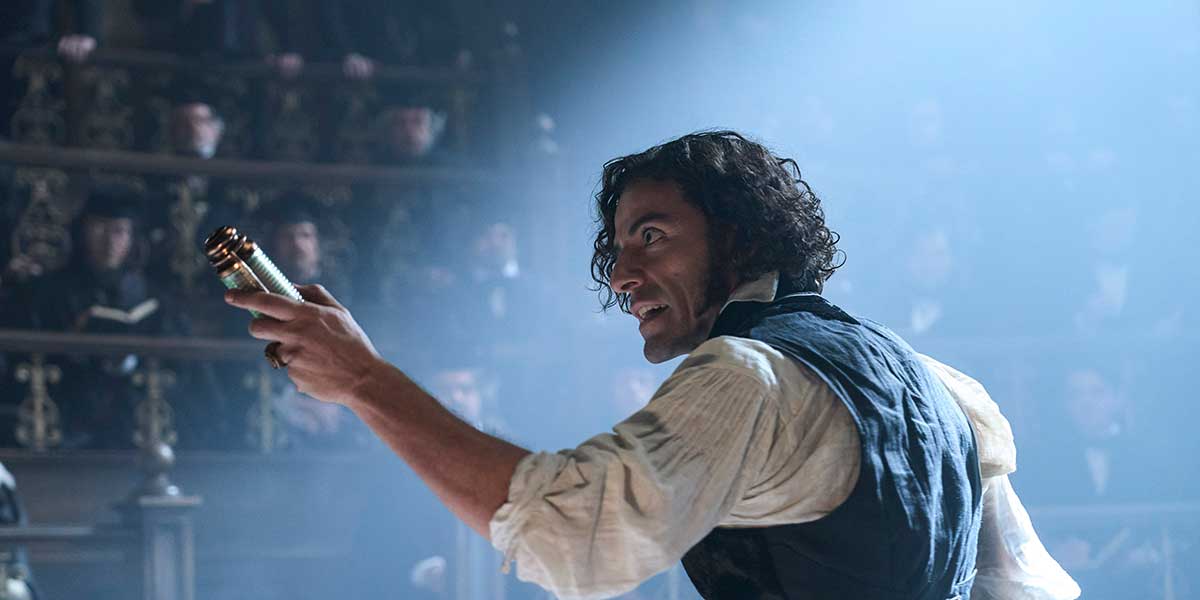
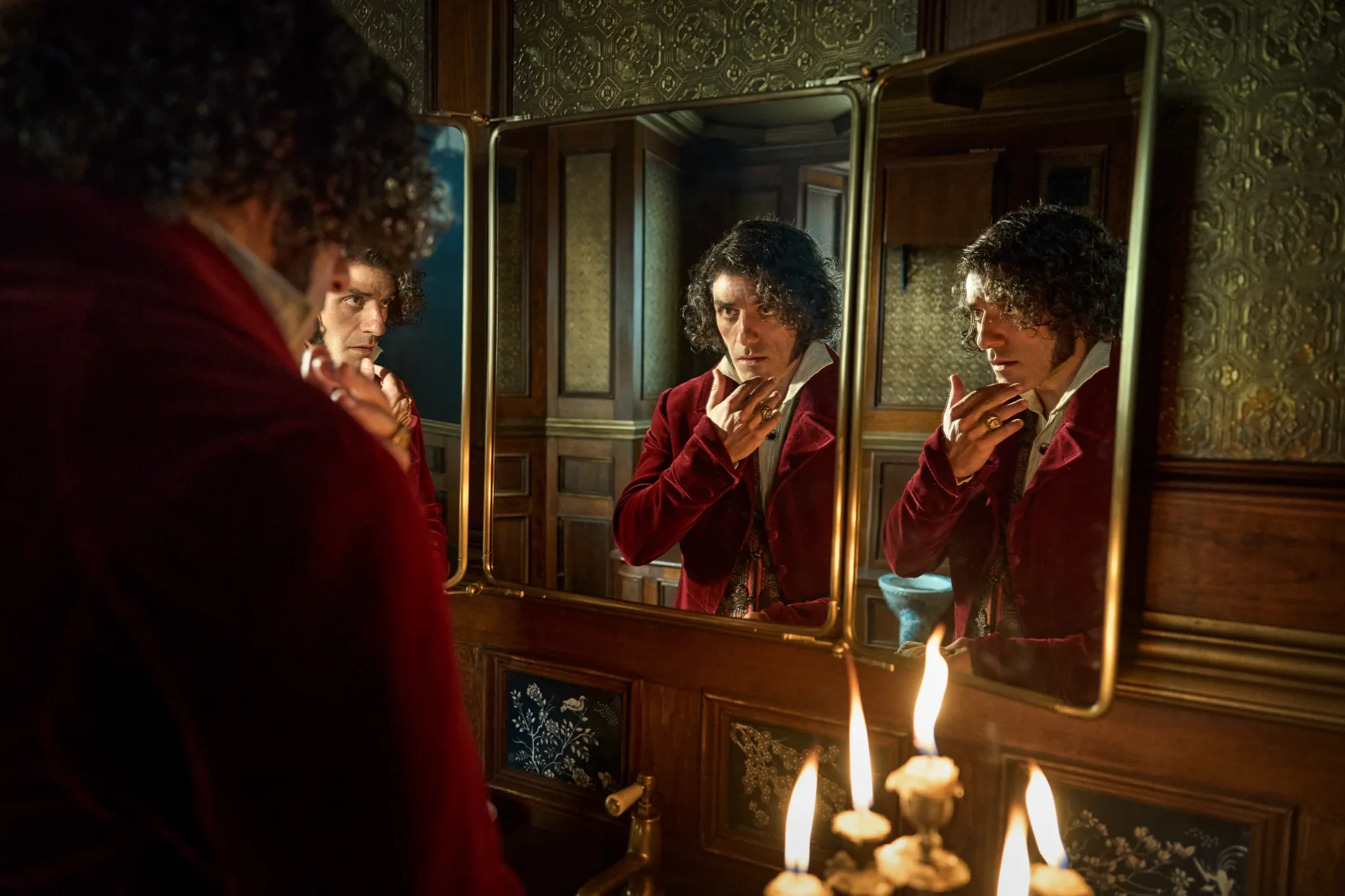
In del Toro’s reimagining of Mary Shelley’s classic tale, we are (re)introduced to Victor Frankenstein (Oscar Isaac), a brilliant scientist who believes that he has the power to create life through his experiments. However, his quest soon turns to an all-consuming obsession. After his work finally offers results, his relationship with his ‘monster’ (Jacob Elordi) reveals the darkest pieces of his soul, leading to a journey that threatens to undo his entire world (and that of his creation as well).
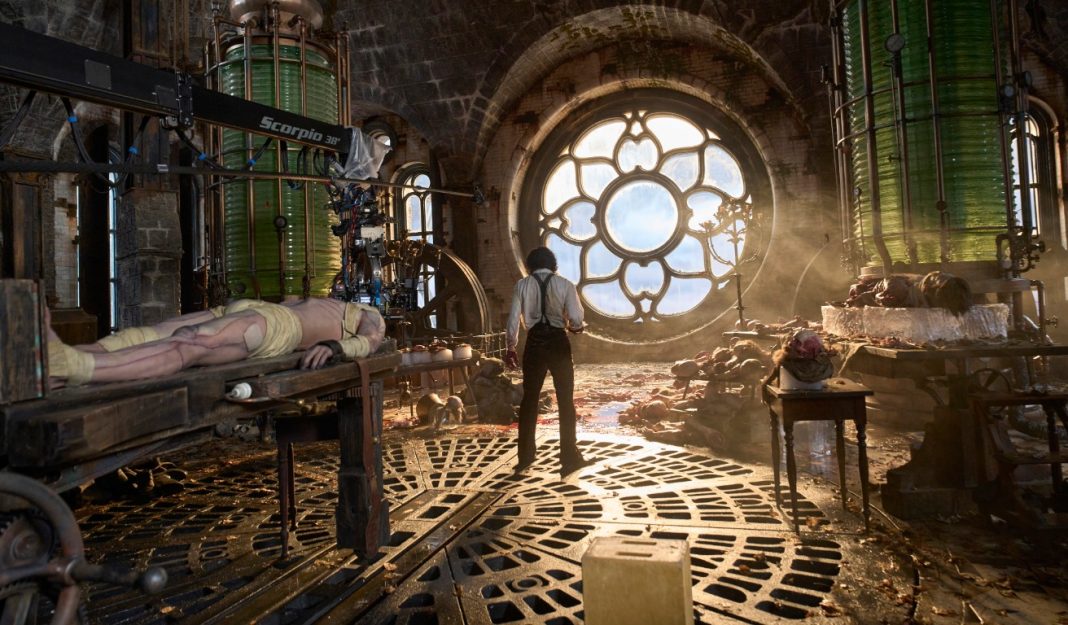
It’s worth noting that the film features some wonderful performances by its cast, especially Elordi who delivers a potentially award-worthy performance as Frankenstein’s monster. However, without question, the brightest star on display is del Toro himself. Here, the Oscar-winning director’s visual sensibilities are so stunning that one cannot help but be swept away by its massive scope. His attention to scale and detail allows Frankenstein to feel as epic as the title suggests. From gothic castles to frozen tundra, virtually every scene becomes an immersive experience as characters are dwarfed by massive sets. (Of course, the exception to this might be Elordi himself, who is given the opportunity to look gigantic, despite the depth of his surroundings.) This is a classic work of literature and it’s clear that he relishes the opportunity to bring it to life visually.
And, similar to the original work, del Toro explores the shadows of humanity’s soul. For example, Victor’s desire to be ‘known’ becomes an obsession for recognition. Dismissed by the scientific community, he believes he can do the impossible and that his research can change the world. At the outset, his ambition is rooted in care for humanity. The implications of his work have the potential to create cures for disease and, potentially, knock on the window of immortality. However, man was never meant to play God. And what Victor initially perceives as success quickly turns into a disappointment (and even fury) at the lack of perfection within his own creation.
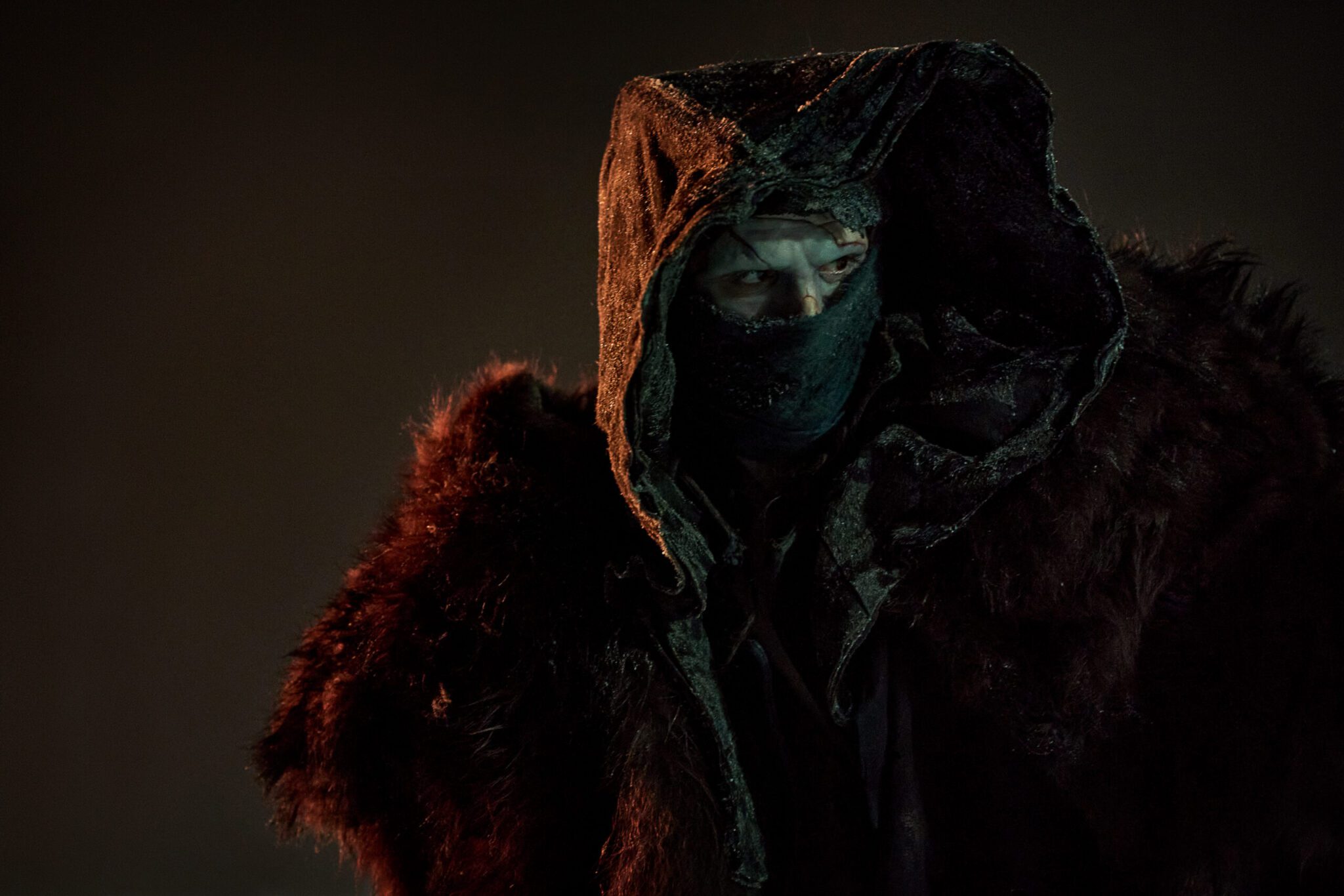
Frankenstein. Jacob Elordi as The Creature in Frankenstein . Cr. Ken Woroner/Netflix © 2025.
Yet what makes del Toro’s vision unique is its shift in perspective. Here, the film is split up into two distinct halves. In the first, we watch as Victor recklessly pursues his own form of immortality. In the second, the narrative moves through the eyes of his monster, retelling the story from its… sorry… his perspective. As a result, del Toro ensures that the monster is more than a mere plot device. Instead, he becomes an active participant in the story, offering feelings and framework for the true evils on display.
In essence, Elordi’s monster isn’t one we feel sympathy for. He’s a living being that we feel empathy with.
This allows del Toro to explore the qualities that make us human from a personal perspective. Love, compassion, self-awareness are all markers of internal beauty that the monster experiences, allowing him to tap into something other than the sum of his (body) parts. Science may be Victor’s true god but his monster believes that there’s something intrinsically special about life itself. To him, life is more than an equation to be solved. It’s an expression of the soul and an experience to be had.
In some ways, it’s fascinating that, even after all these years, the evolution of Frankenstein’s monster still feels relevant as an inquest into the depth of the human soul. While Shelley’s original work was written over 200 years ago, the questions regarding the darkness of man continue to resonate with us today. And the story’s exploration of themes such as xenophobia and obsession is as true in today’s culture as they ever were. With an eye on today’s world, del Toro absorbs these messages and adapts them appropriately, creating conversations about understanding the ‘other’ and the most ‘monstrous’ aspects of man.
Having said this though, it’s also worth noting that, despite its many positives, Frankenstein may not be del Toro’s magnum opus. For fans of his work, the throughlines between Frankenstein and other films such as The Shape of Waterand Pan’s Labyrinth are fairly clear. While this is, of course, not a problem, it could be reasoned that these very same themes have been dealt with in other films of del Toro’s with greater depth. For example, Shape of Water’s exploration of the meaning of ‘monster’ is arguably more thorough than his thematic work here.
However, this is a minor quibble. For those willing to step into del Toro’s world, Frankenstein is a most rewarding experience. If the opportunity exists, this is the sort of film that deserves to be seen on the biggest screen possible (as opposed to waiting to screen on one’s phone). Frankenstein may not quite be del Toro’s best work but it remains an utterly delightful monster mash
Frankenstein is available in theatres on Friday, October 17th, 2025 and streams on Netflix on November 7th, 2025.