

I came out of this film realising just how little I knew of Charles Dickens story (admittedly, before this film, the only specific reference I could conjure for an Ebenezer Scrooge figure was Donald Duck’s uncle). But Scrooge’s story lives in our pop cultural memory, as do the Ghosts of Christmas Past, Present and Future, reminding us to not be so sour on Christmas. This was the vibe in my mind.
In retelling Scrooge’s story through Ebenezer, director Ti West brings us back to the groundedness of the tale, trading the brightness of the festive season for bleak dark tones – apt, given his work in the horror genre, the fact that this is an old English story that deals with poverty, and the film’s supernatural elements.
Ebenezer Scrooge (Johnny Depp) is a wealthy businessman who refuses to help anyone in need or gather with his own family or partake in any sort of joy. One Christmas Eve, he is visited by the ghost of his late business partner, James Marley (Ian McKellan), who, bound up in chains, warns Ebenezer that he must listen to the three ghosts that will visit to avoid ending up like him. The three ghosts show Ebenezer his past, his present and his future, revealing how he ended up this way, the things people around him endure that he can’t see, and how his life will end if he doesn’t change his ways.
Ebenezer shows the slow hardening of Ebenezer Scrooge’s heart, and how in burying himself in work to prove that he can be valuable, he pushes away people who already think he is. The self-fulfilling prophecy keeps him cold and ungenerous in a ‘I worked hard to get to where I am, so they should do the same’ way (does this sentiment sound familiar?).
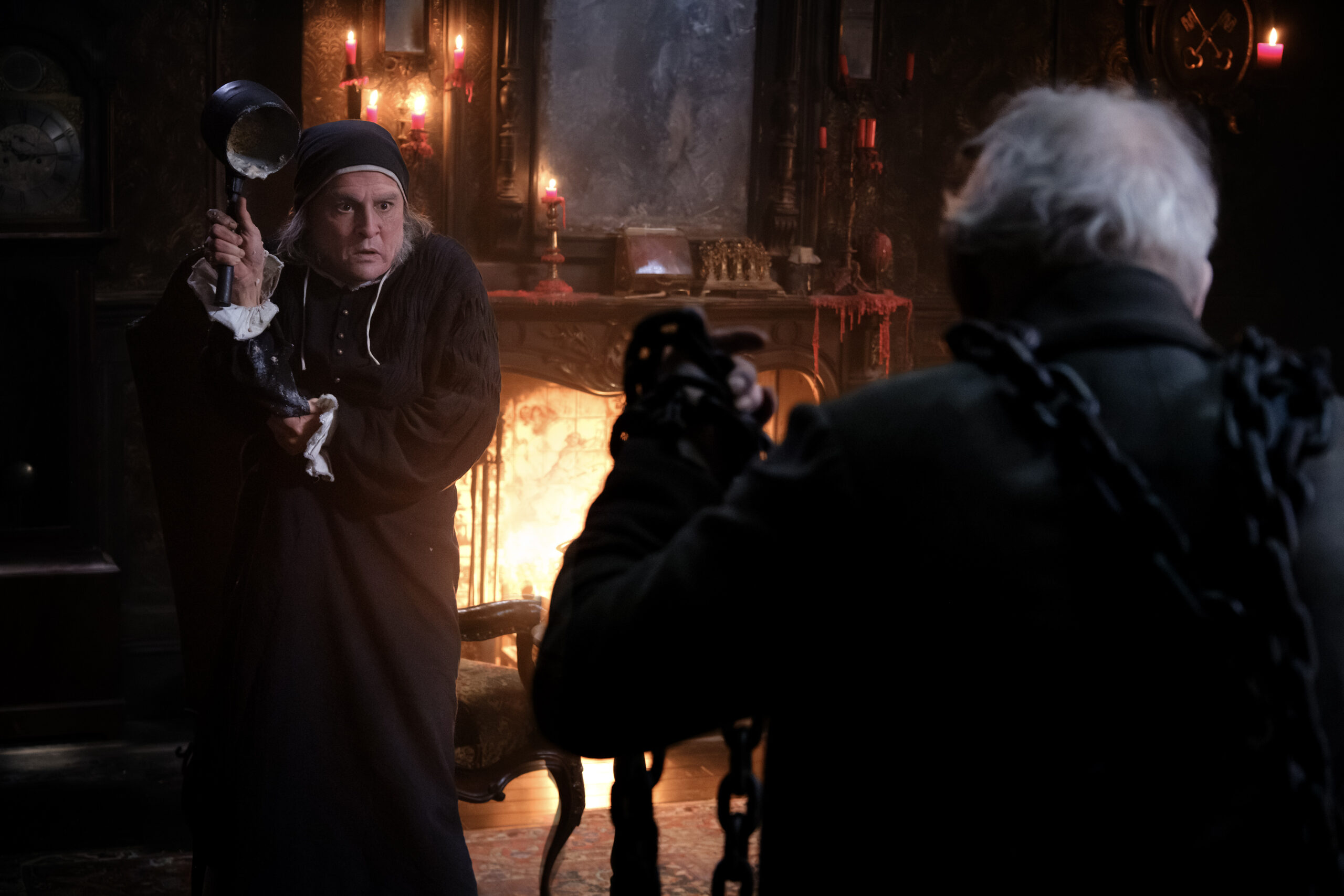
Johnny Depp and Ian McKellen in Ebenezer from Paramount Pictures.
There’s something about the way repeated heartbreak makes a person want to close off. It’s exhausting to keep hoping rejection after rejection, and it’s much easier to move like we don’t care. And it’s easy to project the hardship we face (and how ‘well’ we dealt with it) onto our perceptions of other people and their lives.
One of the ghosts says to Ebenezer, “it is better to break than to harden,” a line that jumped out at me immediately, and one that is reminiscent of C.S Lewis’ quote: “If you want to make sure of keeping [your heart] intact you must give it to no one, not even an animal. Wrap it carefully round with hobbies and little luxuries; avoid all entanglements. Lock it up safe in the casket or coffin of your selfishness. But in that casket, safe, dark, motionless, airless, it will change. It will not be broken; it will become unbreakable, impenetrable, irredeemable.”
Pain is awful, and whenever we experience it, it is important that we allow ourselves to feel it (I’m really talking to myself here). It keeps us human, and more easily able to recognize when other people are going through pain and how we can help alleviate that.
Ebenezer is a Christmas film that highlights pain and suffering in ways that seem antithetical to Christmas as we know it, but might be closer to its central theme, referenced in an expository sermon in the film: a Saviour being born in a lowly stable, and who lived with “nowhere to lay His head”- a life sustained physically by the generosity of those around Him, and given generously for the sake of the world.
Ebenezer awakens in theatres on November 13th, 2026.


