“I’m dying? . . . But I have to play Hamlet”
Shakespeare’s Hamlet is often considered his greatest play. Certainly, the title role is one of the most challenging to perform. It is an existential contemplation of life and death, duty and revenge. In Simon Stone’s Elsinore, we see a dying man as he seeks to reach the pinnacle of the theatrical world.
Ian Charleson (Andrew Scott), an actor best known for his role of Eric Liddell in Chariots of Fire, seems to just be getting mediocre parts in TV and films. In 1989, he is offered the chance to play Hamlet at the National Theatre in London. The rub is that he has just developed AIDS. In the 1980s, such a diagnosis was essentially a death sentence. As a gay man, Ian knows several people who have the disease.
When he develops his first Kaposi’s Sarcoma (known in gallows humor as “the polka dot phase”), Charleson seeks treatment from Dr. Margaret Johnson (Olivia Colman), a groundbreaking physician in the treatment of AIDS, when many doctors shied away from the disease. She makes it clear that to prolong his life, he cannot do the play. The disease and the treatment will take all his energy. But for Charleson, this role is basically his entire bucket list (with the bucket in easy kicking distance). What good is it to prolong life if he does not live it? (As Hamlet would have put it, “To be or not to be”.)
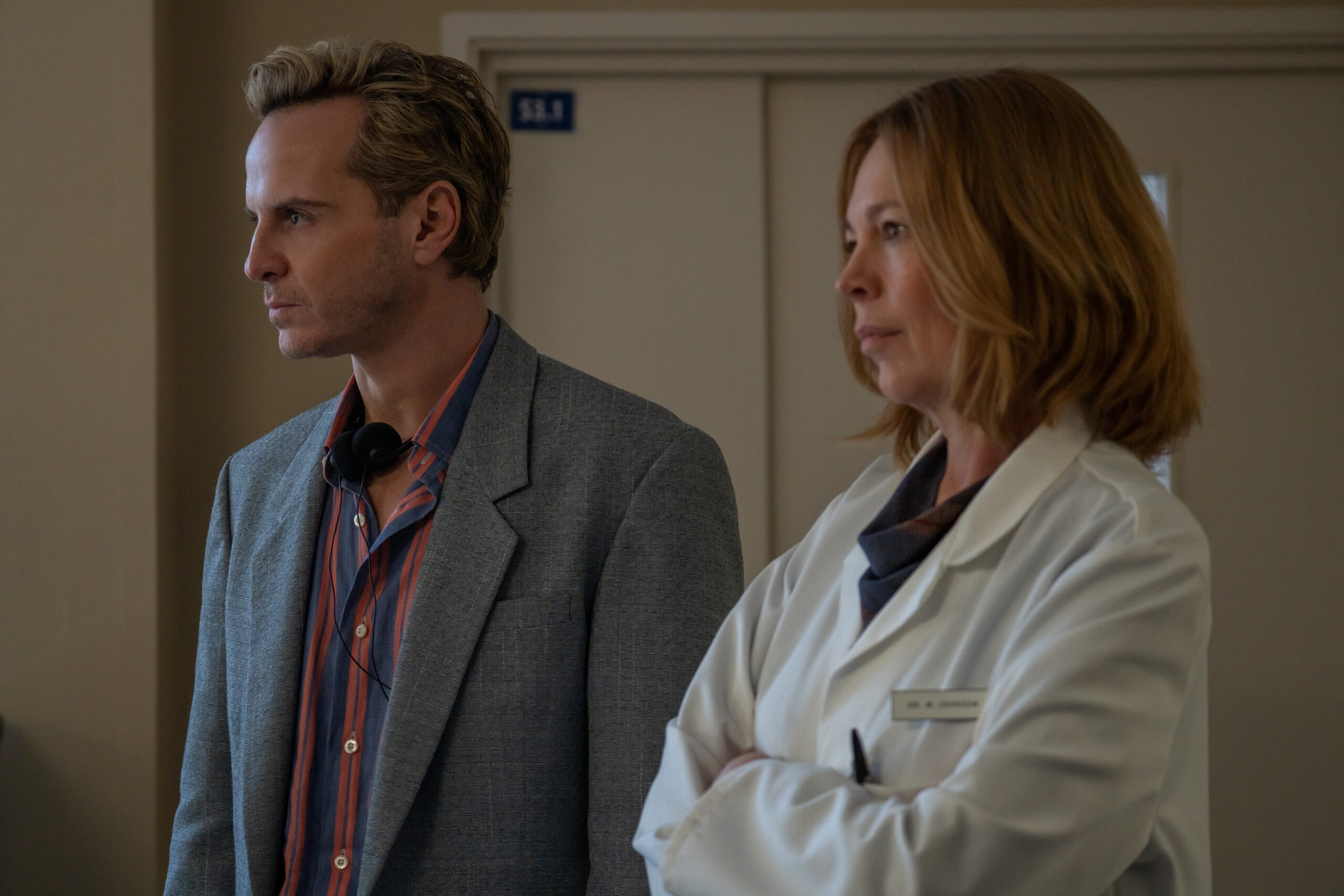
Andrew Scott stars as Ian Charleson and Olivia Colman as Margaret Johnson in ELSINORE, a Focus Features release.
Credit: Anthony Dickenson / © 2026 FOCUS FEATURES LLC
The film is in part a philosophical exploration of this question. It is usually set in the discussions between Charleson and Dr. Johnson, but also at times between Charleson and other patients or other theatre people. It is a question that everyone has to address at some point.
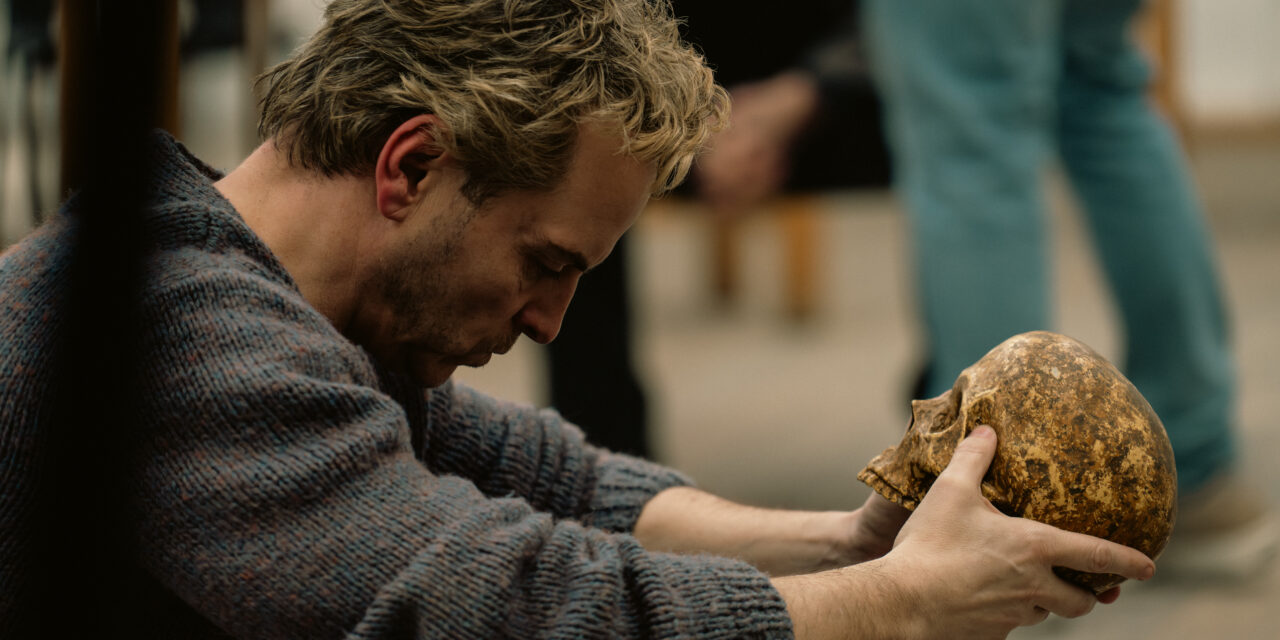
The film plays out between treatment, rehearsals, setbacks. It is edited in such a way that we see Charleson in the role of Hamlet reciting many of the key lines, all of which reflect what is going on in his own life. This creates a poignant meditation on the meaning of life and living, and how knowing the reality of death affects that meaning.
Charleson lived a closeted life. At one point he notes that if he had focused on being in the theater, his sexuality would not have been a problem. But because he wanted a film career, he had to keep it hidden. In the film he doesn’t come out to his parents until he is hospitalized. The struggle of whether to come out or not comes up a few times in the film. For Charleson, it is important that people see his role, not him. So, to let it be known that he was dying of AIDS while performing would diminish his accomplishment.
While death is central to the film (as it is to Hamlet), this is really a film that celebrates living. It is not only Charleson’s endeavor to fulfill his life with this role. We also see it playing out in other patents in the clinic who also find ways of adding glory and joy (the things Charleson wants in life) to their remaining days.
We first see Charleson as he is preparing for a film audition. He recites Hamlet’s “What a piece of work is man” monologue. We follow him through the dual trials of acting as Hamlet and dealing with AIDS. Eventually, Charleson went on to perform the role at the National Theater twenty-four times. As we observe the life force behind those performances we may exclaim, “What a piece of work is man!”
Elsinore is in limited release with general release coming soon.
Photos courtesy of Focus Features.