
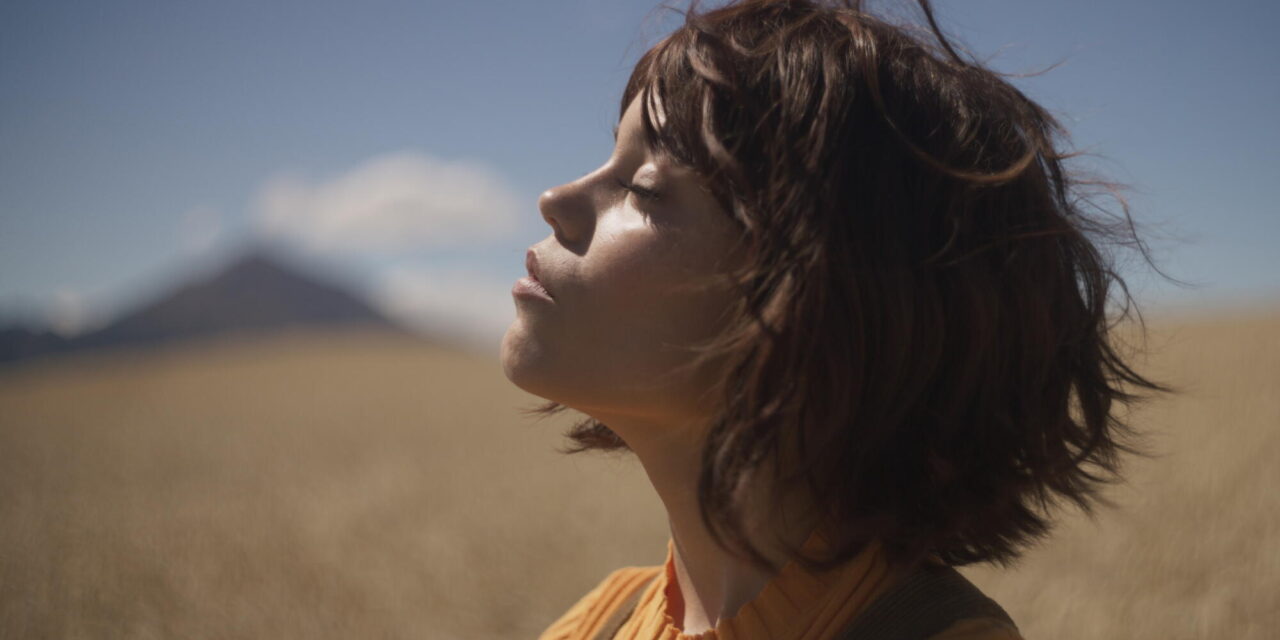
Klara and the Sun stars Jenna Ortega as Klara, a sun-powered AI robot designed to be a companion to teenagers. She loves the sun and subsequently hates the evil Cootings Machine because its pollution blocks the sun’s light. Klara is chosen by Josie (Mia Tharia) and goes to live with her and her mother Melanie (Amy Adams) where she discovers Josie has been genetically ‘lifted’ but the procedure has made her sick.
Based on the book by Kazuo Ishiguro, Klara and the Sun has director, Taika Waititi’s, colourful visual style, which I will say, I like to see. The film is set in a dystopian future, but the tone and character design play with that setting, creating a retro futuristic almost cartoonish look which I think is fun. The tone of the film perfectly accentuates Klara’s never-seen-the-outside innocence, which Ortega plays exceptionally. Speaking of exceptional, I have never seen Mia Tharia in anything before, but I will be looking out for her other work- she is incredible as Josie.

Yet, Klara and the Sun is clunky and repetitive in parts. Some of the comedy and twists don’t land for me the way I think they were intended to.
But underneath the colour, the spectacular acting and the clunkiness, Klara and the Sun works out themes of faith. Klara believes the sun is sentient, giving life and good health to all living things, and even artificial robots like her. So, when she realises that Josie is sick, she prays to the sun constantly for her healing. Her innocence presents here as a childlike faith that gives her hope through each day, even when she is unsure her prayers are being heard. Klara asks something to the effect of, “I know, how can I pray to something I can’t see?” when the sun is out of her view. Her resolve – to reflect the sun’s light, just like the moon – is inspirational.

I’ve found childlike faith to be harder as I’ve gotten older. It’s hard to keep hoping for the best when you know how the world works. It makes me feel kind of dumb, and as a grown woman (TM), that’s not going to be me.
But the fight for goodness must come from the belief that it is there, no matter how hard it is to find. The strength to hold on to God must come from the belief that He is there, no matter how hard He is to see.
Klara’s innocent, yet steadfast faith in the sun colours the way she sees the progression of Josie’s illness towards an ambiguous ending. Klara believes the sun has healed Josie because of her offering (killing the Cootings Machine with her flammable robot blood), but this act left her damaged, making us wonder if what she recalls after this event actually happened the way she tells it. Still, it keeps her hope alive and offers her a new perspective even if the ending is dire – in everything, she finally got to experience love and not just watch it happen from a shop window.
What else are we here for?


