In The Social Reckoning, Aaron Sorkin’s follow up to his and David Fincher’s 2010 film, The Social Network, Facebook finds itself a central driver of culture and politics, for better or worse.
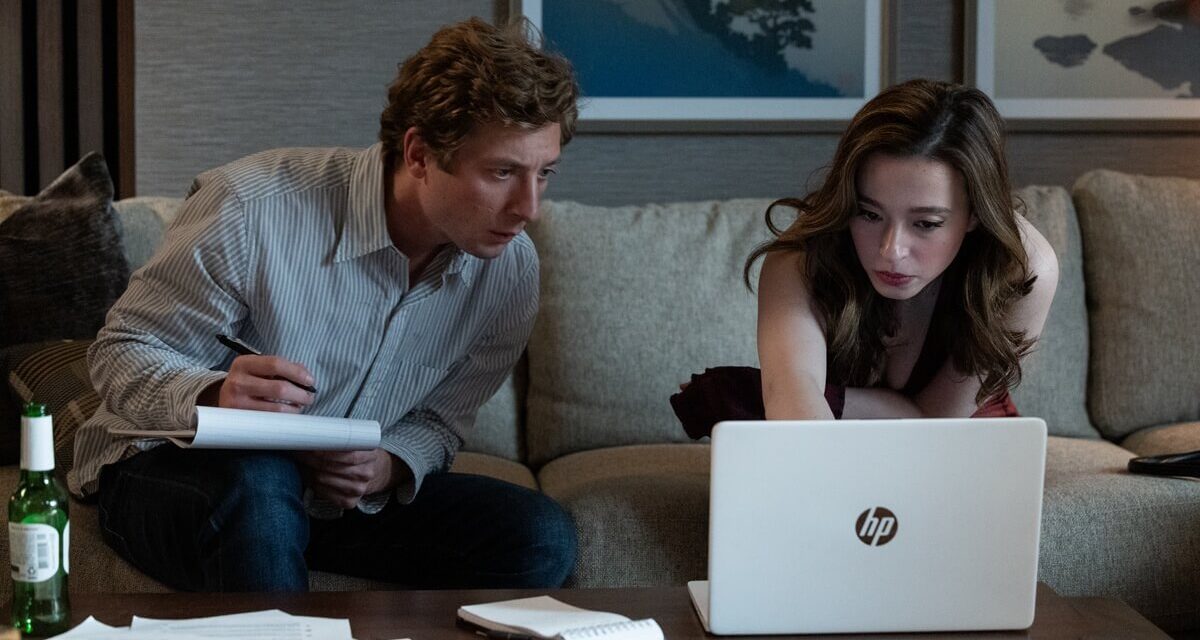
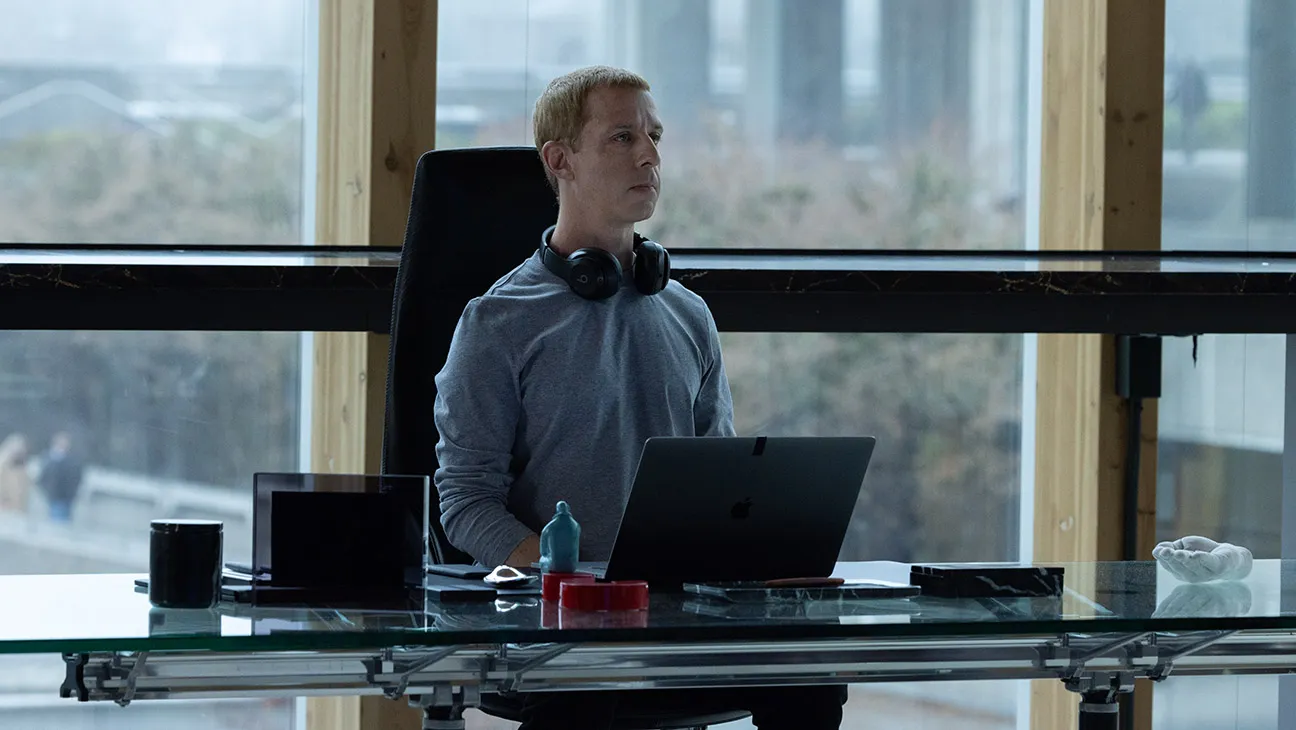
After seeing an acquaintance get radicalised online, and having her concerns fall on deaf ears, data engineer on the Facebook civic integrity team, Frances Haugen (Mikey Madison), teams up with investigative journalist, Jeff Horwitz (Jeremy Allen White) to bring the company’s secrets to light. The film also stars Jeremy Strong as Mark Zuckerberg, who spends most of the film preparing to be questioned by congress, Bill Burr, Wunmi Mosaku, and Billy Magnussen.
Facebook and Zuckerberg are a far cry from the college kid and start up app in the first film. The app now has billions of followers, has acquired two other companies, and is worth trillions of dollars. It is in some ways, as Mark says in the film, a town square. However, what the founder of the app refuses to admit is that it plays a central role in deciding what people believe and how they act. Throughout this film, Haugen and Horwitz work to prove that the app pushes to retain people’s attention for profit, despite being aware of the negative effects it has on them and communities as a whole (these effects culminate in the film at the Jan 6 riots).
The film highlights a phenomenon that we are unfortunately living in. You do not have to be online for a long time to see how ragebait content gets pushed because it drives engagement, radicalisation breeds within a false sense of connectedness, and insecurities are preyed upon in more prevalent and damaging ways. Harmful rhetoric goes unpunished, and even more than that, gets rewarded (64% of people in online hate groups are led there by the algorithm, the film highlights). The fact that all of this is for the monetary gain of already rich corporations is dystopian, to say the least.
The Social Reckoning brings Facebook and corporations like it to account, exposing the depths of its effects to the viewer. However, the dialogue feels cumbersome in moments, making it difficult to follow along (I did go ‘or maybe I’m just dumb’ as Frances keeps telling Jeff when he doesn’t get what she’s talking about). To me, the film feels like a report in film version. That will have its own audience maybe, but I think is a shame, given that its themes affect more people than not. There was also no satisfaction at the end of the film for me. There was a feeling of justice I was expecting that just did not show up.
Still, The Social Reckoning makes us question our online presence. Who really controls what we believe? And I guess the reckoning then falls to us. What are we going to do about it?
The Social Reckoning is available in theatres on Friday, October 9th, 2026.