
What happens when you sense that the American Dream is not really available to you? Mouse, from writer/director Kenny Riches, take us into a world of small-time criminals who try to justify their actions as a response to lack of access to that dream.
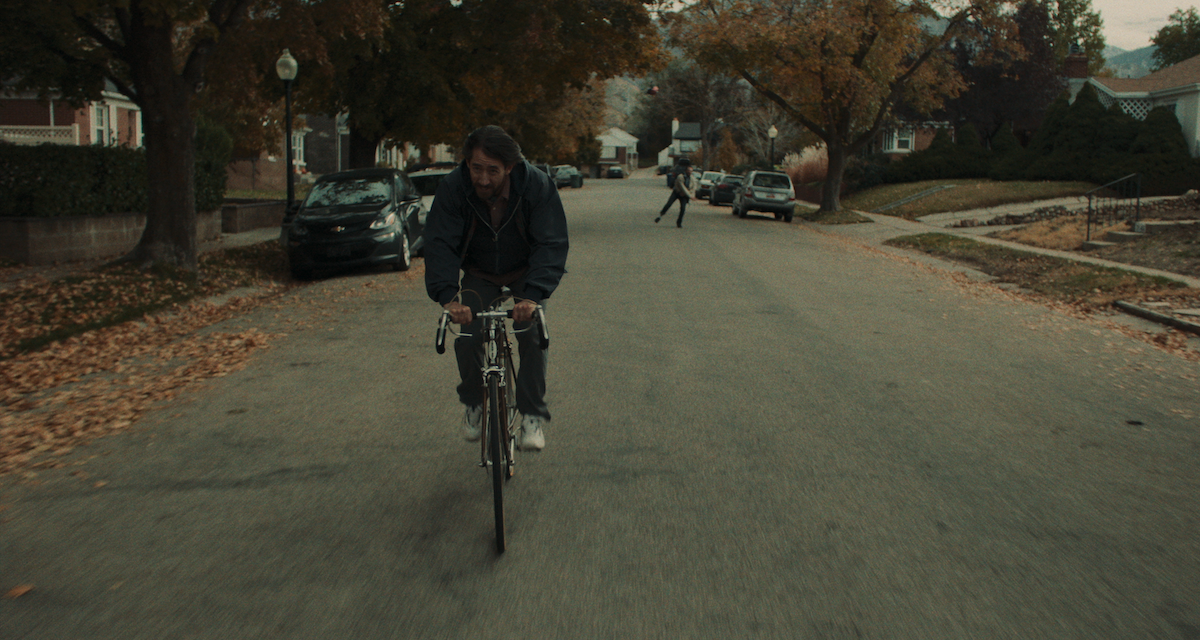
Denny (Riches) makes his living by stealing bikes, burgling cars, and other petty thefts. He calls what he does “soft crime”. He never takes too much to avoid drawing attention. He lives with his mother, who spends her days in correspondence with relatives in Japan. (The story is set in 2007, before the mushrooming of social media.) When he sees an ad for a pen-pal service, he signs up (using a recently stolen credit card and identity).
That pen-pal service is a scam. Tessa (Sarah Coffey) and her boyfriend Maury (Kimball Farley) use it to grift lonely people into sending them money. Like Denny, they rationalize what they are doing by looking at the unequal distribution of wealth. Of course, viewers will see through their obviously flawed reasoning. Which means that viewers may have a hard time emotionally connecting with any of the characters.
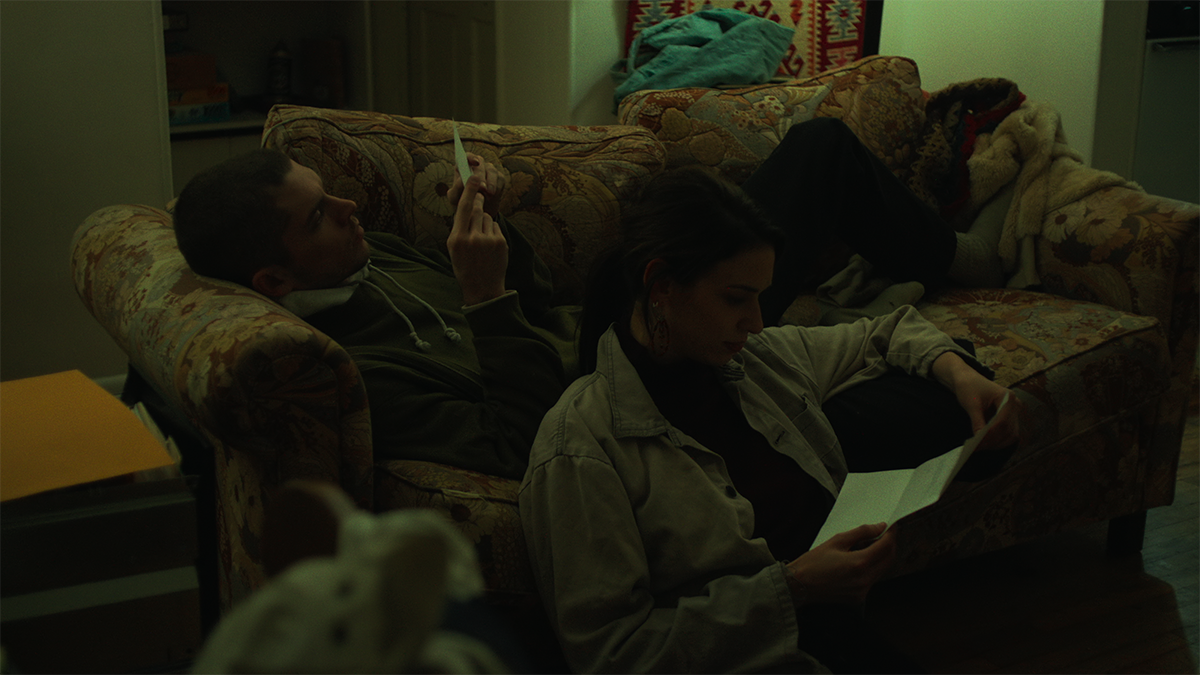
All this two-bit crime escalates quickly about half way through the film. When Maury’s gambling debts forces him and Tessa to take to the road, they decide they need to make a real connection with Denny’s, who has played himself off as a wealthy man, and take him for as much as they can get. Denny, hoping to impress his pen pal Tessa, decides to break into his alter ego’s house and kidnap him so he can show off. It all goes downhill from there.
At the heart of all this is the mythology of the American Dream. Is there any reality to that concept? Is it really available to everyone? What of those who don’t achieve it? All of those are questions for consideration, but the film doesn’t fully confront them.
The film does make a case that one of the issues that confronts our society is the endemic nature of loneliness. Everyone in the story is essentially lonely. Dennis is especially an outsider. He is half Asian, non-Mormon living in Salt Lake City. Other than his mother, he has no connections. Tessa has no connection other than Maury (and I wouldn’t blame her for leaving him to the leg breakers). The film sets it up for these two to finally find a connection, but since it is all built on lies, we know there is no hope for happiness. Which, in the end, leave the viewers without a sense of fulfillment.

Mouse is in select theatres on Friday, September 26th, 2026.
Photos courtesy of Dualist.