In David Ayer’s latest film, retired Green Beret James Belmont (Brad Pitt) crashes his biplane in the wilds of Alaska, with only his combat dog Odin and a few supplies to complete a fifty-plus-mile journey back to civilization. Along the way, Belmont and Odin will battle their PTSD, dangerous wildlife, life-threatening elements, and the insidious siren call tempting them to give up, finding what it means to embrace the Heart of the Beast. Thanks to their friendship and shared experiences, Belmont and Odin will challenge the audience to push forward through their example in this tale of courage and perseverance.
While Ayer has made a name for himself with urban tales like Training Day, Harsh Times, and End of Watch, his latest film would be an idyllic ode to the beauty of the northernmost spot in the United States if it wasn’t for the trials and tribulations that the two protagonists survive. There isn’t much more spectacular than the New Zealand land and sky that cinematographer Mauro Fiore (Avatar) captures, creating a scene where the backdrop is more of its own character than just background for the action. But this isn’t a serene buddy trip – it’s a death-defying ascent through natural circles of hell to reach the other side.
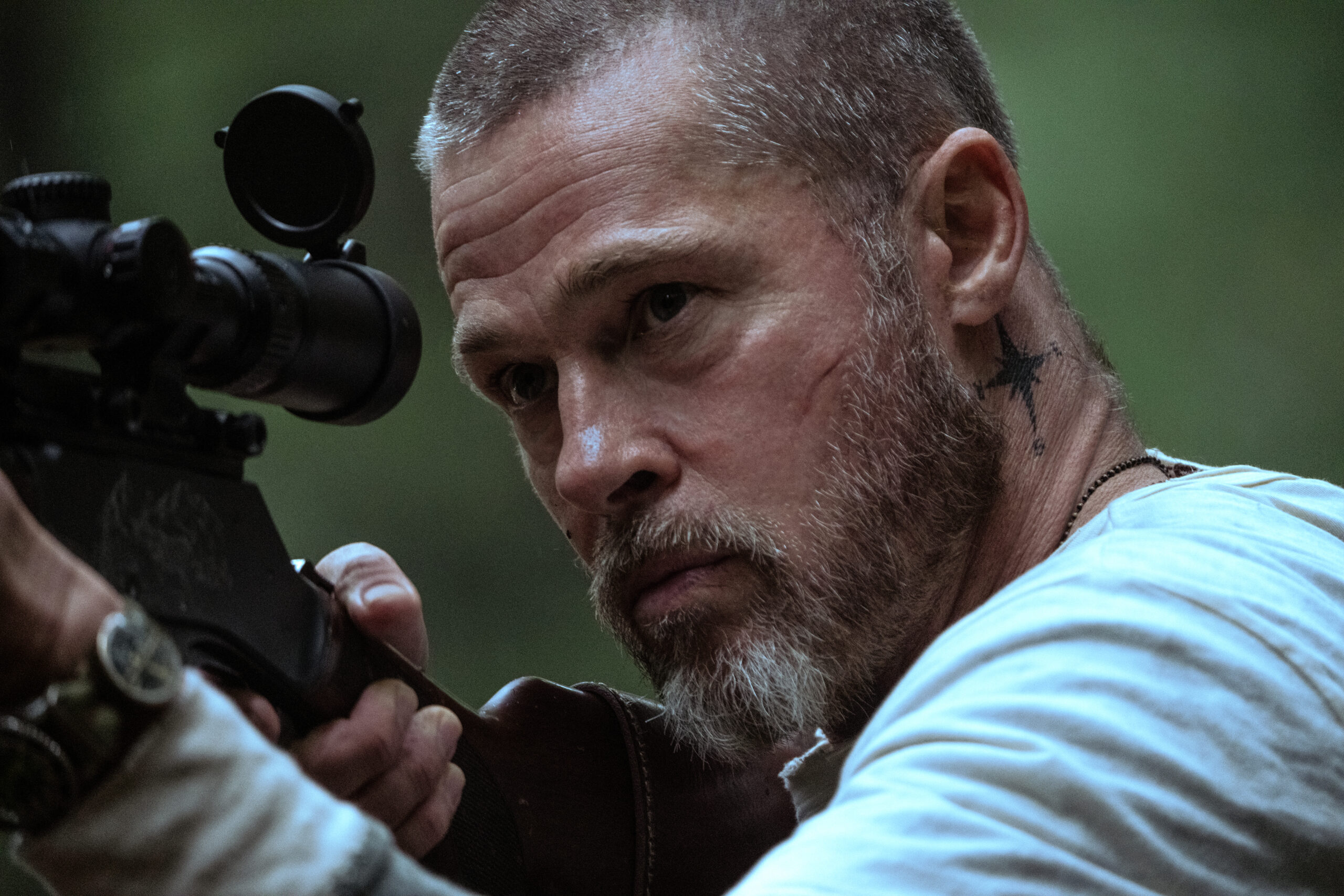
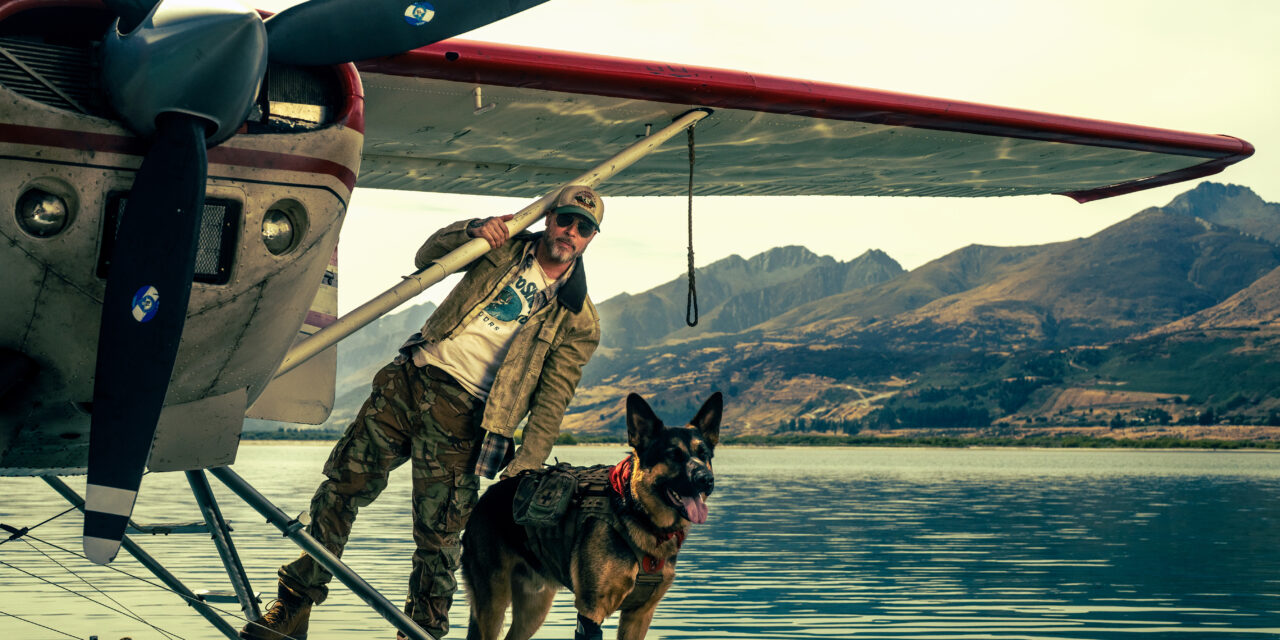
Brad Pitt plays James Belmont in Heart of the Beast from Paramount Pictures.
To be honest, the film rests largely on Pitt’s capable shoulders, with the dog(s) portraying Odin as the third member of the party (including the landscape). Pitt’s depiction of the haunted Belmont, clearly struggling with survivor’s guilt and a lifetime spent at war, bears a remarkably clear portrayal of a soldier returning home. Unlike some films that have shown how hard it is for the ex-soldier to settle into civilian life, Cameron Alexander’s script instead plants the two ex-soldiers in a new warzone, the wild.
Heart of the Beast is not an easy watch. The wounds that the two protagonists bear are physical manifestations of what they returned home from war with. (It’s much easier to see the external wounds than what a person is wrestling with internally… and the film makes that clear.) But when the two fight through a situation, whether it be physically battling weather, a climb, etc. or battling other wildlife, they are doing so together, as one unit. It’s this that the film drives home in the closing slides flashing across the screen, that the man and the dog are one and the same, linked together forever. It’s a testament to the undeniable spirit of the warrior, of human and canine, that will have audiences cheering even as tears are shed.
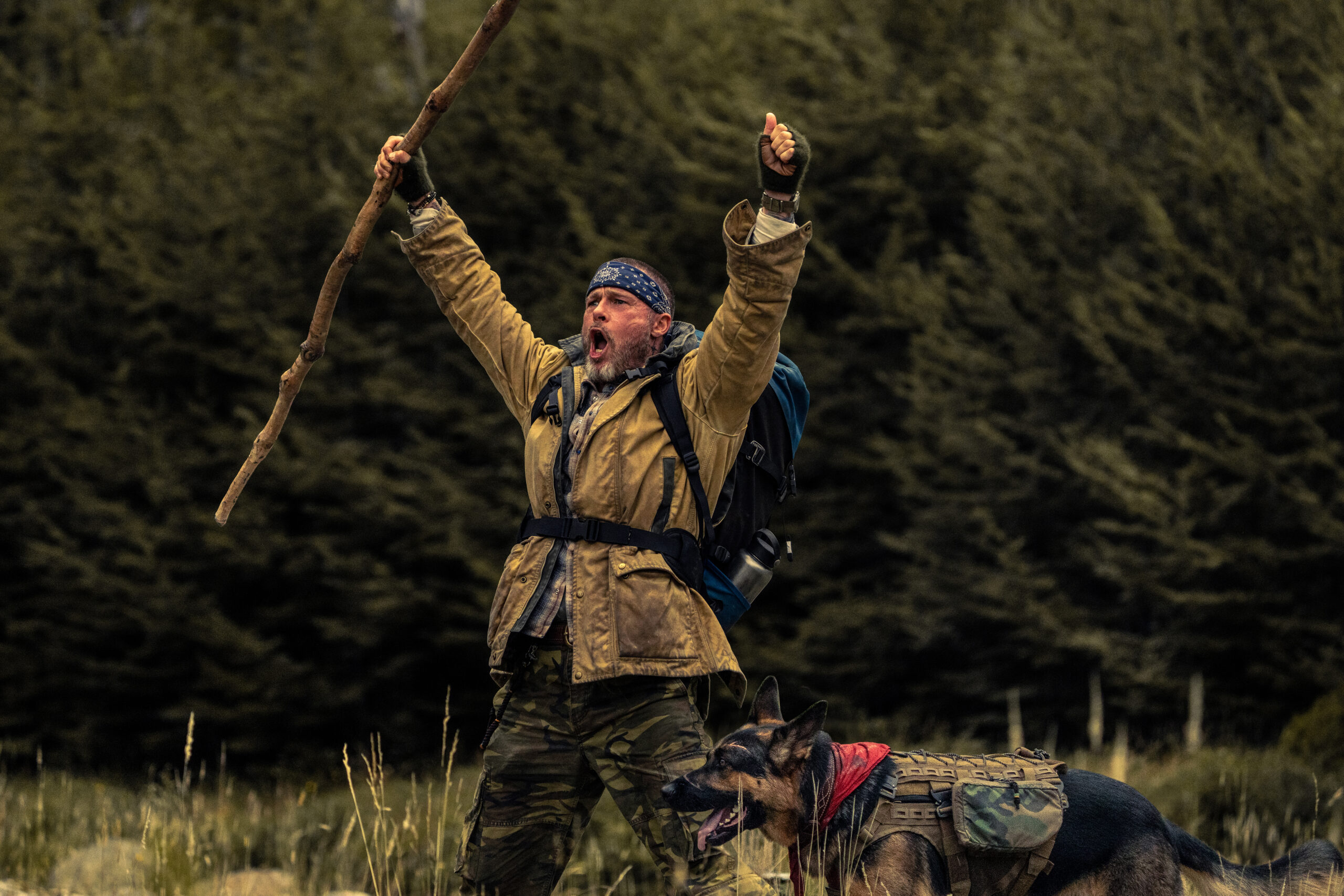
James Belmont (Brad Pitt) and Odin in Heart of the Beast from Paramount Pictures.
That said – and here come potential spoilers, so be forewarned – Ayer’s film has significant undertones that I found myself wrestling with afterward. Yes, the film could be simply slotted in between Castaway and The Call of the Wild somehow mashed up together, but the wounds of war lift it beyond that in my estimation. Belmont and Odin have seen things, done things even, that no human was ever meant to see or do, and yet they have answered a call presumably to country and honor that caused them to take those things on.
Now, alone except for each other, the weight of violence and suffering still rests with them. And for Belmont, there’s the belief that Odin served honestly and innocently, and deserves a life of peace. There’s transformation there, in the journey, that comes with visuals I found to reinforce the point.
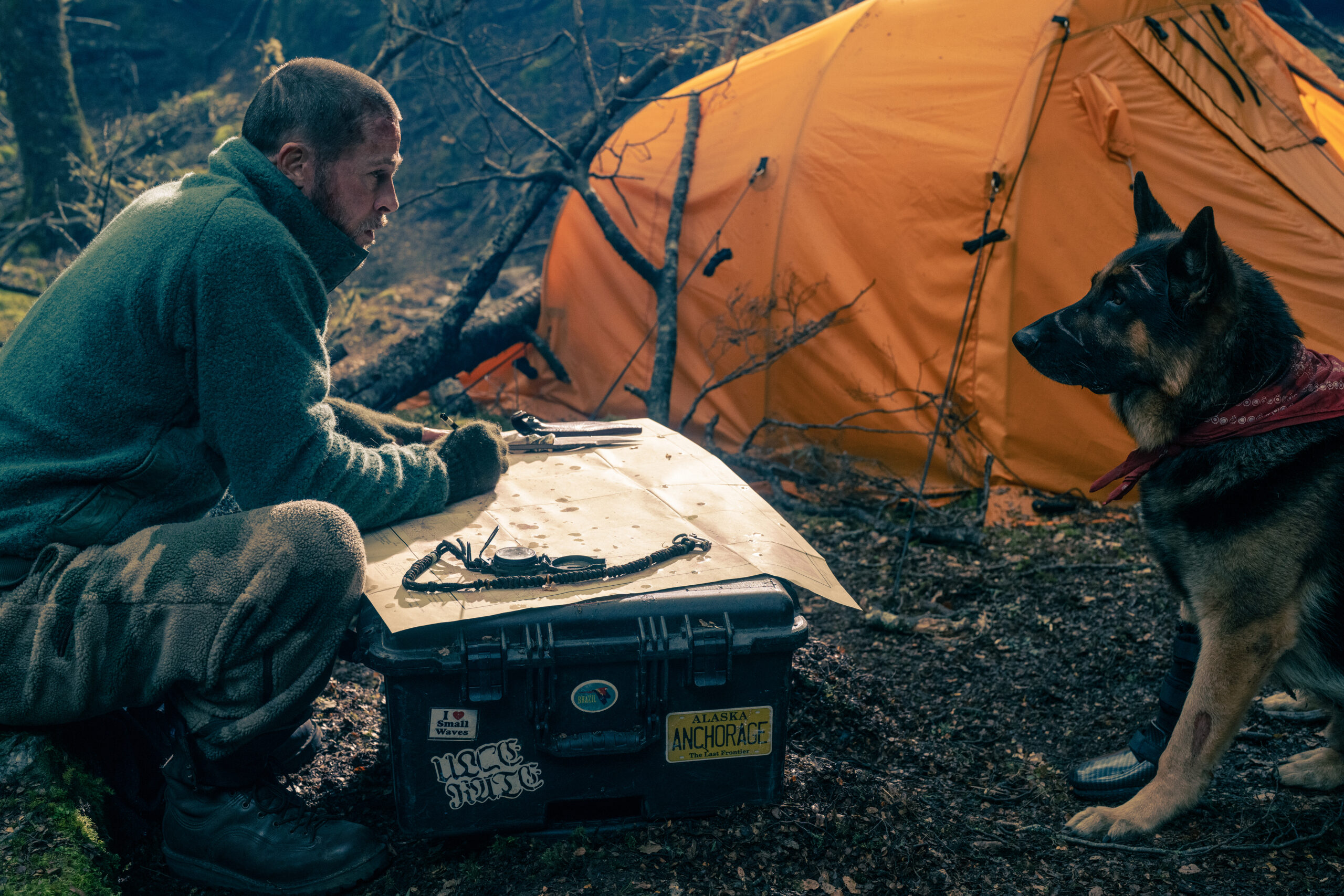
James Belmont (Brad Pitt) and Odin in Heart of the Beast from Paramount Pictures.
When the plane crashes, it’s not on land but in the water. There’s baptismal value in the leaving of (most of) Belmont’s life behind. Most significantly, he is gun-less when he emerges from the plane crash, his weapon of war left behind in his pursuit of peace for Odin. That water will continue to wear him down through his many falls and near drownings, but it’s the water that he and Odin share most frequently that keep them alive.
The other significant theme that struck me was also that of movement to stillness, from busyness or action to peace and contentment. While Belmont and Odin have been actors – those whose lives were predominantly acting on the orders of others and one the behalf of others – come to that place later where they are at peace. They have laid down their lives – in fact, Belmont lays down his life as his lifeblood spills out – but in their own way, they each find rest. (One could dive deeper into the use of the Norse god Odin as one of our heroes’ names, especially as Belmont finds his place in the cosmic Northern Lights and promises to wait for his dog brother in Valhalla.) Each of them hears the whisper of peace, in their own story arc: “It’s okay, you don’t have to fight anymore.”
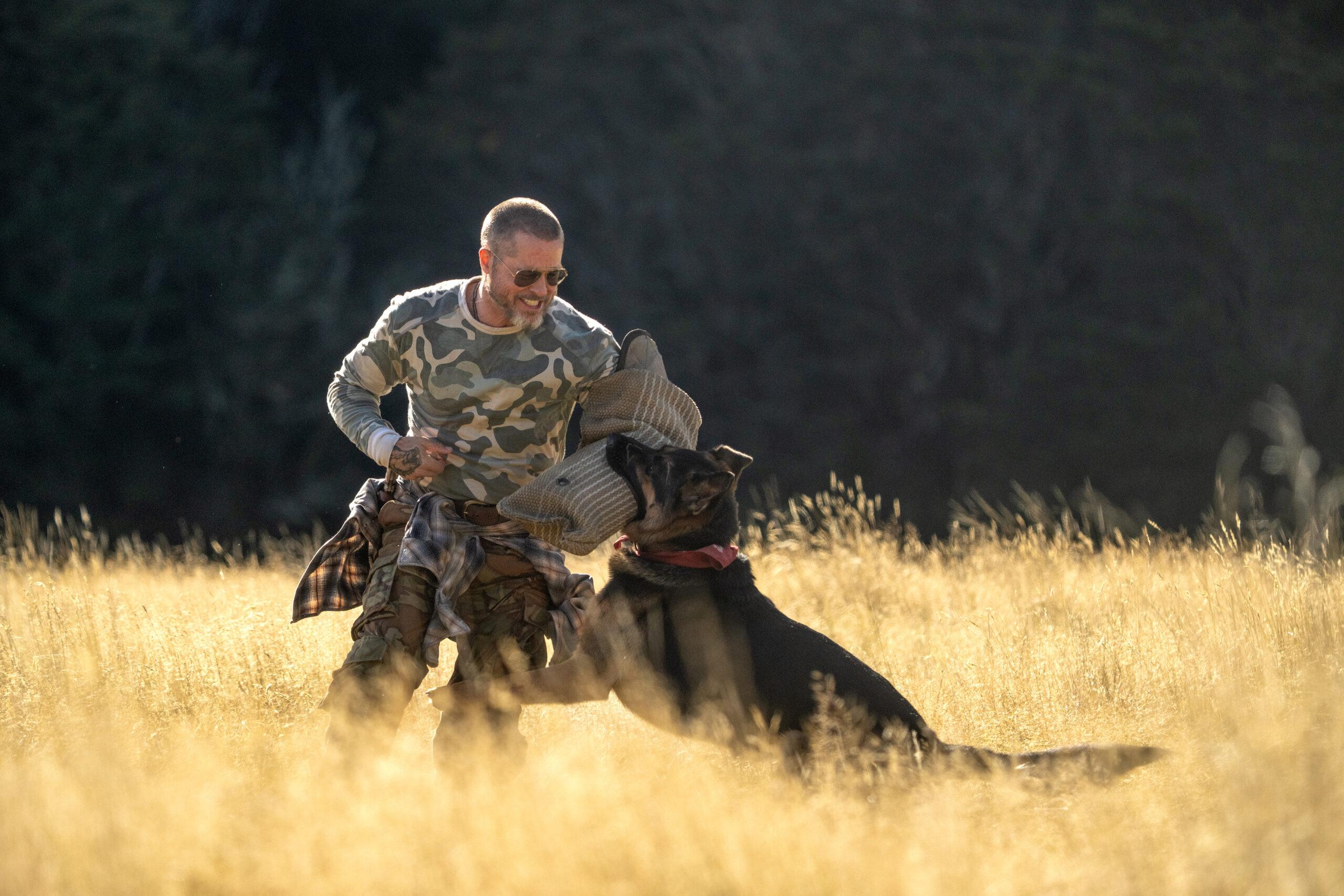
James Belmont (Brad Pitt) and Odin in Heart of the Beast from Paramount Pictures.
For both of our protagonists, the mission has always been “the thing.” It’s the reason to get up, the reason to move forward, the reason to live, the reason to blast their way into an enemy building. Odin’s mission was aiding Belmont (and other humans) as if he was merely a tool of war, but Belmont lays his life down for a friend, as one final mission, getting Odin to a place of peace. Rather than rushing forward to leave his life, I see Belmont laying his life down (again that phrase) for a friend, much in the same way that Jesus told his disciples that there was no greater love (hours before he proved it by his example).
In the end, when the credits have rolled and the tears have dried, Heart of the Beast asks us whether what we’re fighting for matters, and deeper still, who we’re fighting for. How audiences answer those questions will impact how they receive the film, but no matter what, they’ll have witnessed a challenge to love deeply, act boldly, and live courageously.
Heart of the Beast is in theatres on September 25th, 2026.