Sometimes, the biggest villain is the elements.
Directed by Paul Greengrass, The Lost Bus tells the story of Kevin McKay (Matthew McConaughey), a newly-hired bus driver who’s trying to keep his family intact. Struggling to stay connected with his son and his ex-wife, McKay takes a job as a school bus driver in order to pay the bills. However, after one of America’s deadliest wildfires erupts all around him, McKay is forced to take on a new mission: transporting a dedicated school teacher (America Ferrera) and her twenty-two students to safety on the other side of the towering blaze.
Simply put, The Lost Bus is one of the most gripping thrillers of the year. Greengrass infuses the film with such energy that one cannot help but get swept away in its intensity. (And, frankly, if the opportunity exists for you to see the film in the big screen, do not miss the chance to do so.) This is a film that rarely stops to catch a breath. However, a force of nature of this magnitude demands immediacy and Greengrass delivers in a massive way.
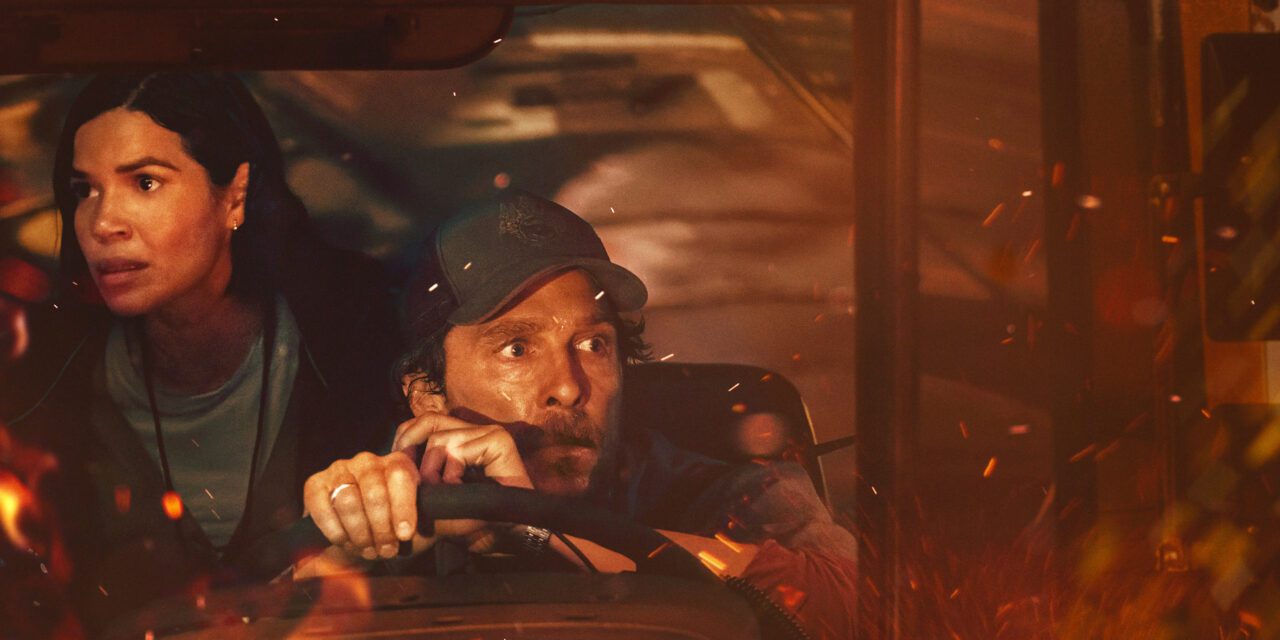
Credit must be given to a delightful performance by McConaughey and Ferrera. In the case of McConaughey, it is interesting to see him in this sort of film. It’s been quite some time since we’ve seen the Oscar-winner in a roll this physically demanding but he embraces the chaos of the moment (and his character). Stepping into the role of McKay, McConaughey carries his trademark affability but never place his bus driver as too heroic. Here, McKay is damaged goods, clinging to the last vestiges of his relationship with his family. He can’t pay the bills and is accused of being irresponsible, especially for his son. But McConaughey has the ability to bring out the best in the broken and his journey as McKay always feels grounded, even as things spiral out of control
At the same time, as schoolteacher Mary Ludwig, Ferrera offers the necessary compassion and strength to counterbalance Kevin’s erratic nature. Unlike her strange bus-fellow, Mary wants to choose a plan and stick to it. Her life is far from perfect but she likes to keep things in order. Yet, while these ungodly circumstances force her far out of her comfort zone, she also maintains the maturity to fight for the lives of her students.
Together, both of these characters balance each other out well. Gone is the forced sexual tension of attractive leads. Instead, the two play off each other with enthusiastic fury. Both have opportunities to show their courage and both have issues that need to be processed over the course of their journey. Neither of them wants to be in this situation but there’s nothing that can be done about it, except to fight together. After all, the villain of the piece isn’t a rogue terrorist or global threat.
It’s simply the elements.
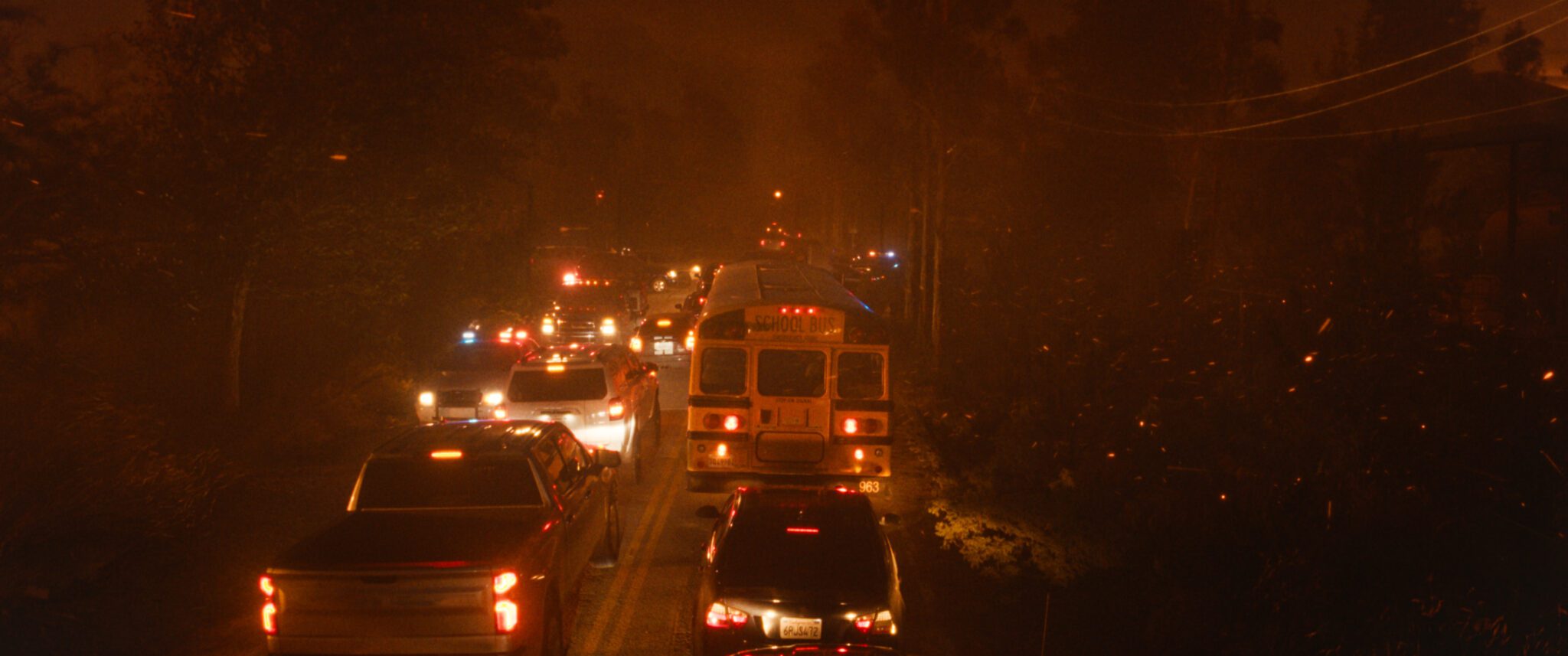
With fire and fury, Greengrass puts the emphasis entirely on the unpredictable nature of wildfires. In The Lost Bus,Greengrass’ visual sensibilities capture the chaos of the flames as they ebb and flow through the quickly deteriorating environment. The camera’s lack of stability operates like a documentary film, giving a sense of authenticity to firefighters and local government systems trying to figure out what to do next. Here, Greengrass holds his characters so closely in frame that one can’t help but feel claustrophobic. These are frenetic moments that can be felt. And, the increasingly red tint to the film makes every moment seem incendiary.
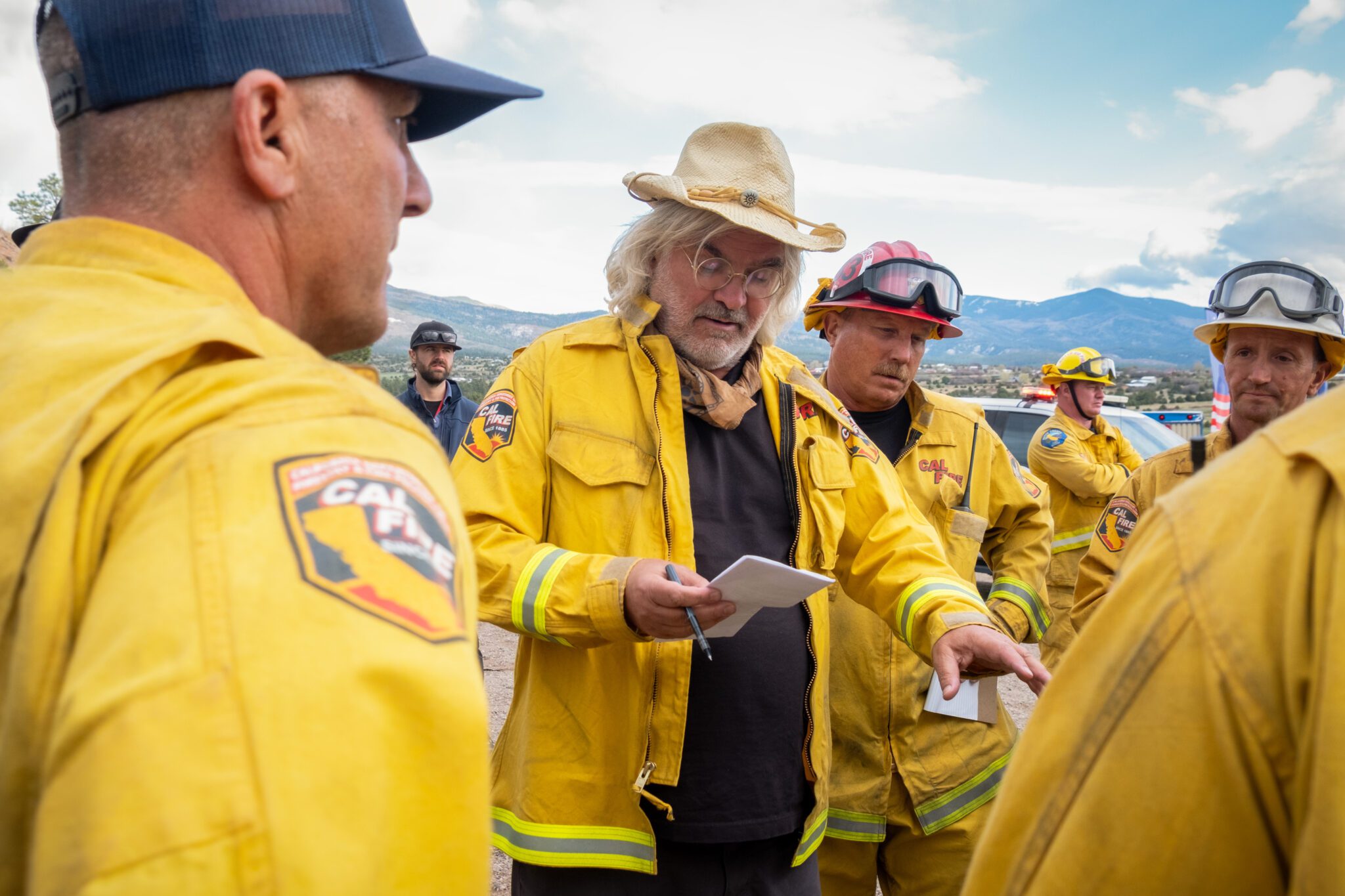
Throughout his career, Greengrass has built his cinematic legacy on the back of the nefarious ‘shaky cam’ footage. Ever since The Bourne Supremacy made moving cameras a staple of its action sequences, Greengrass has made use of moving cinematography to build a sense of intensity and chaos. Admittedly, this can be hit-and-miss stylistically. During action sequences, Greengrass’ bouncing camera and quick editing cuts can easily become erratic messy, making it difficult to understand exactly what’s going on. (Just compare fight sequences between the Bourne films directed by Greengrass and those in the first that was directed by Doug Liman to see the differences.) However, when that style works, it really works.
But, in The Lost Bus, it really works.
Even so, it’s the characters that keep the film feeling grounded. Based on an amazing true story, Lost Bus is meant to remind us that everyone is capable of extraordinary things. Greengrass never (really) gets preachy with his characters. Ludwig and McKay are never held up on a pedestal of perfection. Their imperfections are fully on display. However, they push himself to do what seems impossible simply because it’s what the moment demands. Frankly, it’s just the right thing to do. And they really are the only people who can do it.
In the end, The Lost Bus is exactly what it promises: an intense ride. As he takes us into the heat of battle (and the battle with heat), Greengrass keeps us on the edge of our seats from start to finish. It’s absolutely a ride worth taking.
The Lost Bus is available on Apple TV+ on Friday, October 3rd, 2025.
Photos courtesy of Apple TV+.