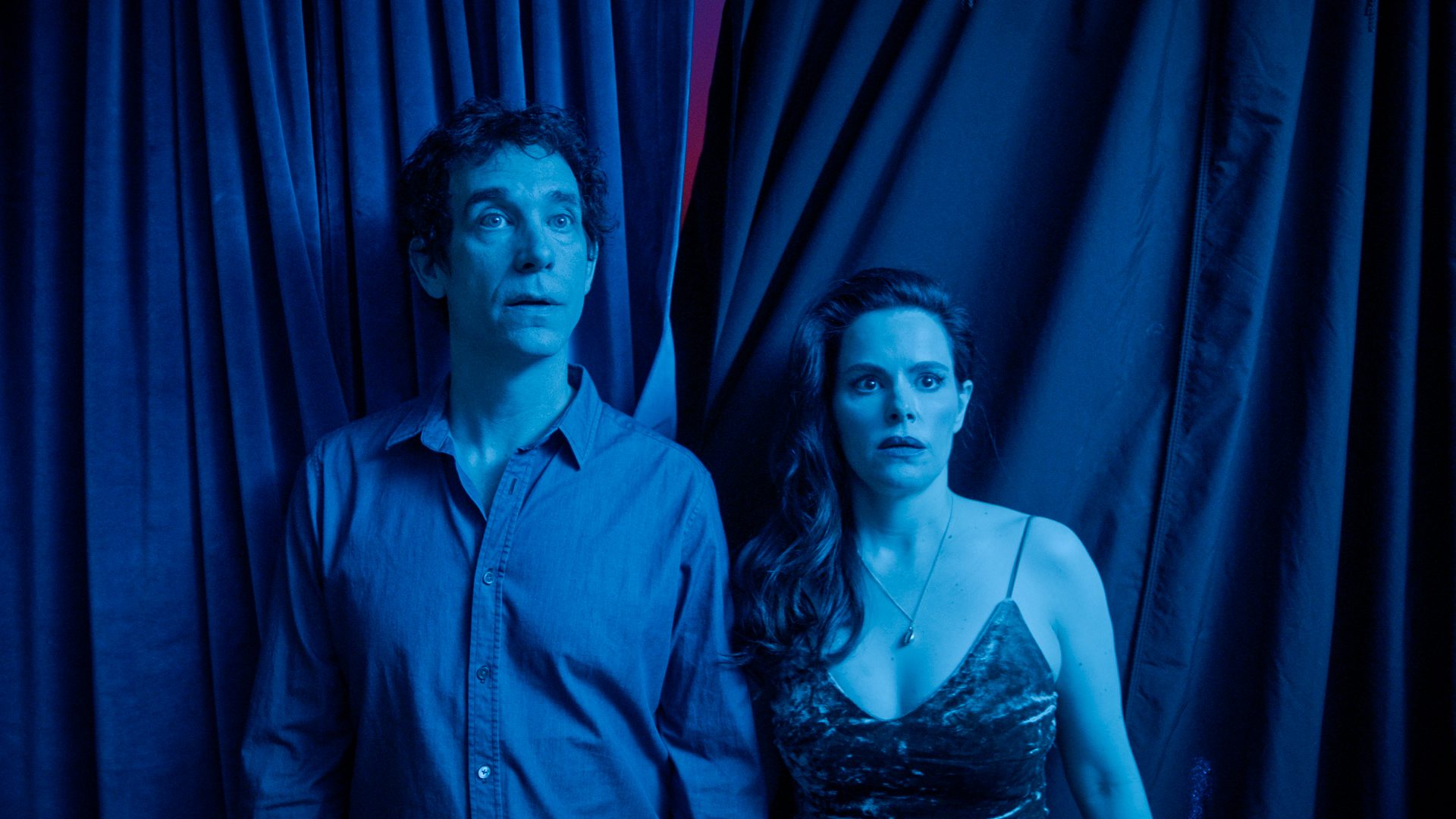
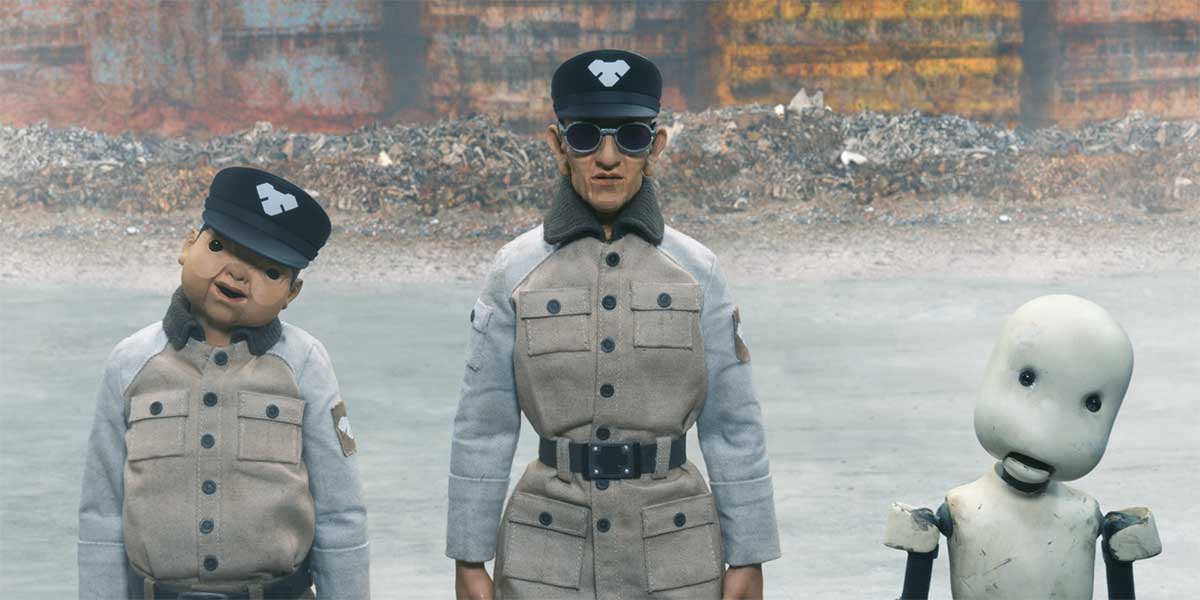
In Junk World, we are transported to a time when humanity is at war with their clone companions. Dubbed ‘Mulligans’, these artificial lifeforms have evolved and rebelled, As a result, the world has become divided between the humans on the surface and their Mulligan counterparts underground. And, after a series of events down below begin to wreak havoc, the humans and Mulligans must form a truce in order to investigate. Led by Captain Torys and her Mulligan counterpart, Dante, the team sets out for the city of Kaapvaal below, only to be attacked by a vicious faction determined to destroy them all.
Directed by Takehide Hori, Junk World is another visual treat for the senses. Having worked with a team of only six people (!), Hori has once again created a world that pops with stop-motion madness. There’s a creativity in Hori’s chaos as beasts range in appearance from your toybox to your nightmares. Yet, every one of them is intricately crafted with care.
Having said this, World may be a challenge to follow for some viewers. With a story that moves backwards and forwards through time, one can often expect some bumps along the way. But World’s… well… world is so expansive that one can get lost in the impact of its shifting narrative structure. For some people, this sort of storytelling will be celebrated as compelling. For others, it could just as easily be construed as confusing.
But World is also a fascinating examination of the power of our choices. Without giving any spoilers, Torys’ journey is riddled with outcomes defined by the decisions of her team members. Whether its robot Robin’s willingness to enter the void or stomping on a smaller lifeform, World embraces the ‘butterfly effect’ in its narrative. Every decision matters because every one determines a subsequent path for the decisionmaker. And these characters quickly become aware of the consequences of their actions, even if they take thousands of years to come into effect.
Junk World is playing at TIFF ’25. For more information, click here.