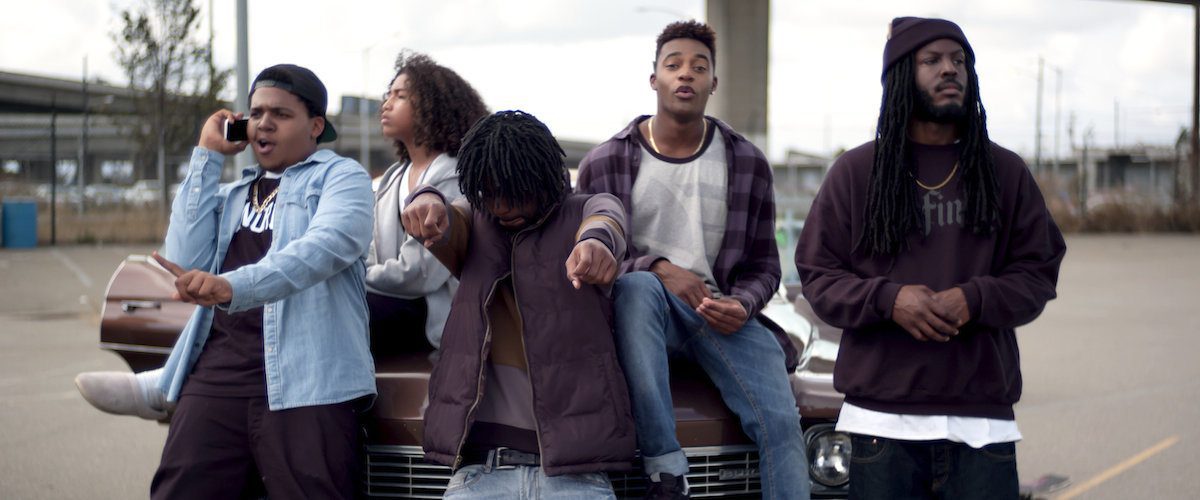
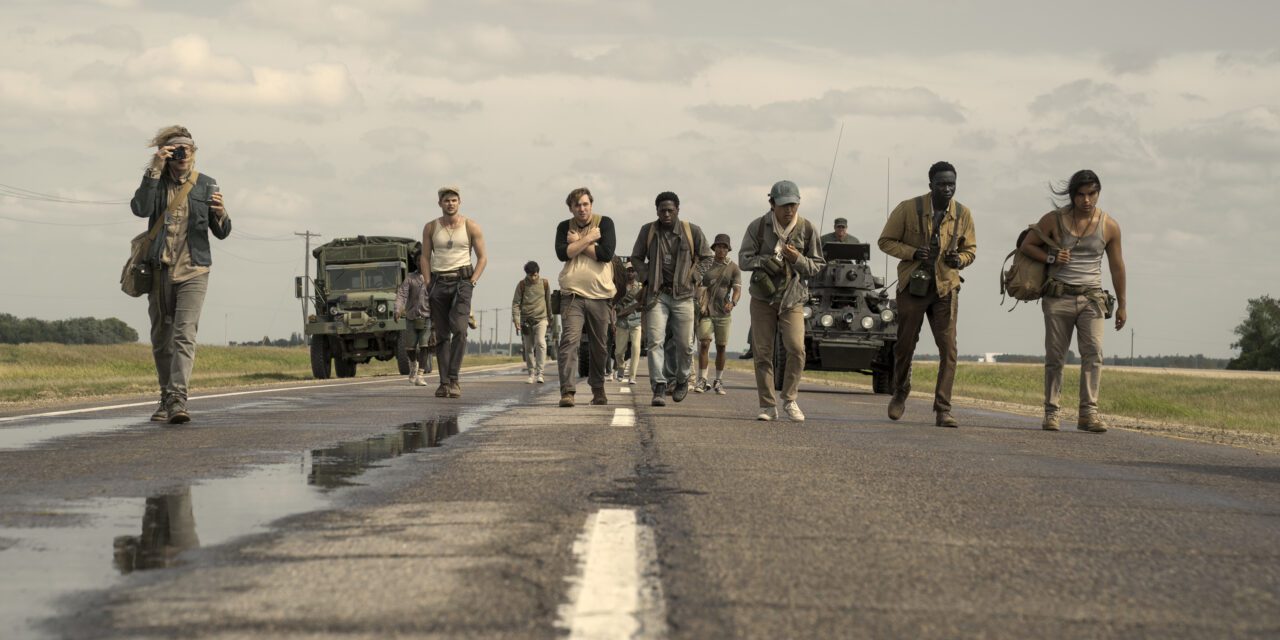
The Long Walk follows 50 boys, one from every state in a totalitarian, dystopian America, who enter a contest where the last person walking faster than 3 MPH wins. The winner amongst their peers is rewarded riches and glory as well as one wish for anything they could desire on earth. Destined for greatness is our protagonist Raymond (Cooper Hoffman) who, as the boy from the state the walk is taking place in, he has lots of eyes on him. As Raymond begins the walk, we learn that their are cameras watching him and his new friends Pete (David Jonsson), Arthur (Tut Nyot) and Hank (Ben Wang) and the boys discuss how this whole event is designed by the antagonistic Major (Mark Hamill) as a way to inspire work ethic in the people of America who are experiencing economic struggle.
All of this is established pretty efficiently by the film itself with quick title cards or by having us simply live with these characters and hear them talk about life in the way anyone might if they were taking stroll with new friends. Imagine your first day at high school or college and one of the events was a hike. The movie has those elements but there are much darker consequence for not connecting to others.
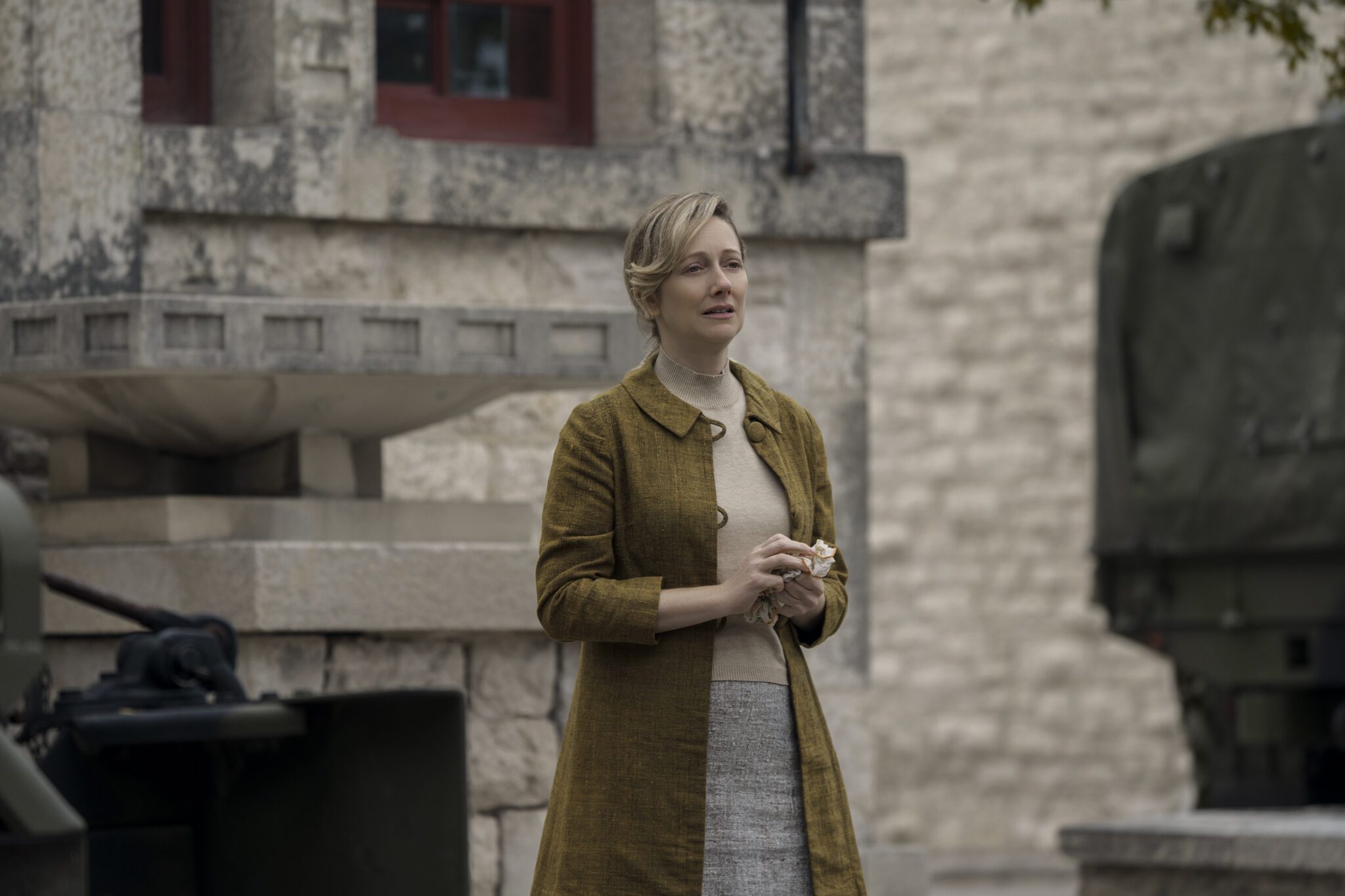
Judy Greer as Ginny Garraty in The Long Walk. Photo Credit: Murray Close/Lionsgate
In the YA genre, The Long Walk does a couple of important things to distinguish itself. First of all, it is brutally violent. The kills, injuries and all the messiness in between is shown in graphic detail embracing the hard R-rating. Yet there is restraint that makes each instance of explicit content impactful. Director Francis Lawrence and screenwriter JT Mollner don’t simply create tension and entertainment from these execution-style deaths but affirms and explores the idea of purpose and the human spirit. What we find through the horror is an affirmation of life. This will be a familiar theme for those who are a fan of other Stephen King stories like The Life of Chuck and Shawshank Redemption and, while this is a distinct movie tonally from those, it still executes on providing some of the same hope, even if its events are quite bleak. This film also is not really focused on the world in the same way as either The Hunger Games or Divergent. Here, the state of the world, besides being in an economic state where risking one’s life for a cash prize would seem logical, is not important. What the film focuses on are the characters and their relationships with each other that are created, challenged and ended between the boys.
What keeps some of the boys going is their interest in rebelling against the man keeping them in line: The Major (Mark Hamill). He is the head of the secret police force that keeps this totalitarian vision of America churning. Hamill instills a lack of humanity and cliche into him that makes him both a ridiculous and hateable figure. It is a small but passionate role that more asks Hamill to fit a type than a character, but he does a good job serving the script.
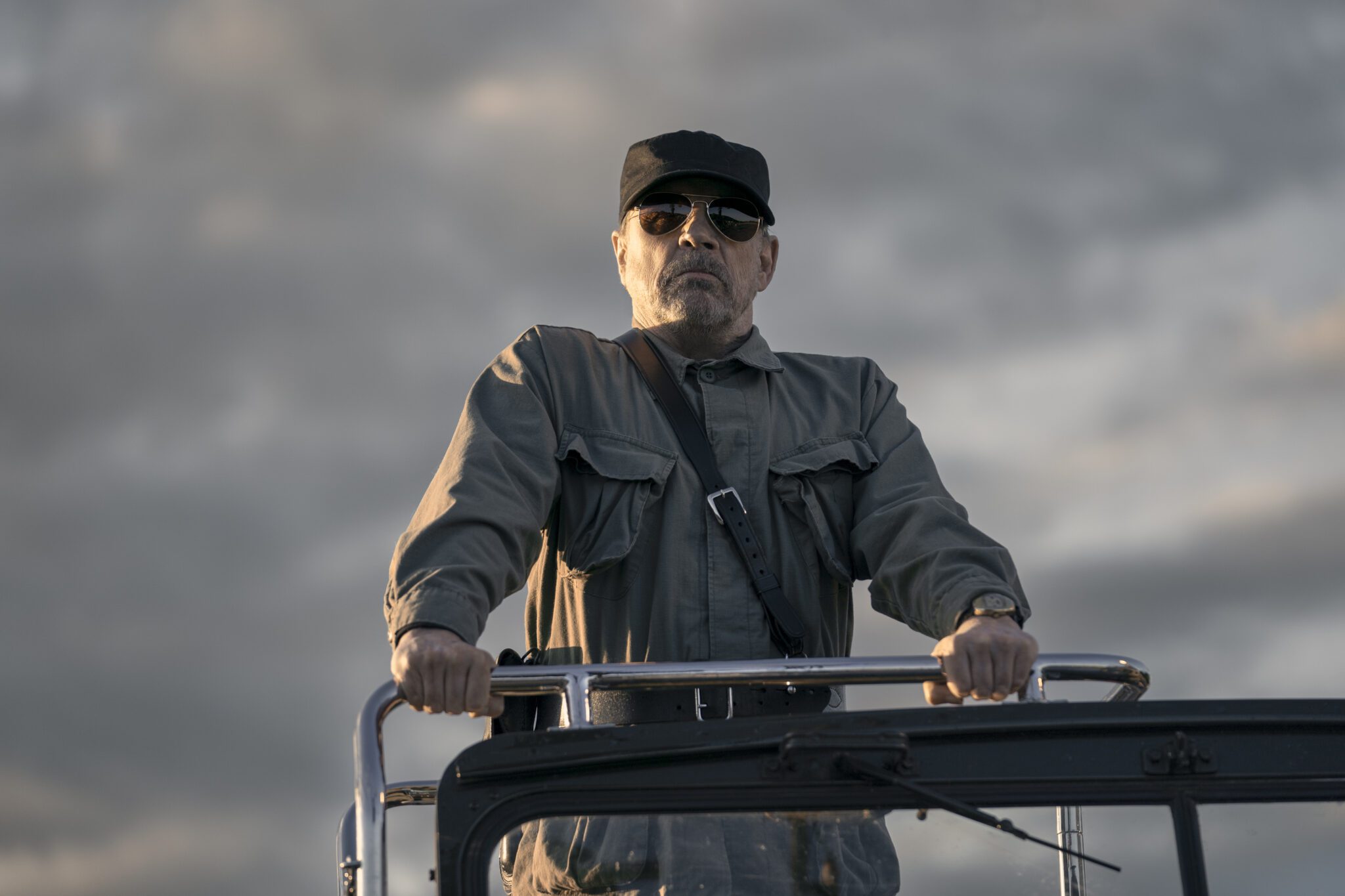
Mark Hamil as The Major in The Long Walk. Photo Credit: Murray Close/Lionsgate
The filmmaking is consistent with Francis Lawrence’s work on Hunger Games: Catching Fire and The Ballad of Songbirds & Snakes. It is minimalist in its camera movements but also engaging. The camera is effective simply as an onlooker over these boys and their situations. Often, we feel like we are walking with them as the camera faces them while they continue walking. This, combined with many long takes and a lack of cutaways from the walk, keeps us right in the shoes of these boys. We never escape the tension of knowing that any of the boys may be put into peril by each other (or themselves). The camera often moves with ease and a steadiness that reflects the walk of Garrity and his companions. It sometimes even stays with our characters as violence happens in the background. For example, the characters we are left to focus on the journey and may try to ignore the violence in the background. However, Lawrence never lets the viewer go as he places characters who are clearly in agony in the frame at all times. Sometimes, injuries become apparent and great subtle makeup helps us to see just how faint and exhausted these boys have become.
The music, while effective at times, did seem overbearing in key scenes. The actors do so much emotional lifting with their scenes and the scenes are so wrought with tension and potential sadness that the score when included often feels overbearing. It is more effective in its quieter moments but rarely does the score justify itself. There is not a lot of depth or emotion in it that we cannot find in the characters.
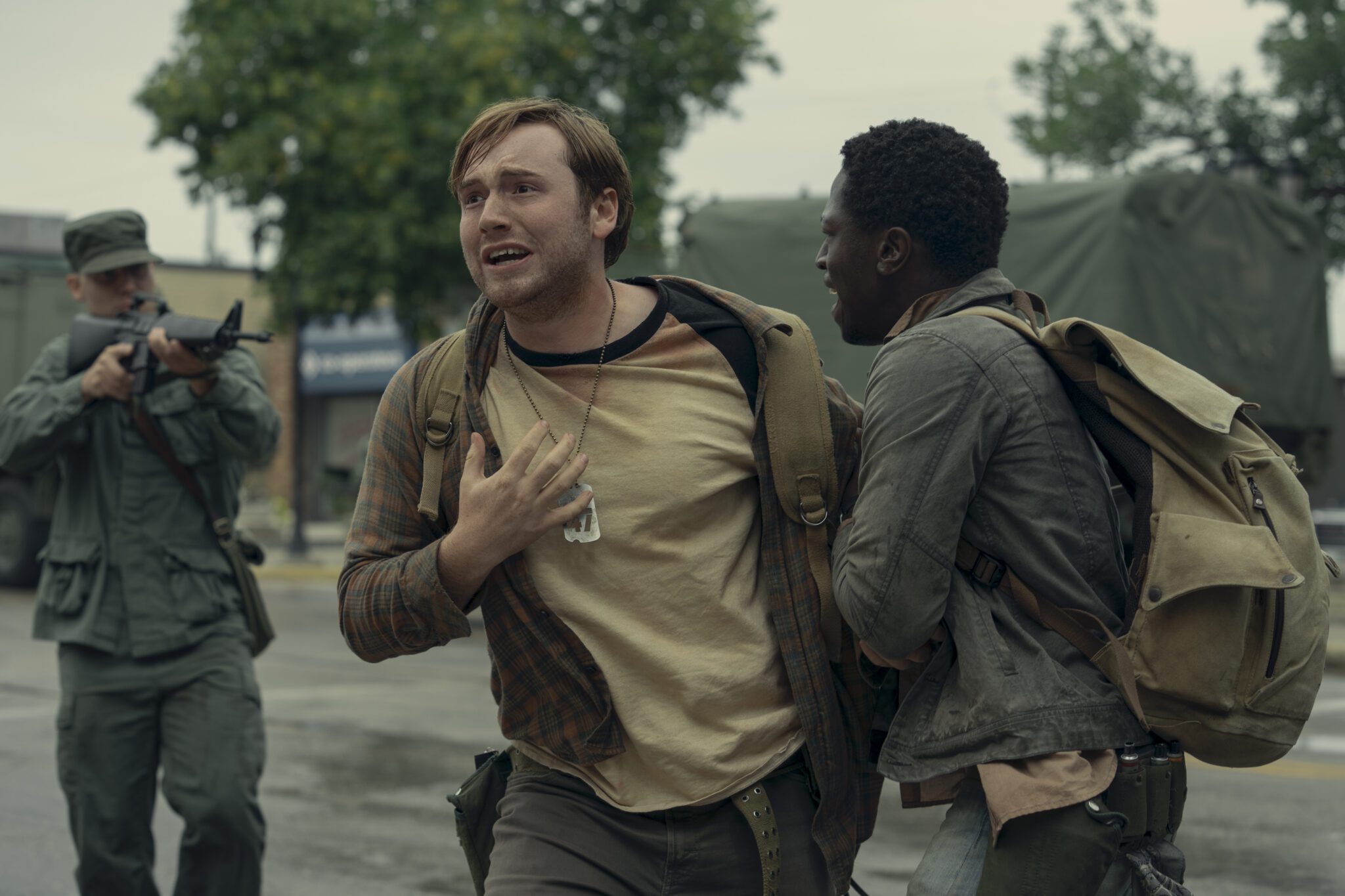
Cooper Hoffman as Garraty and David Jonsson as McVries in The Long Walk. Photo Credit: Murray Close
The film’s pacing is very effective, keeping its scenes wrought with tension or interesting dialogue. Every scene makes an intentional effort to include unique struggle or for a trait about a character to be revealed that deepens our investment in them. As Raymond becomes more invested in the relationships he creates, we become more invested in him and his new friends. The dialogue and shots are cut together smoothly, never using visual flair to distract from the simple brutality. It commits to its minimalist style and, by doing so, allows the natural beauty of the landscapes that the characters are in to stand out. The nature around the characters becomes a fixation as one of the only symbols of beauty in a tough and challenging contest. The audience, like the characters, gets to appreciate the beauty of nature and how meaningful it can be to our lives.
Long Walk plays well with our expectations that the most recognizable character will be the people who are more likely to win the contest. Another question the film leaves us with that increases the tension is what any character would do with the wish they get by winning the contest. With so many possibilities that question lingers in our mind even as we see characters continue to sometimes walk without struggle even as they reach distances that seem incomparable. The film creates an instant embellishment towards these characters that cause us to understand their dynamic and we get to see it change and shift as the weight of the events becomes increasingly difficult to the characters. We also get to see beautifully how they bear each others burdens showing that even in a life changing contest, there is faith that a life in which one treats others with kindness can be worth it.
This film, like the book, is firmly anti-totalitarian but the ethical conflicts it grapples with come more from how can you resist the evils of fascism effectively. The boys are mostly united and suffer only from the fear that is sown into them but still have no power in their unity to change anything. Yet the film also grapples with the darkness that can overtake a society that simply watches (and even cheers) as a violent contest takes place. Being passive does not do anything either. Many characters choose to take actions with different consequences and those consequences never show us the right way to resist. Like all good art, it never leaves us with clear answers but shows us a world where there is an immediate need to figure out how to stand up to a violent regime.
The Long Walk is available in theatres on September 12th, 2025.