
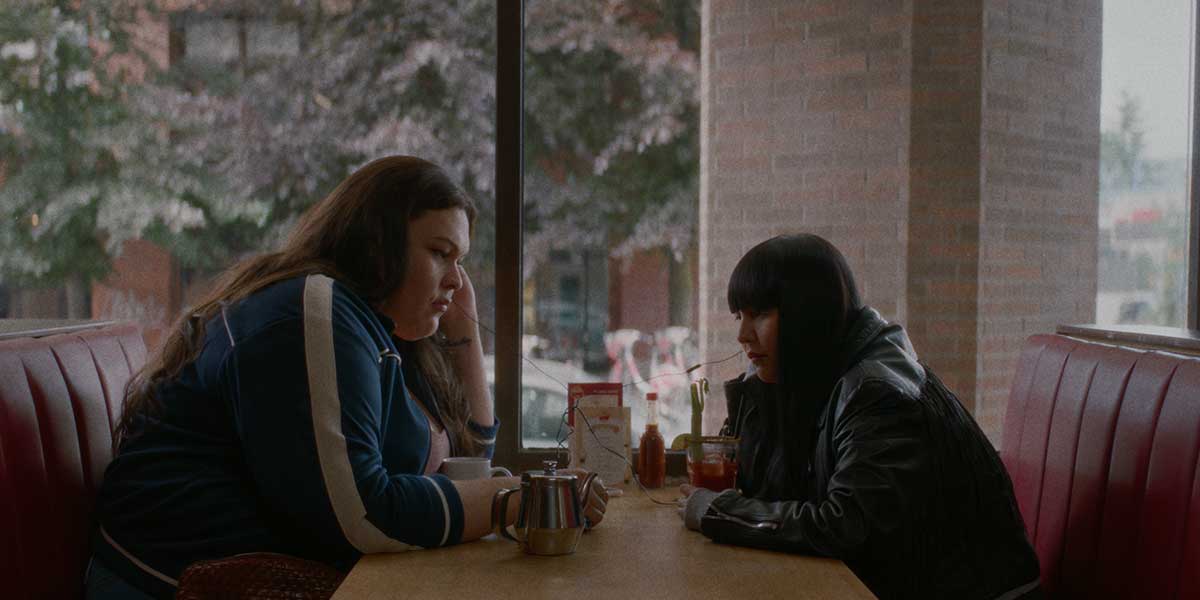
There is something radical about Seventeen: it is a film about queer Indigenous sex workers that refuses to make sex work the most interesting thing about them.
Writer-director Justin Ducharme’s feature debut unfolds across 17 hours in Vancouver, following Tamram December and Aiden as each races against a different deadline involving immigration, housing and family. Their circumstances create urgency, but Ducharme is less interested in manufacturing suspense than observing what happens when people living on the margins are forced to depend on one another because the systems around them repeatedly fail.
That distinction gives Seventeen its humanity. Sex work exists within these characters’ lives without becoming shorthand for tragedy, victimhood or moral judgement. Likewise, their Indigenous and queer identities inform their experiences without reducing them to an issue the film needs to explain. Instead, Ducharme centres friendship, survival and chosen family.
Vancouver also becomes more than a backdrop. This is far removed from the pristine city so often disguised as somewhere else on screen. Ducharme presents an expensive, unforgiving urban landscape where finding housing, maintaining stability or simply getting through another day can become an enormous undertaking. Against that harshness, small acts of care feel significant. The relative newcomers at the centre give the film an appropriately unpolished intimacy, with Aalayna emerging as a particularly compelling presence as December. Familiar Indigenous performers including Kaniehtiio Horn and Joel Oulette strengthen the world around them without overshadowing the younger ensemble.
There are rough edges here, as one might expect from a first feature, but they almost feel appropriate for a story uninterested in polishing its characters into something more palatable. Seventeen ultimately isn’t asking audiences to pity these three people. It asks us to see them. In a cinematic landscape where sex workers, particularly queer and Indigenous workers, are so frequently represented through trauma, that simple act of recognition feels remarkably meaningful.


