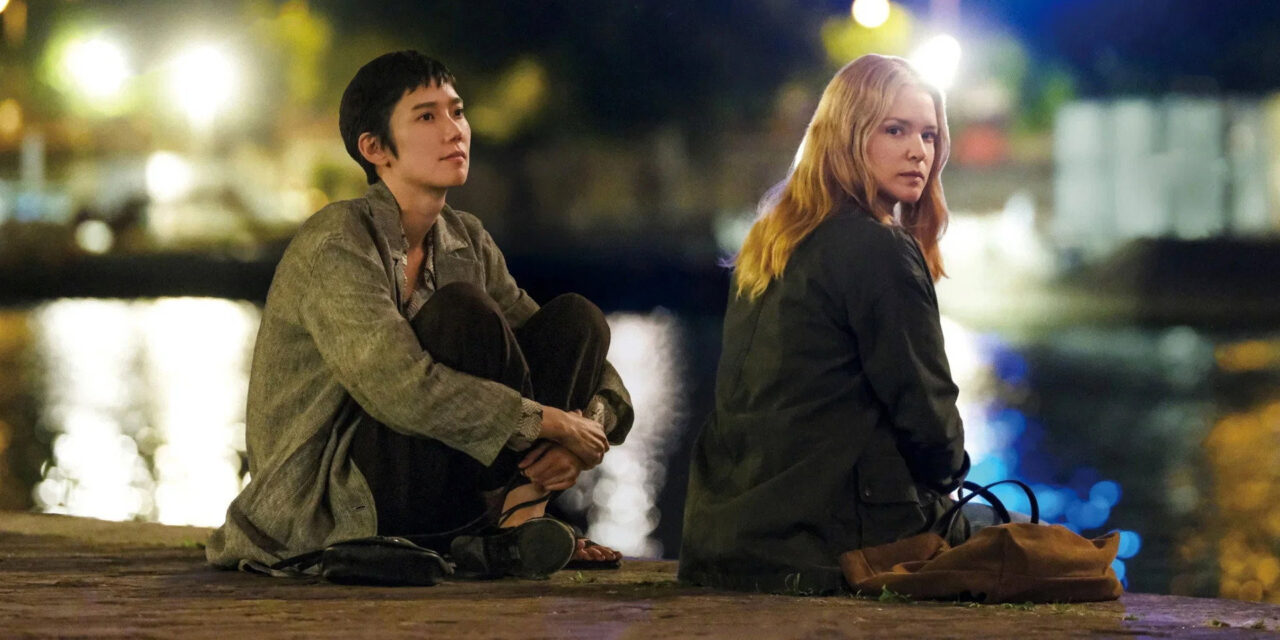
As the director of a Long-Term Care Home struggles with new changes, she encounters a theatre director who is dying of cancer, and their relationship pushes and pulls them toward new philosophies of life, death, and art.
This film is a testament to life. It’s about the end of life yet chooses to focus solely on the life people have left and how one chooses to live it. It’s about the philosophy of humanity, the ethics of trying to be human and treating humans well within a capitalist system that often restricts how kindly we feel we can treat one another.
Virginie Efira and Tao Okamoto are both excellent. You buy this spontaneous friendship that turns into a familial bond and a sacred connection that ends up defining both of their lives in a substantial way. They are individually fantastic in every scene, but the magic of the film happens when you bring them together. Hamaguchi takes that feeling of becoming intimate and personal with someone so quickly, condenses it further into film form, and then dares to push beyond the basics of their relationship.
In this film, Hamaguchi masters what I loved about his last film, Evil Does Not Exist, which is his ability to translate the processes and bureaucratic conversations that make up workplaces and evolve them into emotional and thematically impactful scenes that connect to the heart of humanity and the world around each individual. When people sit down to talk about how best to run the Long-Term Care Home, they are taking the deep philosophical learnings and education they have written on their hearts and translating them into actions and change.
Later, we get to see those changes play out in beautiful light, with slow edits that reveal the beauty and tender love being shared because of the changes occurring within the Long-Term Care Home.
All of a Sudden is playing at TIFF ’26. For more information, click here.