
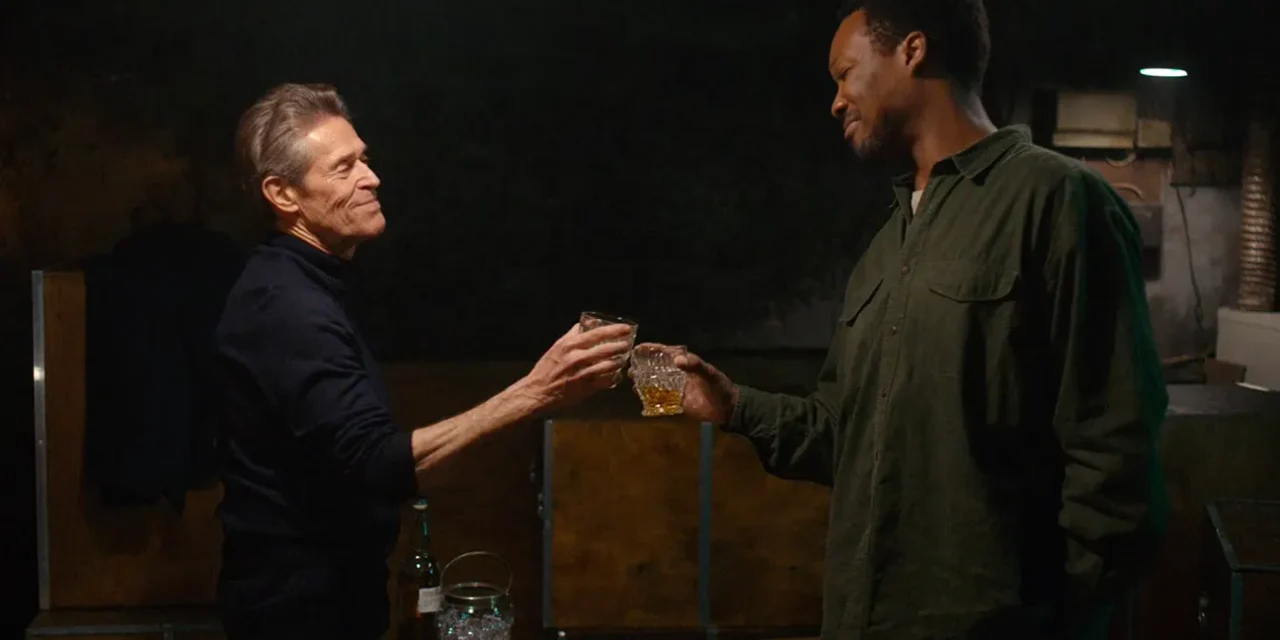
In this deeply uncomfortable film, Charles Blakey (Corey Hawkins) is broke, in massive debt, has a problem with alcohol and is about to have his home (with deep generational history) foreclosed. His problems seem to go away when a suspicious man named Anniston Bennet (Willem Dafoe) offers to give Blakey a large sum of money daily if he can live in his basement for the summer. The money is enough to get his house back from the bank and clear all his debts; at first, Blakey is callously resistant, but quickly surrenders to the offer when he learns no one in his family will help him anymore, and the money from the art in his home won’t come quickly enough. What begins as a mutually beneficial exchange turns into psychological torment for Blakey as he is confronted with suppressed trauma and a haunting lesson about generational colonialism.
I suppose this film is meant to make the viewer feel distressed because I not only felt sick to my stomach as I watched, but also entirely confused. The film is drenched in symbolism, references to colonial violence and artifacts. I understand that this is Nadia Latif’s style as a director – she wants to make the audience think and pay attention. But I felt as though I needed a preliminary course on the subject matter before I could appreciate what she and writer Walter Mosley were trying to say. Because of my confusion and discomfort watching the violence and insanity Blakey experiences, I could not enjoy this film. The cinematography and setting were beautiful, and the artistic vision for the narrative was excellent, but unfortunately, I feel the message got lost in the film’s desire to be overly artistic.
There were moments of genuine fear and grief that drew me in at times. However, the film’s inability to leave me with any of my questions answered bothered me in a bad way. Nothing is resolved in the end. I respect the movie for its courage, but I wish I were left with more clarity.
The Man in my Basement is playing at TIFF ’25. For more information, click here.