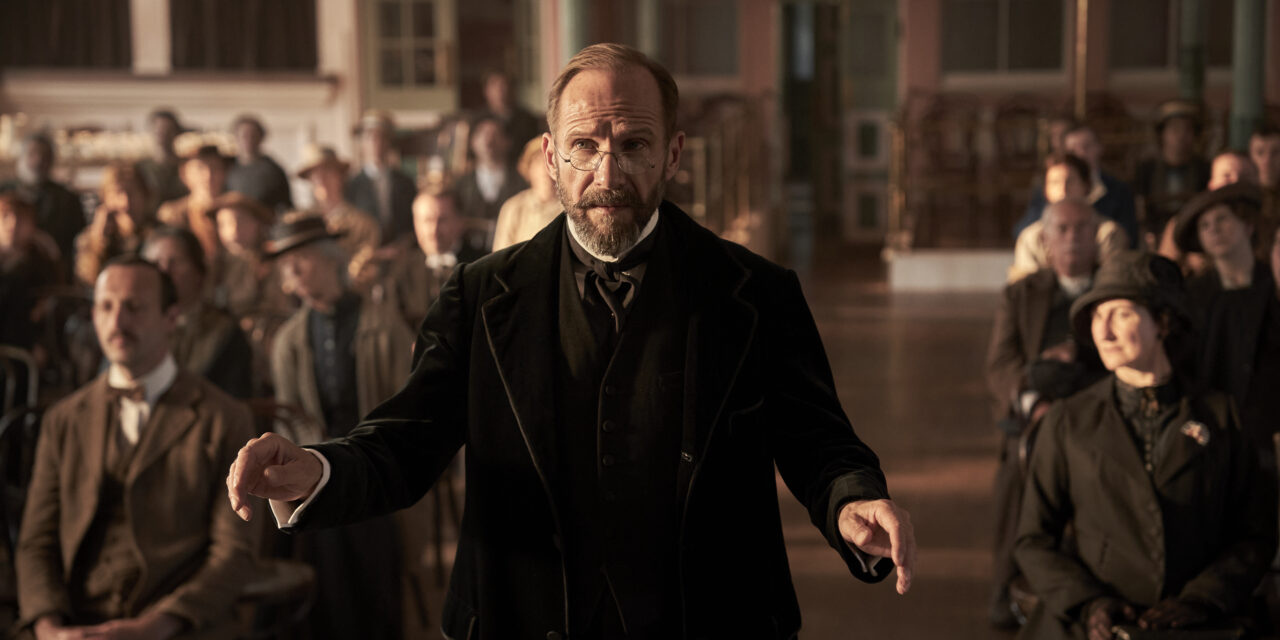
The Choral is very much an ensemble piece where we don’t really see the journey of one person but rather, becomes a collective experience. It starts in a small town where the local Choral is putting on their new show in the midst of World War I. Even as auditions wrap up, the current choir master announces he is signing up to join the war effort. With few options to take his place, they turn to the controversial–but brilliant–Dr. Henry Gutherie. His presence changes everything from the music, to the leaders, to the actual performers and its his touch that may just make this choral’s impact more than a mere artistic escape.
What works best here is the film’s writing, adding dramatic layers into different scenes that work really well. In this first half, you sense of Ralph Fiennes’ character is a mystery that the rest of the choir is trying to understand and figure out. As the viewer, we attempt to understand him with them and come to some interesting dramatic points yet the film gives up on that for most of it, especially towards the climax. There are some nice small moments of catharsis but most of the film feels scattered and not much is done to build up to a dramatic finish. A lot of the conflicts are resolved in a short scene, not really showing our characters take risks, or make interesting choices. (In fact, even the choices they do make fall in line with some familiar tropes.) These tropes are not shaped into either dramatically interesting storylines nor are they realistic enough to drive home the brutal reality that a story about people facing a war could inspire.
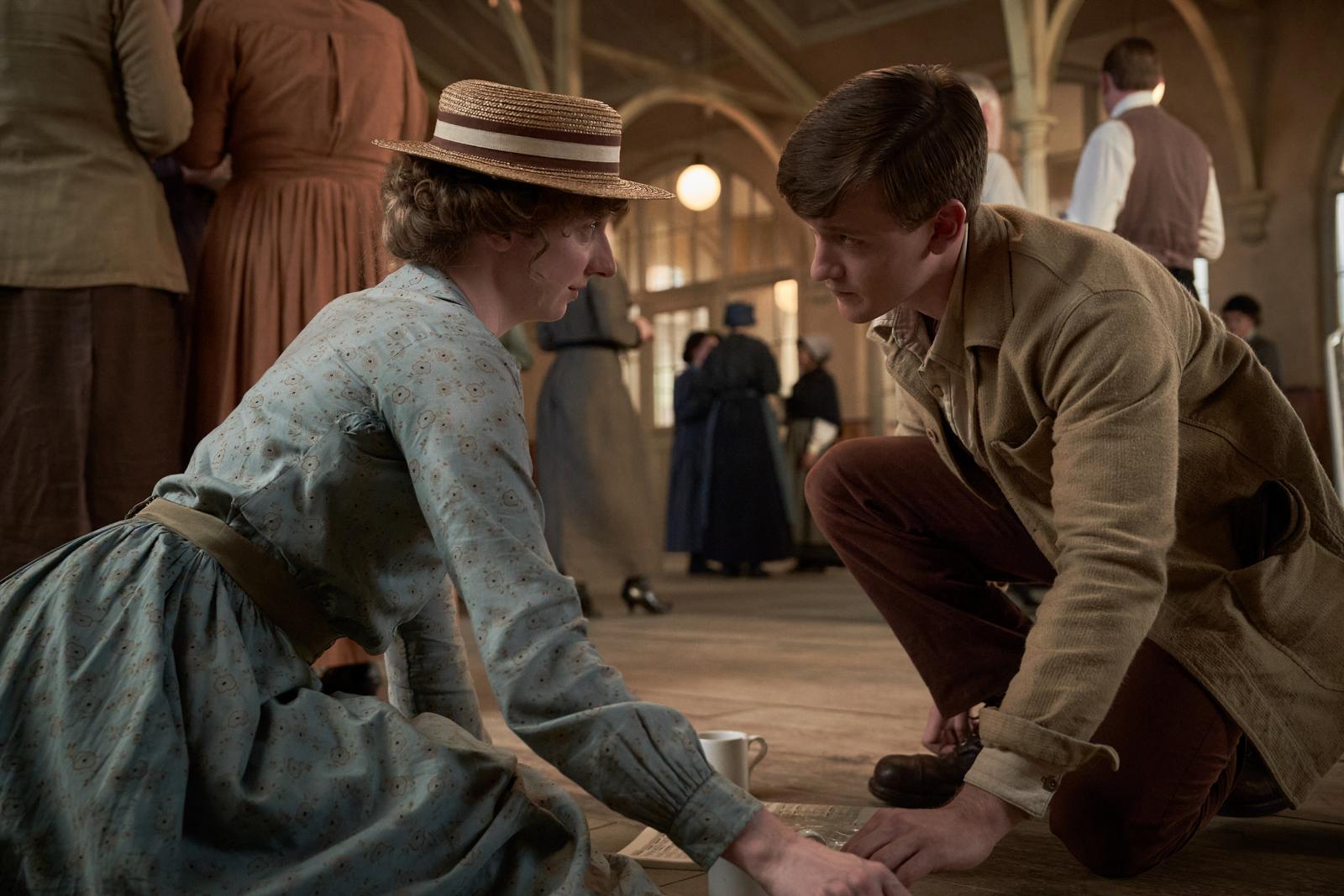
The shots are not flat but never uses lighting expressionistically. For a film about making art from art, it really does not seem to be taking strong inspiration in the look from other famous films that cover stage performances. (Amadeus comes first to mind.) The writer Alan Bennet has always turned to director Nicholas Hytner to direct adaptations of his awarded plays but this was the first original screenplay that Bennet has prepared. It feels unfortunate then that there was not more visual thought put into the script but that perhaps comes from his lack of experience writing directly for the screen.
Ralph Fiennes character is purposefully restrained in a lot of the film. He is, at first, a mystery but also reveals some anger and emotion simmering beneath the surface. It certainly does not call for him to be one of the more eclectic characters of his career but he delivers solid work nonetheless. Some lines and approaches to the three male friends that we meet really challenge our empathy. They are well performed by the trio of Shaun Thomas, Oliver Briscombe and Taylor Ellis. They seem sought after, making the most of their lives with the potential of forced conscription waining over them but they also often do not say polite things to the people around them.
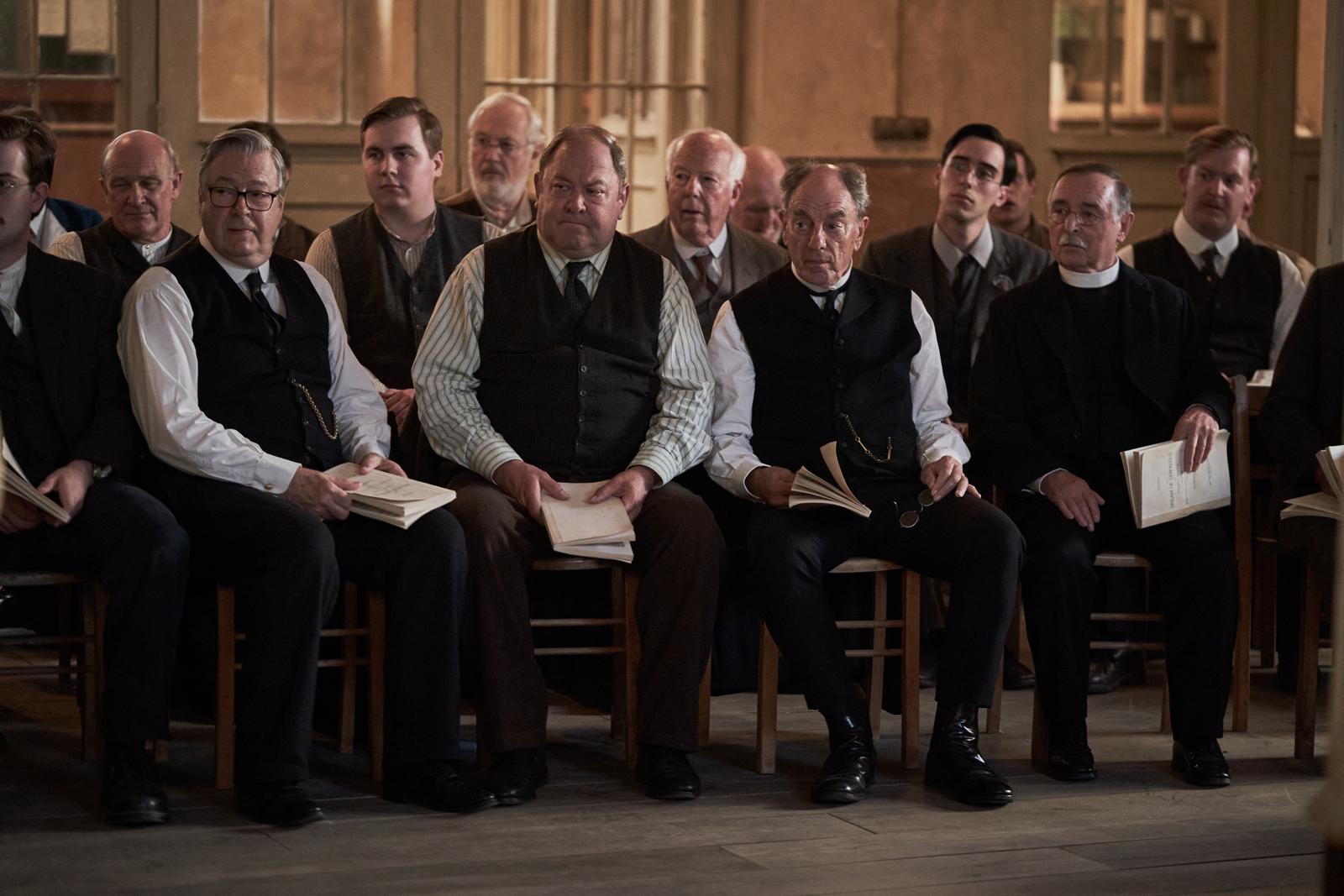
There are other characters like Clyde, a man who comes back from war to see his girlfriend attached to another man but who, with immense talent, is given a chance to lead the choir in their performance. However, after that, they do not do much to explore his condition or what the changes in the songs mean to him. Like most characters, we feel cut short from a full exploration of them and there is not enough detail to provoke our imaginations to create interesting versions of what we imagine these people to be like, outside the confines of this story.
It is spirited to see how art can be used in these dark times to provide meaning to these people whose lives seem to be surrounded by misery because of the war. The hope that art provides in our lives is the central thesis. We get the feeling that there is hope and purpose thrust into the lives of these depressed and disconnected people’s lives thanks to the community of singers. It spotlights the power of art, especially when it is experienced and enjoyed collectively, allowing us to reflect on what is right in this world and what we should do with our lives. The religious aspect of the choir asks how ‘Christian’ a Christian choir should be when it is full of people of different faiths and led by one who is not himself religious or a natural fit in society. In that way, it provokes some questions but most of these ideas are not developed enough for me to recommend this to most. Even so, it remains an enjoyable watch for those who appreciate war era dramas and choir-style music.
The Choral is available in theatres on January 9th, 2026.