It has been said that history has been told by the winners but that doesn’t mean the winners are always blameless themselves.
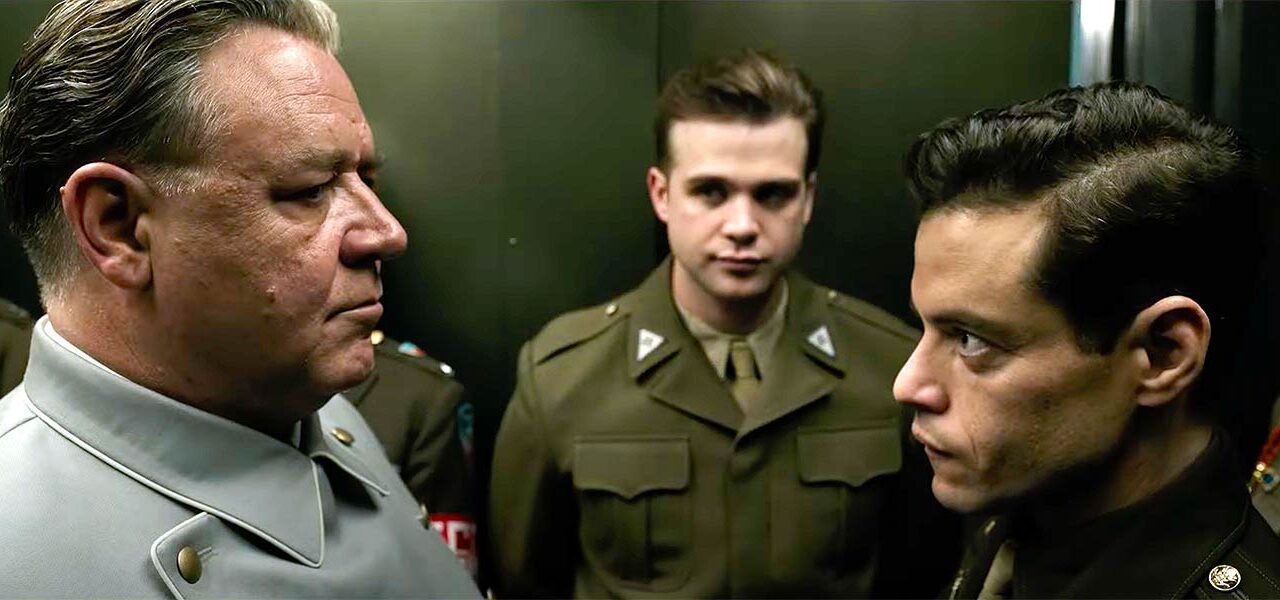
Directed by James Vanderbilt, Nuremberg tells the story of U.S. Army psychiatrist Lt. Col. Douglas Kelley (Rami Malek), the officer tasked with creating psychological profiles of high-ranking Nazi officers in the wake of the Second World War. As the world prepares to put these men for their war crimes, Kelley finds himself locked in a battle of wits with Hitler’s chief officer, Hermann Goring (Russell Crowe). Through their conversations, Goring displays such charisma and cunning that gives Kelley surprising emotional pause, causing him to question how ordinary men can be guilty of extraordinary evil.
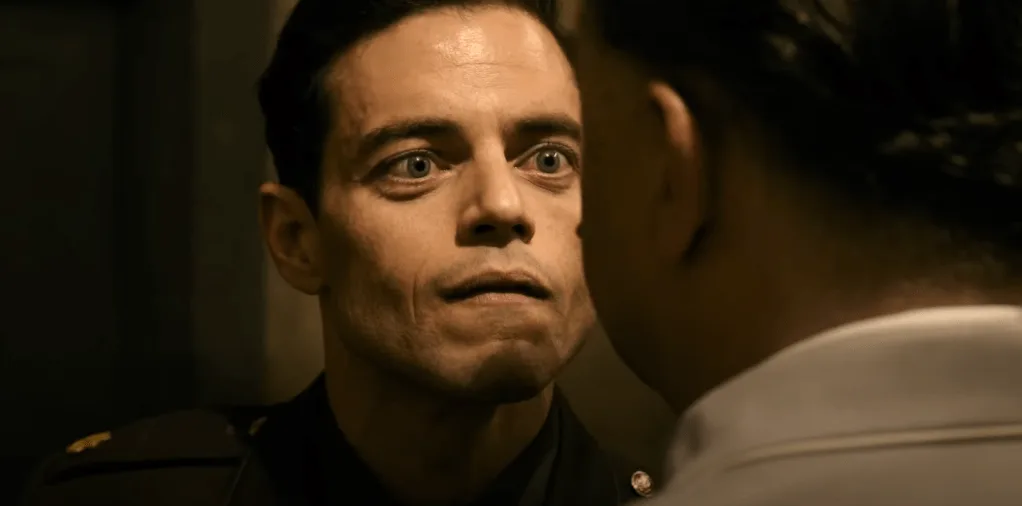
With fire and fury, Nuremberg revisits a history that we know and yet still manages to help us find something new within it. Without showing any scenes of brutality, Vanderbilt reveals the fact that human darkness is not limited to the battlefield. Here, the real drama takes place in the courtroom, becoming a game of compelling psychological chess. On the one hand, the film delves into the minds of Hitler’s most trusted advisors, especially Goering, in order to unravel the context for human atrocity. On the other, the Allies must attempt to justify how they can put a foreign government on trial when no such precedent had ever been set.
And this is also where Nuremberg sets itself apart from other war films. Whereas many projects focusing the Second World War make clear lines between the ‘good guys’ and the ‘bad guys’, Vanderbilt recognizes that the Nazis aren’t the only ones with the potential for evil. Without giving spoilers, the film does offer suggestions that the same malevolent spirit that exists within the Nazis potentially also exists within the Allies.
Although the Americans and British posture themselves as the heroes (and, frankly, it’s fairly easy to do so when the opposition is trying to take over the world), Nuremberg never allows them to completely take the moral high ground. Yes, they’re prosecuting those responsible for history’s most devastating war. Yet Vanderbilt still manages to show the potential cracks in their own moral integrity as well.
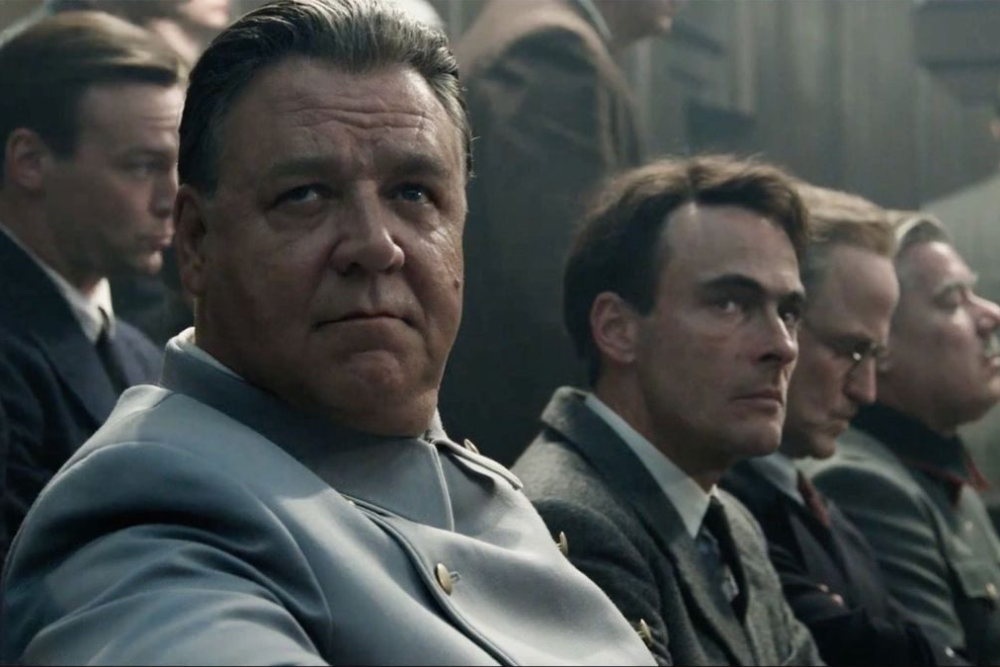
And, at the same time, he also shows some humanity in the Nazis themselves. Goring’s conversations with Kelley reveal a love for his family that makes him feel relatable. There’s a method to his madness that is rarely explored when looking back upon human history. To be fair, Nuremberg never suggests any lack of guilt on their behalf. However, they it does point out that these people were more than caricatures of supervillains. Despite the horrors caused by the Nazis, they also had homes and families that they loved.
It’s worth noting that much of the success of this perspective comes through some incredible work by Crowe as Hermann Goring. Though sitting in a prison cell for much of the film, Crowe feels almost larger than life. He is mysterious yet appears honest; severe yet humble. Somehow, Crowe manages to take one of history’s most notorious villains and make him feel relatable and, in some moments, even endearing. It is an utterly remarkable performance that may be some of his best work in years.
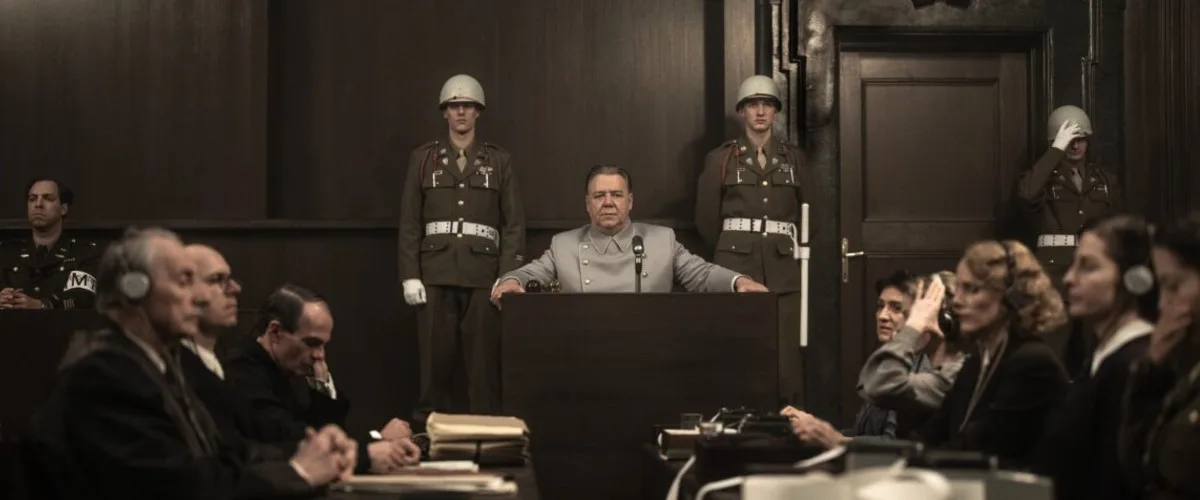
Now, eventually, Nuremberg stabilizes its point of view to something more ‘traditional’. But it’s these moments where it asks the hard questions about the human race that the film really sets itself apart. While we know who deserves justice, the film never completely allows the rest of us to feel comfortable with our own potential for evil.
And that’s the complexity that makes Nuremberg so fascinating. As these men thunder away at one another within the courtroom, Vanderbilt manages to fight for justice yet still recognizes that every one of us has the potential to destroy lives. Here, both villains and heroes are broken, even if to different degrees.
Nuremberg is available in theatres now.