If you want to change the world, you have to speak with passion.
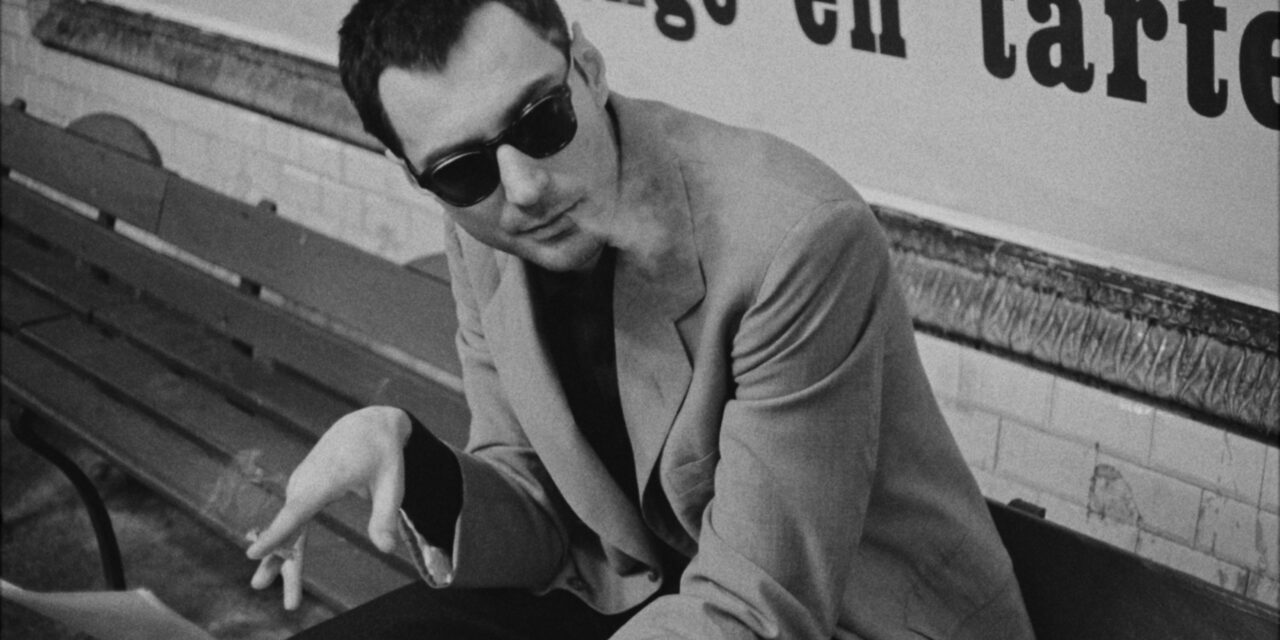
Set in late 1950s Paris, Nouvelle Vague follows Jean-Luc Godard (the positively stellar Guillaume Marbeck) as he frustratedly watches his peers create their own films. As one of cinema’s most profound voices, Godard believes that he has something to say and, finally, he gets the funding in place to begin his own cinematic opus. Yet, as Godard runs up against corporations and marketing, he continues to fight for the right to create in his own voice, ultimately leading to the release of his classic film, Breathless.
Directed by Richard Linklater, Nouvelle Vague is a stunning film that captures the urgency of one of cinema’s most iconic forms and features. Backed by strong performances, Linklater manages to bring style and colour to the black and white format, creating a piece that honours the past while still speaking to today.
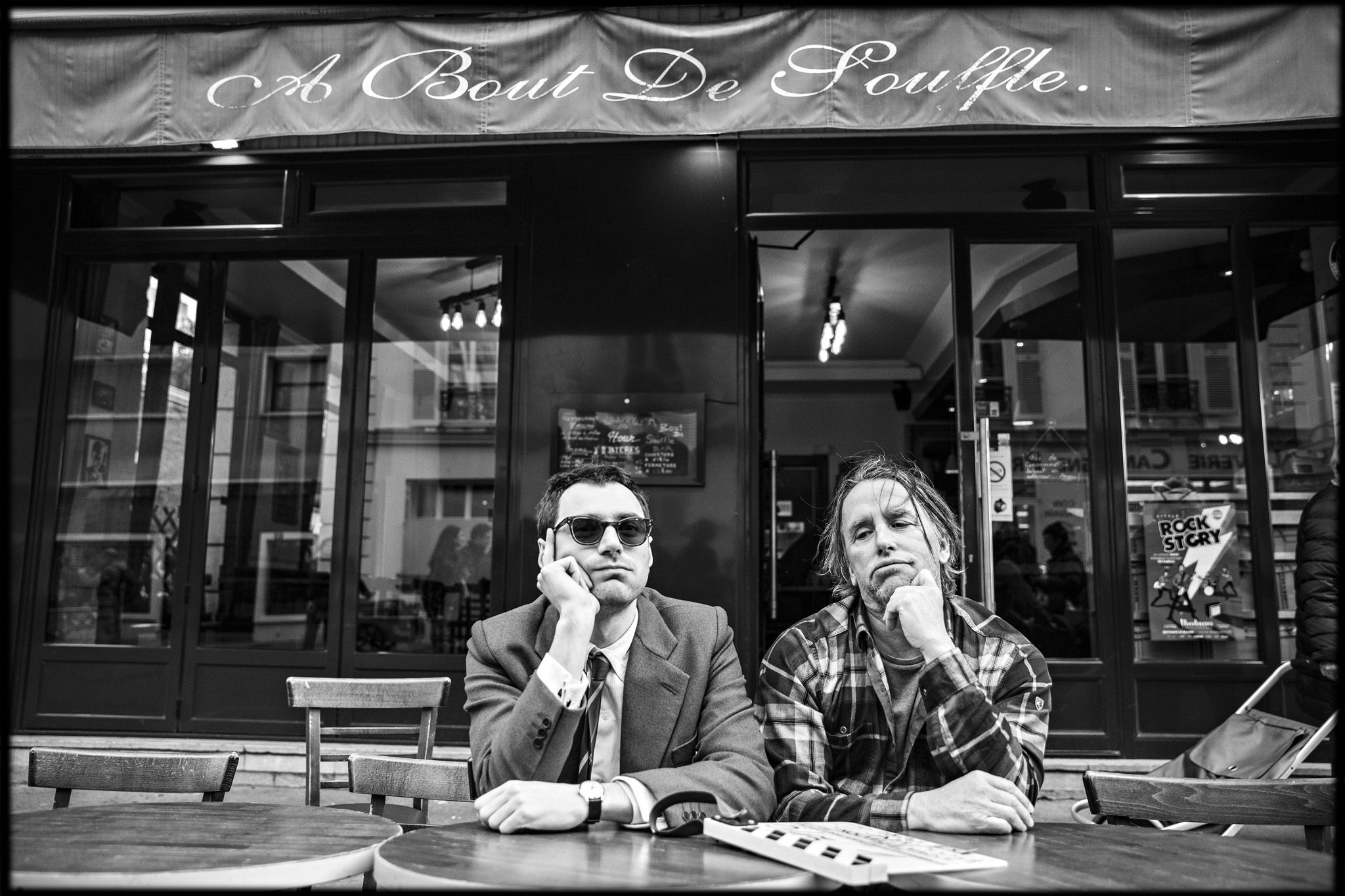
And it’s that tension between eras that makes Vague such a fascinating project as it seems to walk the line between modern pop drama and cinematic history lesson. Structurally, Linklater ensures that Vague emulates the very style that he wants to honour. The New Wave was a movement that sought to find what’s real on film and Vague taps into these sensibilities with enthusiasm. Long takes, reflective glances and awkward cinematography tap into the very soul of the era. In between takes of their onscreen film, Linklater captures the heart of his characters in an intimate manner. Every cold stare or frozen glance is meant to leave us feeling as though we have tapped into some unspoken piece of their soul.
Which, not to put to fine a point on it, is the very essence of the New Wave.
At the same time though, the film never abandons its more traditional structure. After all, this is a film about making a film. And Linklater never leaves modern audiences cold in his narrative style. In the wrong hands, Nouvelle Vague is a film that could easily alienate those who have no prior knowledge of Breathless or the revolutionary style that it celebrates. But Linklater prevents this from feeling like a ‘film school’ project. Although the New Wave was highly experimental, Vague brings the audience along for the ride. We follow the filmmaking process through the eyes of Marbeck’s Godard as he battles systems that attempt to corral his vision. Obsessed with perfecting life onscreen, the creation of Breathless speaks to the pressure on filmmakers to turn a profit instead of breathing life into their story. But here, Godard will not be denied.

And it’s worth noting that Marbeck does an absolutely spectacular job bringing the cinematic icon to life. Marbeck plays Godard with a smarmy narcissism that highlights his creative genius yet never loses his charisma. He’s fast with his tongue and loose with his scheduling but, at the same time, he always feels like he’s (somewhat) in control. Godard wanted to capture the authenticity of the moment and Marbeck embeds that fury into his performance.
And that’s the magic of Vague. Linklater doesn’t just make it a film about making a movie. Instead, he seeks to remind the audience of the power of the medium itself. Although Godard’s obsession borders on arrogance, it stems from his very real passion of the power of the cinematic experience. To Godard, cinema is “a moral affair”; a “priesthood” with the power to change the world. It’s language like this that bleeds through Nouvelle Vague, revealing his believe that the theatre can create genuine spiritual revival.
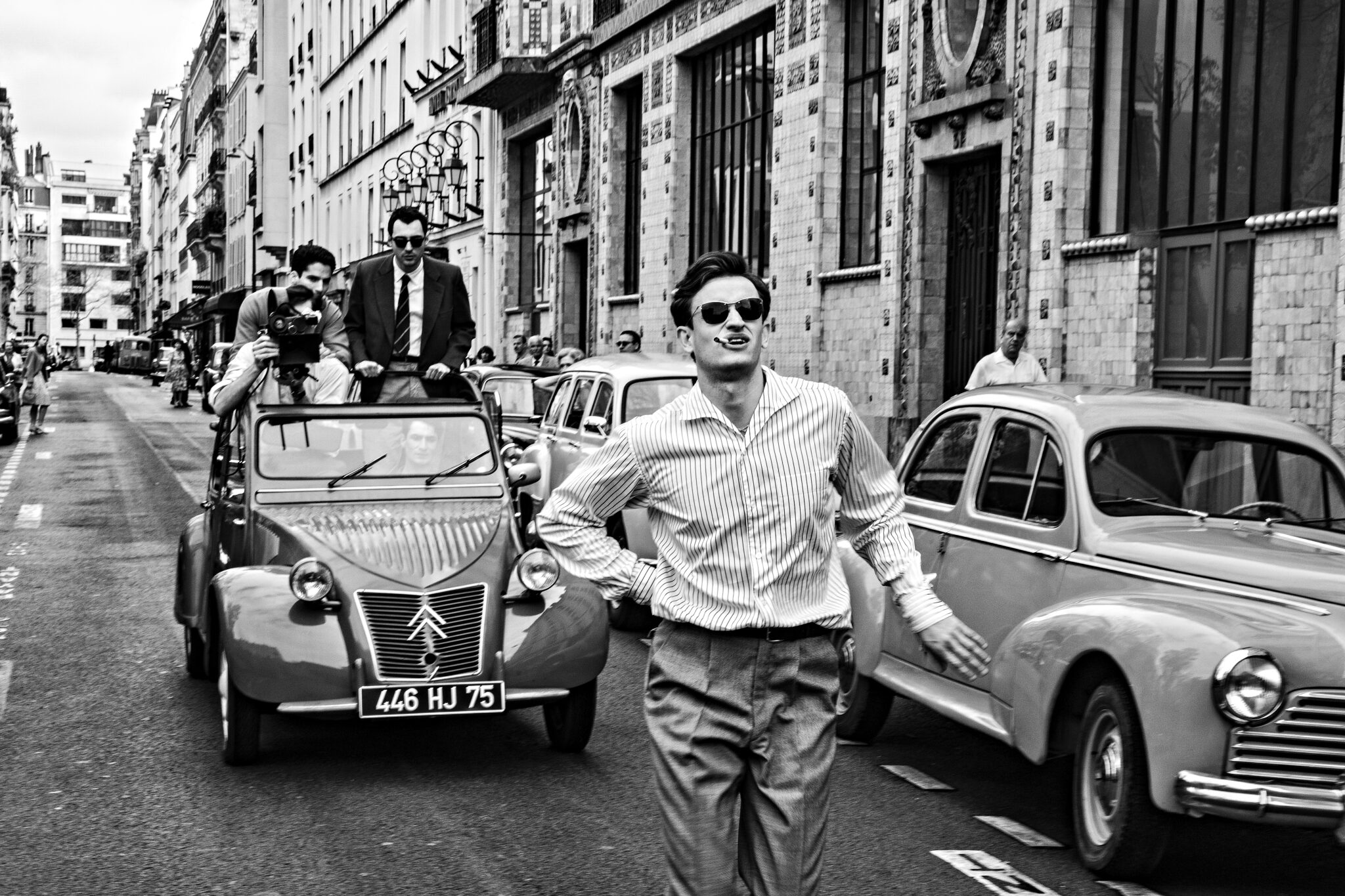
Nouvelle Vague. (L-R) Matthieu Penchinat as Raoul Coutard, Guillaume Marbeck as Jean Luc Godard and Aubry Dullin as Jean-paul Belmondo in Nouvelle Vague. Cr. Jean-Louis Fernandez/Courtesy of Netflix
“Purity is not of this world,” he pines.
Godard understands the responsibility filmmakers hold in shaping culture. He believes that, if cinema is fueled by urgency and necessity, it has the opportunity to bring revolution. There’s power in the medium and Linklater brings that passion to the forefront of Nouvelle Vague. This is a film that reminds us that stories can shape a culture and its people… yet it’s people of vision who, in turn, shape those stories as well.
Nouvelle Vague is available in theatres now.
Photos courtesy of Photon Films.